What Is a Pintxo? A Complete Guide to Pintxos in San Sebastián and the Basque Country
A pintxo is a small bite of food, two or three mouthfuls, served at a bar in the Basque Country and eaten standing up with a drink in your hand. I've lived in San Sebastián since 2010, and pintxos are the subject I know best. I spent years researching their history for my book, The Book of Pintxos, and that research meant hundreds of interviews with the bar owners and cooks who built this way of eating and still look after it.
I also made a full episode of my podcast, Spain Explained, all about pintxos, and you can listen to it at the bottom of this post. Below, I'm answering the questions people ask most about pintxos, from what the word means to how to pay at the end of the night. The pintxo episode is here for those who are curious or prefer the audio format!
The Main Things to Know
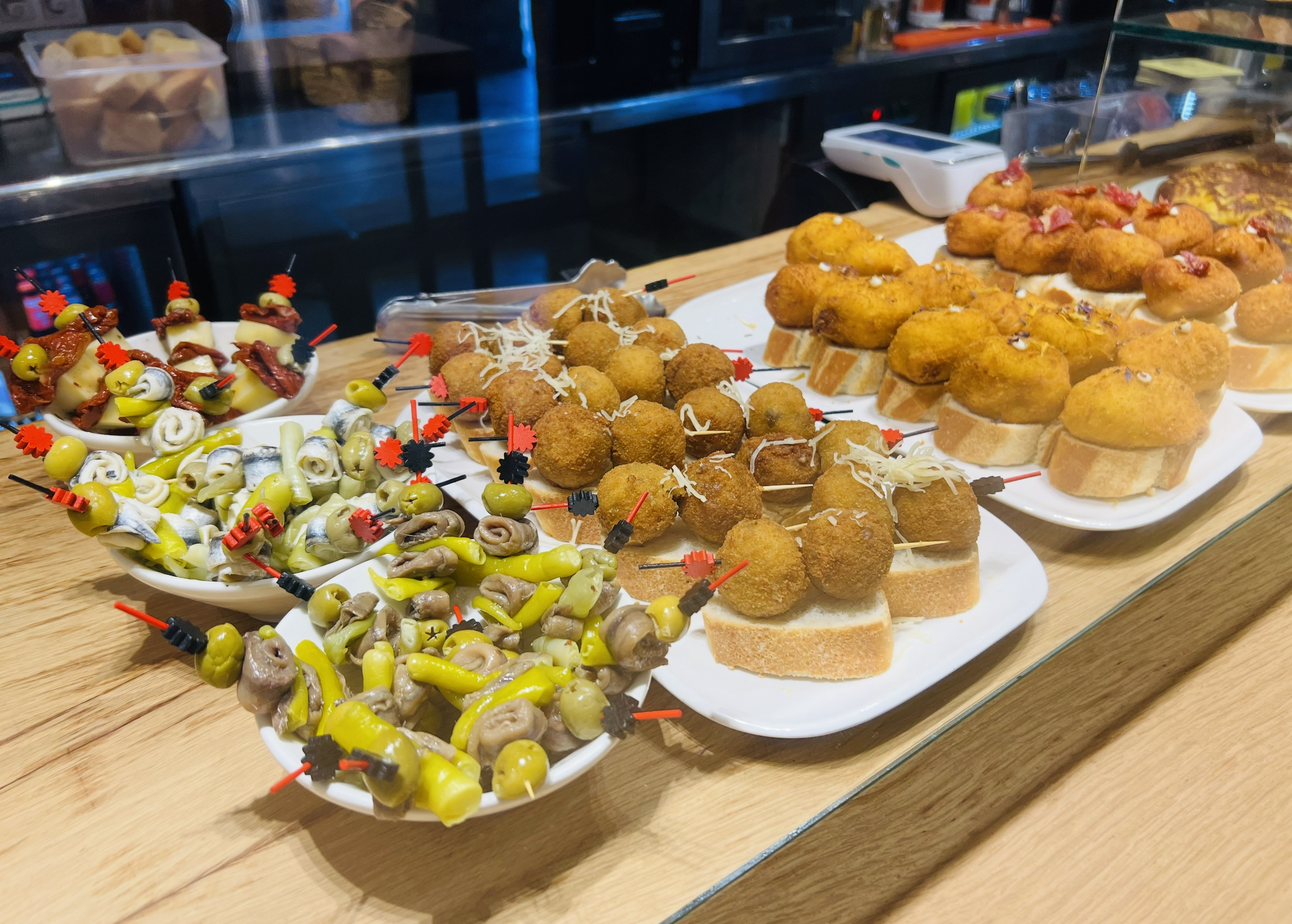
A pintxo is a small, composed bite served at a bar, usually two or three mouthfuls.
The word comes from the Spanish verb pinchar, to prick or skewer.
Pintxos were born in San Sebastián in the early 1900s. Nobody knows who made the first one.
Pintxos are always paid for.
The custom here is one bar, one pintxo, one drink, and then you move on.
That’s only a tiny summary, though. Read on for all the details behind this fascinating tradition!
What is a pintxo?
The Real Academia Española defines a pintxo (pincho in Spanish) as a portion of food eaten as an appetizer, sometimes pierced with a toothpick. That definition is accurate, and it leaves out most of what makes a pintxo a pintxo. If it covered everything, I wouldn't have needed a whole book to write about them.
A pintxo belongs to a bar. It comes with a drink, a bartender, and friends to talk to. As I put it in the episode:
"Pintxos are a what, but they are also a where, and a who, and a what-you're-doing-while-you-eat-them."
Pintxos were born in San Sebastián in the early 1900s, and today you'll find them all over the Basque Country and in neighboring Navarra, with strong pintxo cultures in Bilbao, Vitoria-Gasteiz, and Pamplona.
How do you pronounce pintxo?
Pintxo is pronounced PEEN-cho. In Basque, the letters tx make the same sound as the English ch. The Spanish spelling is pincho, and you'll see both spellings on bar menus in the Basque Country.
The word comes from pinchar, to prick or to skewer. A pintxo, at its root, is something stabbed onto a stick. The earlier name for those skewered bites was banderilla, after the barbed sticks used in bullfighting, and pincho replaced it in everyday speech around the middle of the twentieth century.
What is the difference between a pintxo and a tapa?
This is the question I get asked more than any other, and the short answer is that pintxo is not simply the Basque word for tapa. There are a few main differences:
Price. In some parts of Spain, a tapa still arrives free with your drink. Pintxos are always paid for.
Composition. A tapa is traditionally a small portion of a single food, like a plate of jamón or a few croquetas. A pintxo tends to be a construction: several ingredients combined into one deliberate bite.
Size. Pintxos usually run smaller.
The moment. Until recently, a pintxo was never a meal. It was what you ate before the meal.
Posture. Pintxos are eaten standing at the bar. Tapas are more often eaten sitting at a table.
Geography. Pintxos live in the Basque Country and nearby provinces. The rest of Spain says tapa.
Every one of these has exceptions, but together they'll orient you correctly.
Are pintxos free?
No. Pintxos are always paid for, and the custom of free tapas with a drink doesn't exist in pintxo bars. Prices vary by bar and by pintxo, and it’s something that’s dynamic and tied to which bar you go to. I definitely have an opinion on how much a pintxo should cost.
You pay at the end. Keep track of what you ate and drank, because the bartender will ask you.
What was the first pintxo?
The most famous answer is the Gilda: an anchovy, a pickled guindilla pepper, and an olive on a toothpick. The story goes that it was invented in 1946 at Casa Vallés in San Sebastián and named after the Rita Hayworth film. The trouble is that the film didn't reach Spanish screens until the end of 1947, and posters advertising hot and cold banderillas were hanging in another San Sebastián bar as early as 1920.
The truth is that nobody knows who made the first pintxo. Jesús Castro of La Espiga, one of the bar owners I interviewed for The Book of Pintxos, described the origin as a black hole in history. The Gilda is still the most iconic pintxo in San Sebastián, though, and you can make it at home with my recipe for the Gilda.
Where do pintxos come from?
Pintxos come out of drinking culture. A hundred years ago, San Sebastián was full of food shops, cider houses, and small wine bars selling wine by the glass, and people brought their own snacks to eat alongside it. Out of those places came the poteo, moving from bar to bar for a glass of wine, and its Basque cousin, the txikiteo.
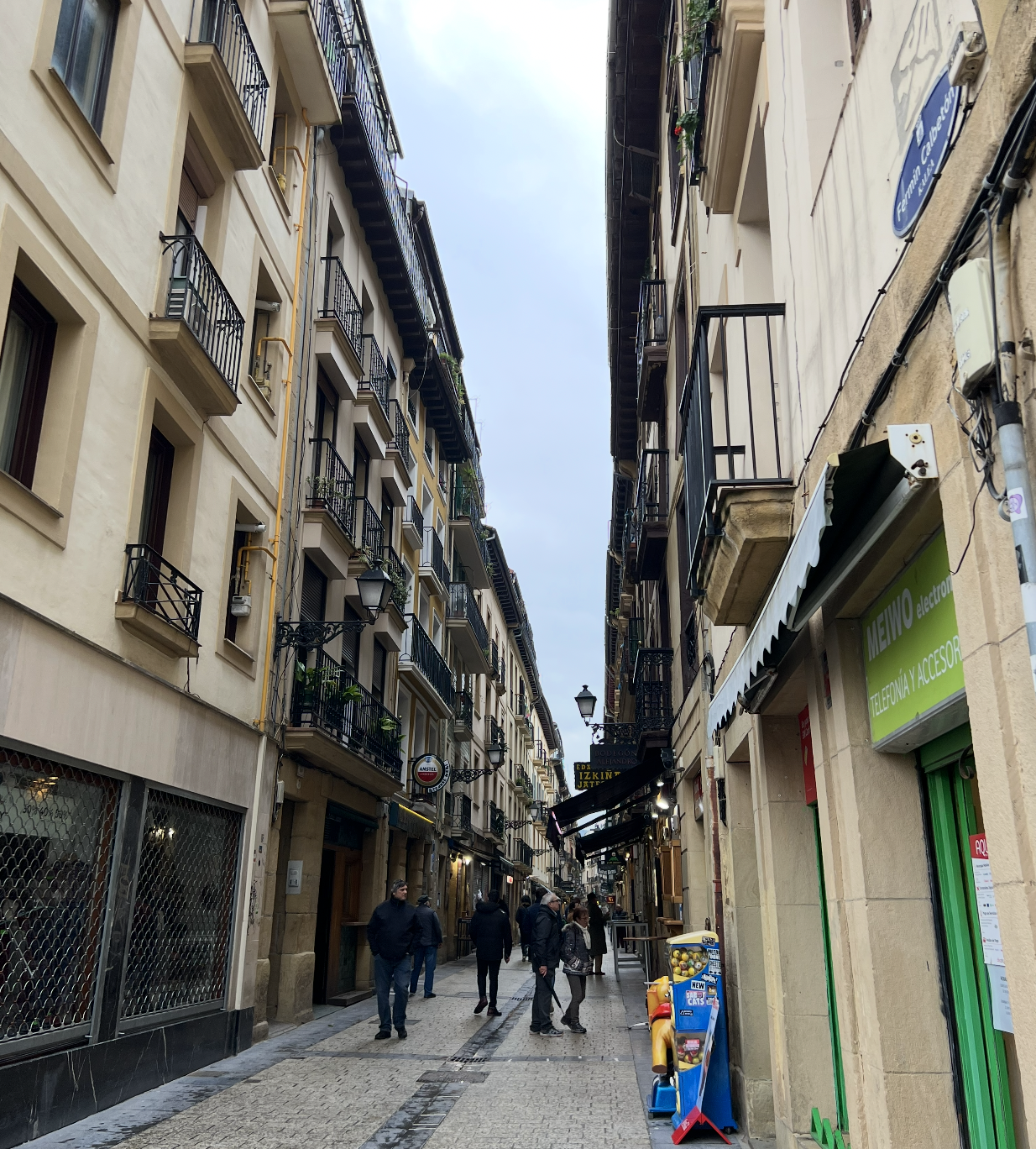
the old town of San Sebastián, ground zero for pintxos
In the txikiteo, your kuadrilla (your lifelong group of friends) met after work and moved from bar to bar, taking turns paying for rounds of txikitos, small glasses of wine in thick-bottomed tumblers. Ten to thirty rounds was normal, and thirty rounds of anything requires food. A hard-boiled egg, some olives, a sardine, and eventually little skewered banderillas: those are the ancestors of the pintxo.
The 1940s were a decade of deep poverty after the Civil War. There are accounts of Gildas made with half an anchovy each. That same decade, though, a generation of now-legendary Old Town bars opened, including Martínez, Casa Tiburcio, Paco Bueno, Casa Alcalde, and La Cueva.
By the 1960s, salaries were rising and bars were changing. Bar Martínez put up a poster banning outside food, which marks the moment bars stopped being places that only served drinks. At La Cueva, María Salud started serving Moorish kebabs and gambas al ajillo, and dozens of bars copied her. By the 1970s, every bar needed a signature pintxo, and bars began displaying their creations on the counter. Even then, making pintxos was simply a job. In some bars, it fell to the cleaning lady.
So much of this history lived only in the memories of people in their seventies and eighties. Getting it into The Book of Pintxos before it disappeared was the reason I wrote it.
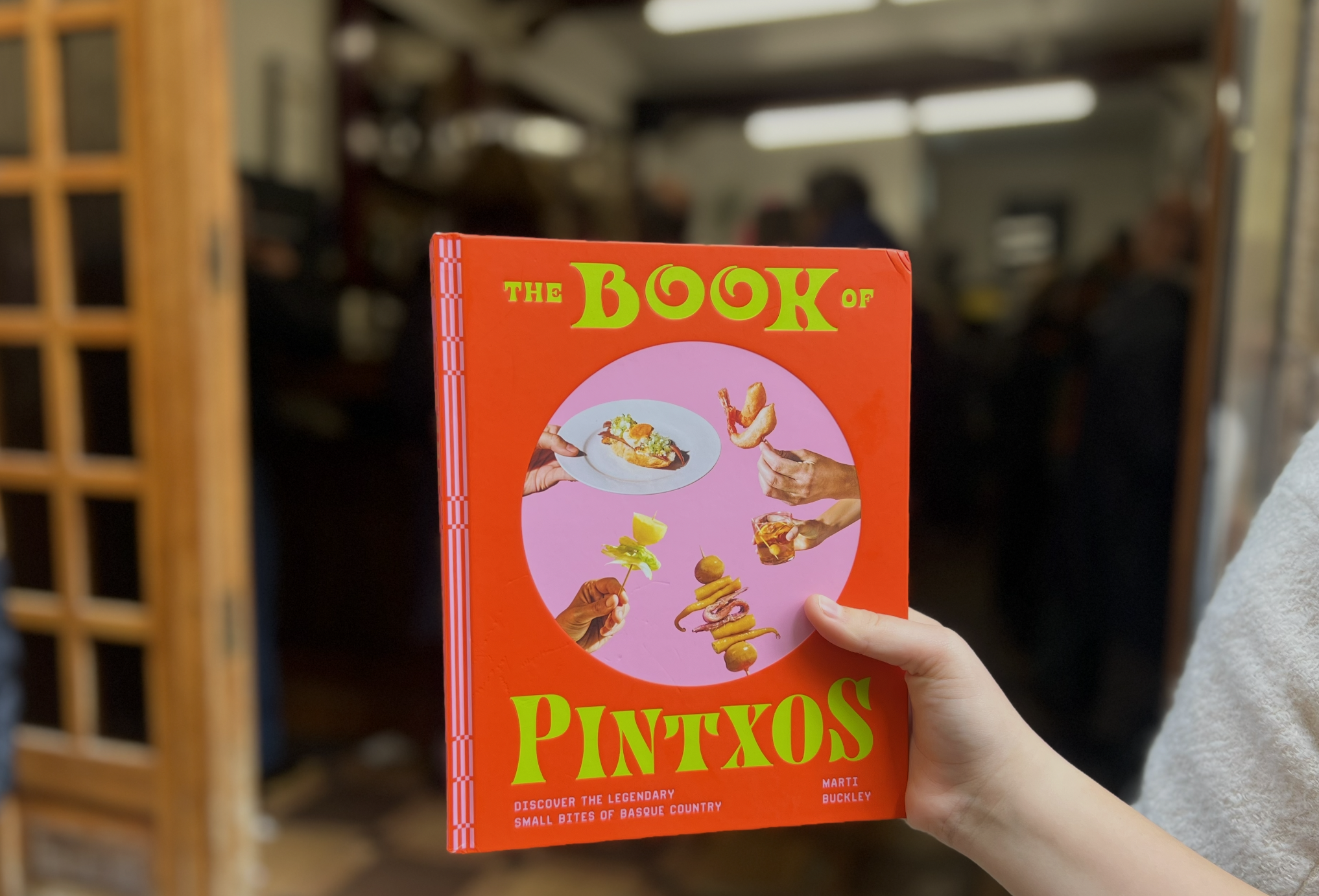
my book outside of the lovely bar, Paco Bueno
How did pintxos become haute cuisine?
The real transformation came in the 1980s and 1990s, which I think of as the golden age. In the early 1980s, Juan Mari, son of the owners of Bar Hidalgo, presented San Sebastián's first menu of hot pintxos: miniature versions of stews and raciones. In 1989, a restaurant seminar organized by the Cofradía Vasca de Gastronomía put thirteen bars and their pintxos in front of the hospitality world, and Gipuzkoa held its first banderilla competition that same year. Cooks like José Ramón Elizondo and Patxi and Blanca Bergara brought the techniques of Nueva Cocina Vasca to bar food, and in 1992 Pedro Martín Villa published Pintxos Donostiarras, the first real catalog of the form.
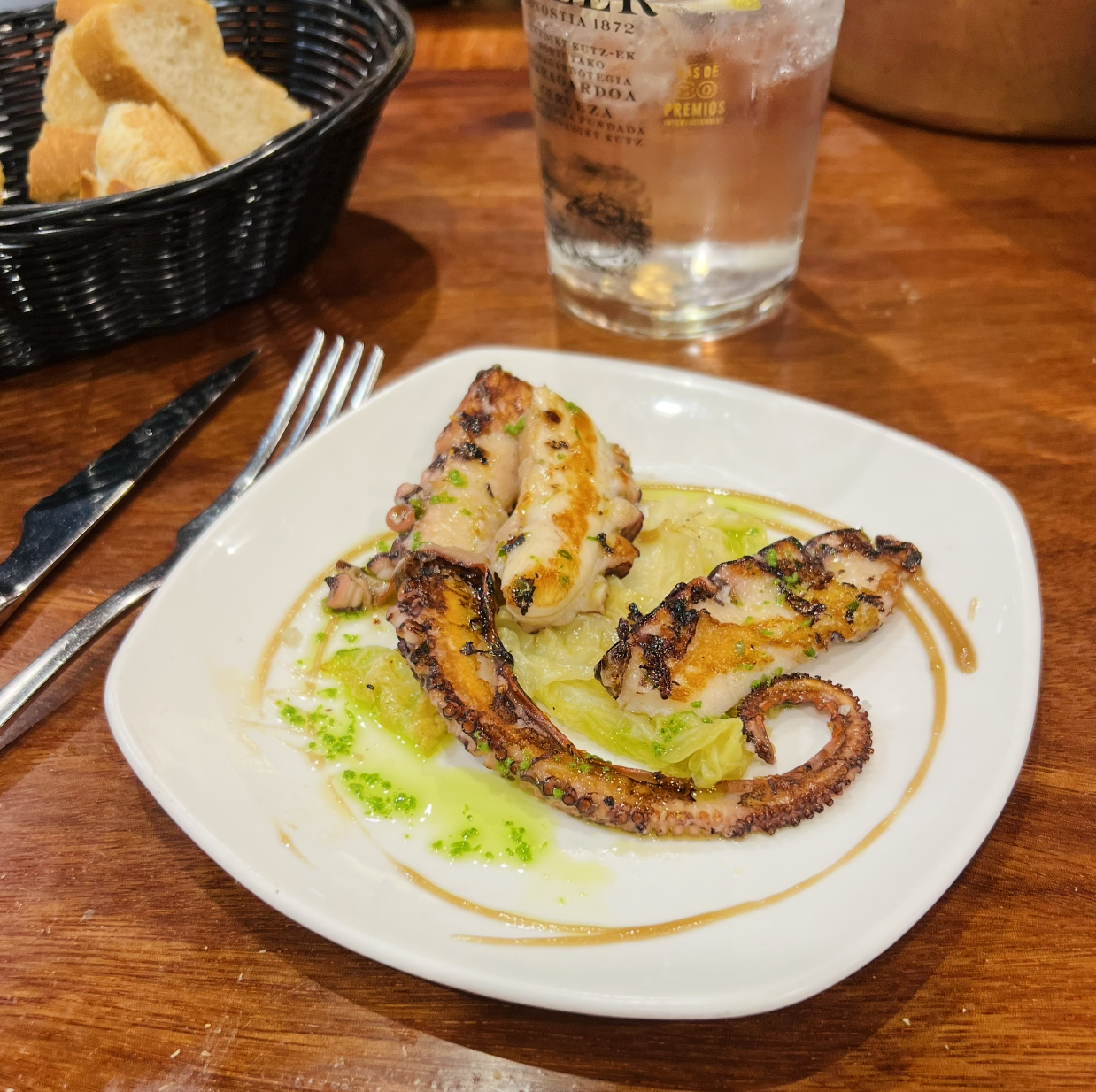
octopus at la cuchara de san telmo
Then, on the day of Santo Tomás in 1999, La Cuchara de San Telmo opened in a corner of the Old Town with nothing on the counter and a chalkboard on the wall. Its two-bite portions of braised meat in a glossy demi-glace changed what a pintxo could be. Now a pintxo could be eaten with a fork, it could be a meal, and it could even be sweet. The years that followed brought gels, foams, and spherifications.
Pintxo competitions run through this whole story. They're debated here, and plenty of cooks think they reward spectacle over flavor. They also gave pintxo cooks a public reason to be ambitious, and much of the creativity of the last thirty years traces back to them. The Institute of the Pintxo, founded in 2019 to define and defend what a quality pintxo is, comes from the same instinct to protect the tradition.
What are the different types of pintxos?
In The Book of Pintxos, I sort them into eight families. Once you can recognize them, a full bartop becomes much easier to read:
Toothpick pintxos. The original banderillas: anchovies, pickled peppers, olives, and cocktail onions laced onto a stick. Vinegary and bright, made to open your appetite.
Bread pintxos. Toasts piled with almost anything. This is where the pintxo spent most of its childhood.
Fried pintxos. Croquetas, stuffed peppers, and battered everything. Vitoria-Gasteiz in particular ran with this genre.
Ensaladilla. Creamy dressed salads get their own category, and locals judge a bar hard on its ensaladilla rusa.
Bar pintxos. The ones displayed on the counter that you can point to.
Kitchen pintxos. Made to order from the chalkboard. Since La Cuchara de San Telmo, this is where much of the most serious cooking happens.
Pastry pintxos. Savory bites built on puff pastry and other doughs.
Dessert pintxos. The newest branch of the family, small sweet bites that close out a night the way dessert closes a meal.
The book has tested recipes for the classics in each family if you want to make them at home.
How do you eat pintxos?
Pintxos come with an etiquette, and following it changes the whole experience:
Don’t wait in line. A local would literally NEVER.
Get the bartender's attention politely. Bars get crowded. Make eye contact so they know you're waiting.
Eat standing up. That's how pintxos are designed to be eaten.
Order the specialty. Every good bar has one thing everyone comes in for. If you can't tell what it is, ask.
Pay at the end. Keep track of what you had.
Talk to people. The conversation is the reason the bar exists.
The golden rule is one bar, one pintxo, one drink. Then you move. The pintxo grew out of the txikiteo, a route shared with friends, and walking from bar to bar is part of the design. Condé Nast Traveler has a good roundup of more of San Sebastián's unwritten rules.
That's also why I'd skip long lines. Some of the most celebrated bars, places I love, have moved to waiting lists and queues because they have changed to a business model more closely resembling a restaurant: your place, sit down, order. I understand the reasons, but an hour in line runs against the spirit of pintxos. In the Old Town, there's almost always another great bar a few minutes' walk away.
Why do people throw napkins on the floor in pintxo bars?
In a traditional pintxo bar, you drop your used napkin on the floor, discreetly, under the bar. It's considered more hygienic than leaving a dirty napkin on the counter next to the food. A floor full of napkins is a good sign: it means the bar is busy and beloved.
What do you drink with pintxos?
Traditionally, a txikito, a small glass of wine. Other common orders are a zurito, a small glass of beer, and txakoli, the Basque white wine. The small pours exist for the same reason the pintxos are small: you're having one at each stop.
Where should you eat pintxos in San Sebastián?
The Parte Vieja, San Sebastián's Old Town, has the highest concentration of pintxo bars in the city, and the Gros neighborhood across the river has its own strong scene. Bilbao, Vitoria-Gasteiz, and Pamplona each have pintxo cultures worth building a route around too.
Lonely Planet asked me to write their guide to the best places to eat and drink in San Sebastián, and it includes my full pintxo route for an evening in the Old Town. I've also shared my favorites with José Andrés on his Substack, The Chef's List, and with Culinary Backstreets in my favorite bites in San Sebastián.
Some bars close one day a week, so I've put together a guide to where to eat pintxos on a Monday night in the Old Town. For more recommendations, browse all my posts on pintxos in San Sebastián. And if you want the bars, the families behind them, and the stories in one place, The Book of Pintxos works as a complete introduction to the pintxo bars of the Basque Country, and I would be HONORED if you added it to your library. Let’s be honest, if you’ve read this far, you probably should :)
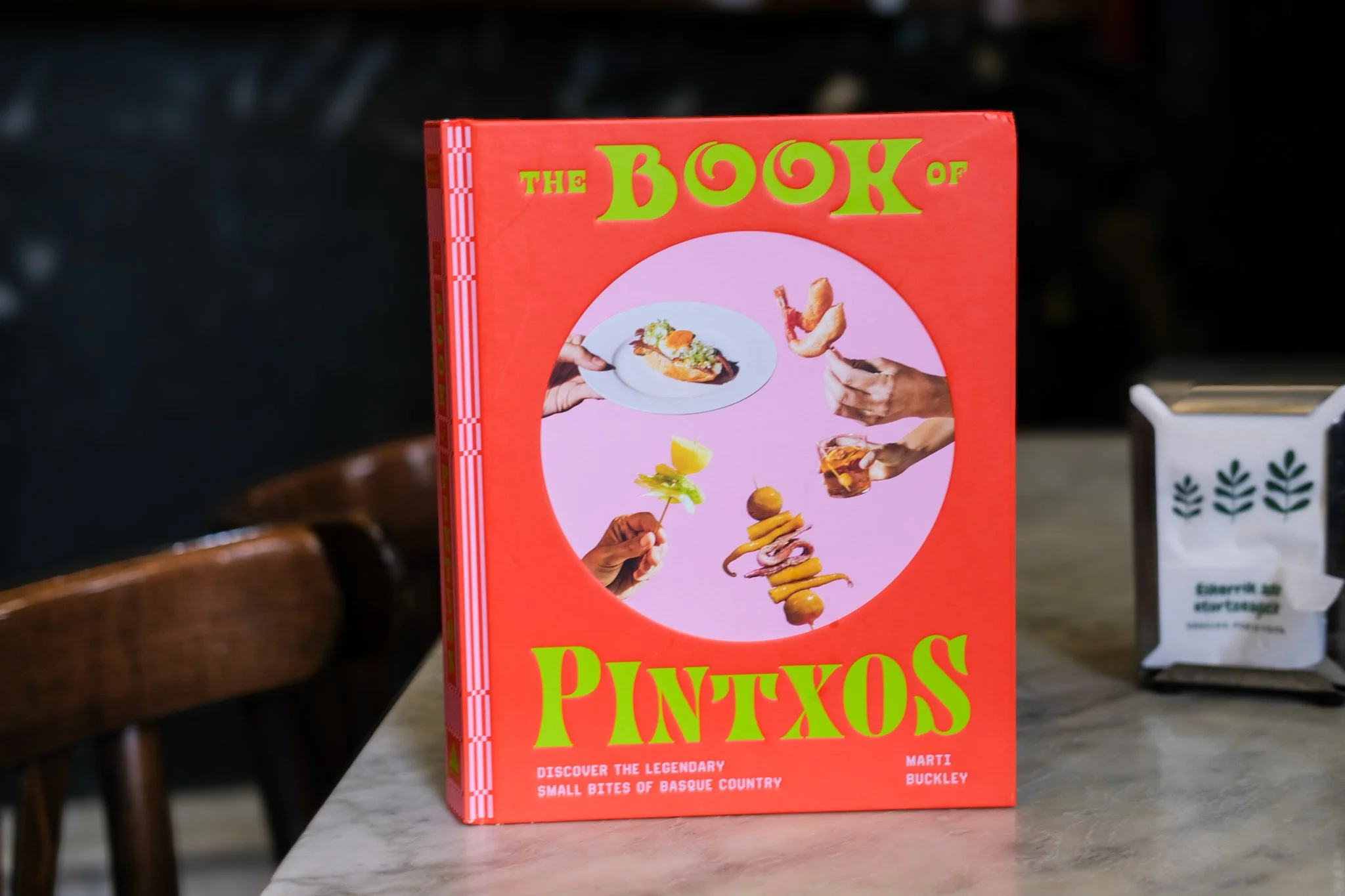
Listen: the Spain Explained episode on pintxos
In this episode of Spain Explained, I break down what a pintxo is, how it differs from a tapa, the hundred-year history of how a toothpick and an anchovy became miniature haute cuisine, the types of pintxos you'll find on a bar today, and how to eat them the way people here do.
If you want to go deeper, The Book of Pintxos has the full history, profiles of the bars and the families behind them, and tested recipes for the classics. It covers the pintxo bars of San Sebastián, Bilbao, Pamplona, and Vitoria-Gasteiz, and it works just as well in your kitchen. So much of this history had only ever been lived, never written down, and it took hundreds of interviews to get it on paper. Even La Vanguardia wrote about the lessons in the book. You can find it wherever books are sold, and your local bookstore can order it.
On egin.
This blog started because I was obsessed with Spain. I still am. You can catch more about my life and Spain over at The Spain Dispatch. Sign up for my newsletter where I share what I'm eating, where I'm traveling, and more random stuff! It's free, so come join a few thousand of us! If you liked this post, you'll probably love it.