
The Camino de Santiago: Honest Answers to All Your Questions
You've been thinking about it. You've watched the movie. You've been on the forums. Here's what you actually need to know if you’ve got the Camino de Santiago on your mind.
I have lived in Pamplona and (currently) San Sebastián, which means I have watched thousands of pilgrims shuffle past my city on their way to Santiago de Compostela. I have watched them in January rain and August heat. I have watched them limp. I have watched them tear into a bocadillo. And I know exactly what they’re feeling, because I did the camino in 2006.
The Camino de Santiago is one of the oldest pilgrimage routes in the world, ending at the Cathedral of Santiago de Compostela in Galicia, where the remains of Saint James the Apostle are said to be buried. There are multiple routes. The most famous, the Camino Francés, begins in the French Pyrenees at Saint-Jean-Pied-de-Port and covers roughly 800 kilometers across northern Spain. Others start in Seville (the Vía de la Plata), Lisbon (the Camino Portugués), or right here in the Basque Country (the Camino del Norte) and the north of Spain (the Camino Primitivo).
I did a whole podcast episode on it where I explain it all in audio format, highly recommend:
People have been walking it since the 9th century. Every year, more than 400,000 people receive their Compostela, the certificate of completion.
But I know you have questions. Let's get into them.
Will the Camino change my life?
Maybe. Probably. Almost certainly.
Here is what I can tell you: the Camino has an outsized reputation for being a vehicle for personal transformation, and this reputation is earned. There is something about removing yourself from your regular life, putting on a backpack, and walking in the same direction as everyone else for weeks that tends to loosen things up internally. Thoughts you have been avoiding have nowhere to hide when you are alone on a meseta at 8am. Relationships you have been rationalizing look different when you are 3,000 kilometers from home.
But the Camino does not do the work for you. It is more like a very long, very scenic pressure cooker. Whatever you bring in, it intensifies. Some people arrive home with clarity. With a new purpose. Others arrive home with the same unresolved issues and blisters. The Camino is a tool. You still have to use it. Pro tip, keep your smart phone put away except for limited use in the evening to maximize the miracle effect.
Do I need to be religious to do the Camino?
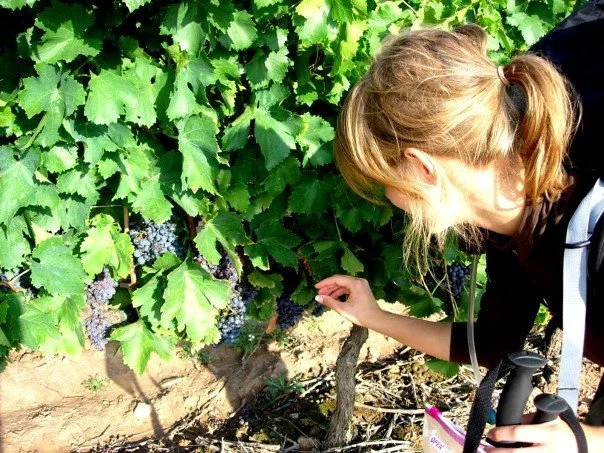
No. Statistically, most people walking the Camino today identify as doing it for personal, cultural, or sporting reasons rather than strictly religious ones. The Pilgrim's Office in Santiago doesn't ask you to prove your faith. You just have to have walked at least the last 100 kilometers (or cycled the last 200) to receive the Compostela (although that’s a rule that’s recently changed, too).
That said, the Camino is shot through with Catholicism at every level: the architecture, the rituals, the botafumeiro (the enormous incense burner swung dramatically at the Pilgrim Mass in Santiago, which is one of the most theatrical things I have ever seen), the prayers carved into stones, the cruceiros at crossroads. You do not have to participate in any of it, but ignoring it means missing a significant part of what makes the experience what it is.
What are Camino miracles, and will I have one?
This is my favorite question.
The Camino has a long tradition of miracles, starting with Saint James himself, who according to legend appeared on a white horse at the Battle of Clavijo in 844 to help the Christian forces against the Moors. The route is dotted with shrines, chapels, and crosses marking spots where things happened that people couldn't otherwise explain.
The modern Camino miracles are of a more contemporary bent but pilgrims report them constantly. The blister that should have ended your walk that inexplicably healed overnight. Meeting the exact person you needed to meet, on the exact day you needed to meet them, in a tiny village in the middle of Castile. Reaching the Cruz de Ferro, the iron cross where pilgrims leave a stone brought from home, and feeling something drop away that you have been carrying for years.
Will you have one? I cannot promise you that. But I can tell you that if you go in with any openness at all, the Camino has a way of offering something you weren't expecting. Whether you call that a miracle or just a very good day is up to you.
How hard is the Camino, really?
Harder than you think, and easier than you fear.
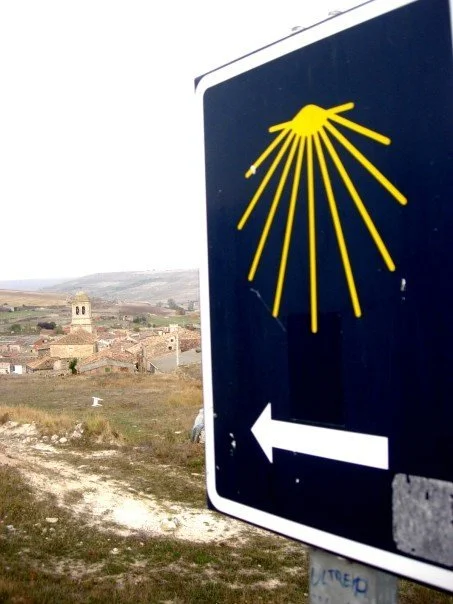
The Camino Francés, if you walk the full 800 kilometers, takes most people around 35 days. The first stage, over the Pyrenees from Saint-Jean-Pied-de-Port to Roncesvalles, gains around 1,400 meters in elevation and for me was absolutely the most difficult day. I like this website for a breakdown of the stages. The meseta, the long flat stretch through Castile, is psychologically challenging in a completely different way: it goes on, and on, and on, and the sky is very big and you are very small.
The most common mistake is going too fast in the first week. Blisters, shin splints, and tendonitis sideline more pilgrims than any lack of fitness does. The Camino rewards slowness. This is, incidentally, a good metaphor for Spain in general. Be sure to practice beforehand, with your shoes and with your walking sticks.
What should I pack on the Camino?
The single most important rule is weight. Your pack, fully loaded with food and water, should not exceed 10 to 15 percent of your body weight. Most experienced pilgrims will tell you to aim for 10 percent. On a 30-day walk, every extra gram you carry adds up to something real. Your back and hips will make this very clear to you around day three.
For the pack itself, you want something between 30 and 40 liters. That is enough room for everything you need and, crucially, not so much room that you start filling it with things you don't. Get one with a padded hip belt and make sure it either has an integrated rain cover or that you buy one separately. It will be tested.
Shoes are the most consequential decision you will make. Not the most expensive, not the most technical… the most consequential, because bad footwear decisions will end your Camino or at least make it miserable. Most experienced walkers now favor trail runners over traditional heavy hiking boots, because they're lighter and your feet don't overheat as badly during long days on the road. But whatever you choose, break them in properly before you leave. Weeks, not days. Walk in them, walk in them more, and walk in them again. Blisters are a rite of passage on the Camino regardless, but starting with broken-in shoes rather than stiff new ones is the difference between manageable and super painful. You'll also want a pair of flip-flops or lightweight sandals for evenings, I used a pair of Tevas.
Socks matter. Bring three pairs so you can wash and alternate and have a backup. Merino wool or a technical synthetic, not cotton. Cotton holds moisture, and moisture on a long day means blisters faster.
For clothing the philosophy is: two of most things, quick-dry fabrics for everything. Walking pants, leggings, and a waterproof layer. My pants unzipped to become shorts. Two or three shirts, enough underwear to wash and rotate. You'll be hand-washing at albergues and hanging things to dry overnight, so fabric that dries fast is not a luxury, it's a practical necessity. Dr. Bronner’s for bathing and washing clothes. One warmer layer like a fleece or a light down jacket for the evenings, the mountain passes, and Galicia, where the weather does whatever it likes. A waterproof jacket. A hat for sun and a hat for cold are not the same hat, and both are worth having depending on what time of year you're going.
For the first aid side of things, the essentials are blister care… Compeed blister plasters specifically are worth their weight in gold but you can buy these at any Spanish pharmacy. Pain relief, antiseptic cream, and a needle to drain blisters when they inevitably arrive anyway. Pharmacies are easy to find on all the main routes, so you don't need to prepare for every scenario, but you do want the blister kit on you at all times rather than buried at the bottom of your pack.
A few other things that sound small but matter: a headlamp, because you will be packing in the dark in an albergue in the early morning and your phone torch is not the same thing. A lightweight microfiber towel, because albergues never provide them. A sleeping bag liner, especially if you're traveling in shoulder season or winter… the albergue blankets are not always reliable. And your credencial, your pilgrim passport, protected in a waterproof bag. Without it you cannot stay in the pilgrim hostels, and without the stamps in it you cannot receive your Compostela at the end.
When is the best time to start the Camino?
The routes are open year-round, which means the honest answer to "when should I go?" is: it depends on what kind of experience you want. That said, there are genuinely better and worse windows, and a few months that most experienced pilgrims would steer you away from.
The sweet spot, for most routes and most people, is late spring or early autumn. May, June, and September are consistently cited as the ideal months for the Camino Francés. The days are long, the temperatures are manageable, the wildflowers are out in spring and the light turns golden in September, and while you will have company on the path, the crowds haven't yet reached the levels that start to strain the infrastructure and erode the meditative quality of the experience.
What should I eat on the Camino?
Now we're talking.
The Camino Francés passes through some of the best food regions in Spain. On the Frances, leaving from the French Pyrenees, you enter Navarra, where the Piquillo peppers are roasted over fire and the wine is excellent and cheap. Then you move into La Rioja, where you should absolutely stop long enough to eat a proper meal and try the local red. Then the wide plains of Castile, where roast lamb is the regional calling card. Then Galicia, where everything is seafood and rain and the most incredible bread you have ever eaten.
The pilgrim menu, a fixed-price meal served at most restaurants along the route, runs between 10 and 15 euros usually and typically includes a starter, main, dessert, wine, and bread. It is one of the great bargains in Spanish dining. Order the vino tinto, eat everything, rest your feet.
What happens when you arrive in Santiago?
You cry. Almost everyone cries, including people who did not expect to cry, including people who specifically said they were not going to cry.
The Plaza del Obradoiro, the square in front of the Cathedral of Santiago de Compostela, is one of the most emotionally charged places I have ever stood. Pilgrims are full of emotion. Some lie down on the cobblestones. Some hug strangers who have become friends over weeks of shared suffering and shared wine. Some just stand there, unable to quite process that it's over.
Then you go queue for your Compostela. Then you eat a very good meal. Then you sleep a lot.
Should I do the Camino?
Here is my honest answer: if you have been thinking about it, you probably should. The fact that you're reading a 1,500-word blog post about it at this particular moment suggests something is already pulling you toward it.
The Camino asks of you time, physical effort, a willingness to be uncomfortable, a willingness to be alone with your own thoughts for long stretches of time. In exchange, it offers something that is genuinely hard to find in ordinary life: a clear direction, a clear purpose, and the company of thousands of strangers all walking toward the same thing.
Want to know more about the Camino, Spanish pilgrim culture, and the food and traditions you'll encounter along the way? Listen to my episode on the Camino de Santiago on my podcast, Spain Explained, wherever you get your podcasts.
Get regular updates on life, food and culture on my newsletter!