
What Are Churros? A Complete Guide to Spain's Beloved Snack
Over the years, I’ve developed incredibly strong opinions about churros. Not whether I like them. Everyone likes them. But which churrería is correct, what time of day is acceptable, and even what the things are actually called. I've been living in San Sebastián since 2010, and I spent an entire episode of my podcast Spain Explained going deep on churros, because this is one of those foods that gives you a glimpse of Spain’s regionality.
If you want the full story with all the texture and context, go listen to the episode. But if you landed here because you want to know what churros actually are, where they come from, how to make them, and whether they're dairy-free (they are), here's everything, organized by the questions people ask most.
What Are Churros?
At their most basic, churros are fried dough. You mix flour with boiling water and a pinch of salt to create a scalded dough called masa escaldada, pipe it through a star-shaped nozzle into hot oil, and fry until golden. Sometimes you dust them with sugar. Often you dip them in chocolate. Always, ideally, you eat them fresh.
The simplicity is the whole point. Three ingredients, one technique, and somehow it becomes one of the most satisfying things you can eat.
In Spain, churros are sold at dedicated churrerías, at cafés, and from street kiosks. They're a weekend breakfast food, an afternoon snack, a late-night ritual after a party, and a New Year's morning tradition. They are everywhere and they are loved, and yet they almost never appear in a Spanish cookbook. More on that in a minute.
What Are Churros Made Of?
Traditional Spanish churros are made from three ingredients: flour, water, and salt. That's it. The technique of pouring boiling water over flour partially cooks the starch and creates a specific dough texture that holds its shape when piped and develops a crispy exterior when fried.
Some home recipes and international versions add butter, eggs, or oil to the dough, which changes the texture and richness. Traditional Spanish churros don't include any of those things, which is also why they're naturally dairy-free and vegan (more on that below).
The oil you fry them in matters. Many traditional churrerías in Spain use olive oil, and they change it regularly. A good churro should not taste like oil at all. It should just taste like churro. That's a sign of quality oil and proper frying technique.
Churros vs Porras vs Tejeringos
As we say…OJO! “Churro" means different things in different parts of Spain.
Churros (the thin, ridged kind) are made with the basic flour-water-salt dough, worked while still hot and fried immediately. The interior is dense, with no air pockets.
Porras are the thick, airy churro cousin. The dough uses more water and includes a bit of bicarbonate, and it rests for about 10 minutes before frying. That rest releases CO2 and creates the characteristic sponginess; all those air pockets that make porras light inside. They're so airy that if you dip them in chocolate, the liquid can get trapped inside. Porras are typically formed into wheel shapes and cut into portions before serving.
Tejeringos are the style you find in Málaga and parts of Cádiz and Granada. They're made with flour, yeast, water, and salt, which gives them a texture somewhere between the density of churros and the airiness of porras. They're piped one at a time by hand directly into the oil, using a syringe-like tool called a jeringa , which is also where the name comes from.
And then there are the naming variations. In Sevilla and parts of Huelva, what much of Spain calls churros are often known as calentitos. In Jaén they were historically called tallos. In Córdoba, jeringos. In A Coruña in Galicia, churros are straight rather than looped, with deep ridges that create extra crispiness, and there are two historic churrerías (Bonilla and Timón) with devoted regulars on each side.
Where Are Churros From?
The honest answer is: nobody knows for certain, and the most popular origin story probably isn't true.
The most widespread version is that Portuguese explorers encountered youtiao, long fried dough sticks eaten in China, and brought the concept back to the Iberian Peninsula. Spanish shepherds then popularized churros because they could make them in the fields without needing an oven, naming them after churra sheep.
The problem with the shepherd part of the story is practical. Making churros requires boiling water, specific dough consistency, a piping tool, and extremely hot oil maintained at a precise temperature. That's a lot of equipment for a field. The origin story is charming, but it's almost certainly been smoothed down over the years.
What's more likely is that fried dough has appeared across many cultures throughout history….the Romans made flour-and-water fritters, and Arab culinary traditions brought various fried pastry techniques to the Iberian Peninsula during their centuries on the peninsula. The technique of scalding dough with boiling water probably developed independently in multiple places. By the late 19th century, what we recognize as churros was well established across Spain. Chocolatería San Ginés in Madrid, probably the most famous churro institution in the world, opened in 1894.
Are Churros Mexican?
Churros are Spanish in origin, but Mexico has a deep, legitimate churro tradition of its own, and the two are different things.
Spanish conquistadors brought churros to Mexico in the 16th century. Mexico adopted them enthusiastically and made them their own. Mexican churros tend to be thicker, are almost always rolled generously in cinnamon sugar, and are often filled with cajeta, chocolate, or fruit jam. The flavor profile is sweeter and more dessert-forward than the typical Spanish churro.
There's also an interesting historical footnote here: the hot chocolate pairing that Spain is so associated with actually has roots in Mexico. Chocolate was already consumed in Mesoamerica for thousands of years before the Spanish arrived. The combination of churros and hot chocolate, which feels so quintessentially Spanish, is partly a fusion of both cultures.
So: Spanish in origin, deeply Mexican in tradition, and different depending on where you're eating them.
How to Make Churros at Home
Making churros at home is very doable. The ingredient list is short; what takes a bit of practice is the oil temperature and the piping. Here's a basic recipe for churros, nothing fancy.
Ingredients (serves 4)
250g plain flour
250ml water
1 tsp salt
Spanish olive oil for frying (enough to fully submerge the churros)
Method
In a large saucepan, bring the water and salt to a boil.
Remove from the heat and add all the flour at once.
Immediately stir with a whisk, working quickly and continuously until you get a smooth, compact dough with no lumps. The dough is ready when it pulls away cleanly from the sides of the pan.
Before transferring the dough to a piping bag, make sure it's compact and work out any air pockets. Trapped air can cause hot oil to spit when you fry. If needed, knead the dough briefly on a flat surface first.
Fill your piping bag and fit it with a star-shaped nozzle. The star shape is what gives churros their traditional ridged surface and that contrast between crispy exterior and soft inside.
Pipe the churros one at a time, either straight or in the traditional oval loop shape, onto a sheet of baking paper or a clean kitchen towel.
Heat a deep pan with enough Spanish olive oil to fully submerge the churros. Using olive oil is traditional and makes a real difference to the flavor.
When the oil reaches 195°C to 200°C, lower the heat to medium. Carefully lower the churros into the oil one at a time, holding them from one end and letting them slide in gently to avoid splashing.
Fry for a few minutes until golden. Remove with a slotted spoon or tongs and drain on kitchen paper. You'll likely need to fry in batches.
For more recipes, check out my cookbooks :)
Tips for Getting It Right
Fresh is everything. Churros are not a make-ahead food. They start losing their magic the moment they cool down. The ideal is eating them so fresh they're still a little too hot to hold comfortably.
The star nozzle matters. The ridges created by the star shape increase the surface area, which is what gives you that contrast between crispy outside and soft inside. A round nozzle will give you something more like a fried bread stick.
Oil quality matters. If you want to approximate what a good Spanish churrería tastes like, use olive oil. It makes a difference.
For porras, increase the water slightly (roughly 300ml for the same amount of flour), add half a teaspoon of bicarbonate of soda, and let the dough rest for 10 minutes before frying. The oil should be slightly hotter, around 215°C to 220°C. Pipe in wheel shapes and cut after frying.
Do Churros Have Dairy? Are Churros Vegan?
Traditional Spanish churros contain no dairy. The dough is flour, water, and salt. The frying oil is typically olive oil or another plant-based oil. That makes classic Spanish churros both dairy-free and vegan.
A few caveats:
Home recipes and many international versions do add butter or eggs, which would make them not vegan. If you're making them at home, stick to the traditional three-ingredient dough.
The chocolate dipping sauce traditionally uses whole milk and dark chocolate. If you want a vegan version, substitute oat milk or another plant milk and use dairy-free chocolate.
If you're ordering at a churrería and have dietary restrictions, it's always worth asking about the frying oil, since some places use lard, though this is less common than it used to be.
How to Reheat Churros
The honest answer? Reheating churros is a compromise. They're best eaten fresh, and nothing fully restores the texture of a just-fried churro. But if you have leftovers:
Oven: The best option. Spread churros on a baking sheet and heat at 190°C for 5 to 8 minutes until they crisp up again. This restores some of the exterior crunch without drying them out completely.
Air fryer: Works very well. 180°C for 3 to 4 minutes. Quick and effective.
Toaster oven: Similar to the oven method, just watch them closely.
Microwave: Skip it. The microwave will steam them and you'll end up with something soft and sad.
One more note: if you're making churros for a crowd and want to have them "ready" quickly, you can fry them slightly underdone and finish them in a hot oven. Not quite the same as fresh-from-the-oil, but much better than reheating from fully cooked.
When Do People Eat Churros in Spain?
This varies more by region than you might expect.
Churros for breakfast are primarily a weekend tradition. During the week, they're more often an afternoon merienda (snack), especially in autumn and winter when you want something warm.
The big cities are where churros reach maximum flexibility. Weekend breakfast, yes. Afternoon snack, yes. And there's the post-party ritual: around 6 or 7 in the morning, people ending their night out and people starting their day converge at the same churrerías. It's one of the more Madrid-specific experiences.
Churros are also a widespread New Year's tradition across Spain. If you've stayed up through the night, churros with hot chocolate is the traditional way to welcome January 1st.
In Andalucía, morning is more the norm, often eaten with coffee rather than chocolate. In parts of the country, chocolate is the classic pairing; in others, coffee is. Neither is wrong.
Where to Find Great Churros in Spain
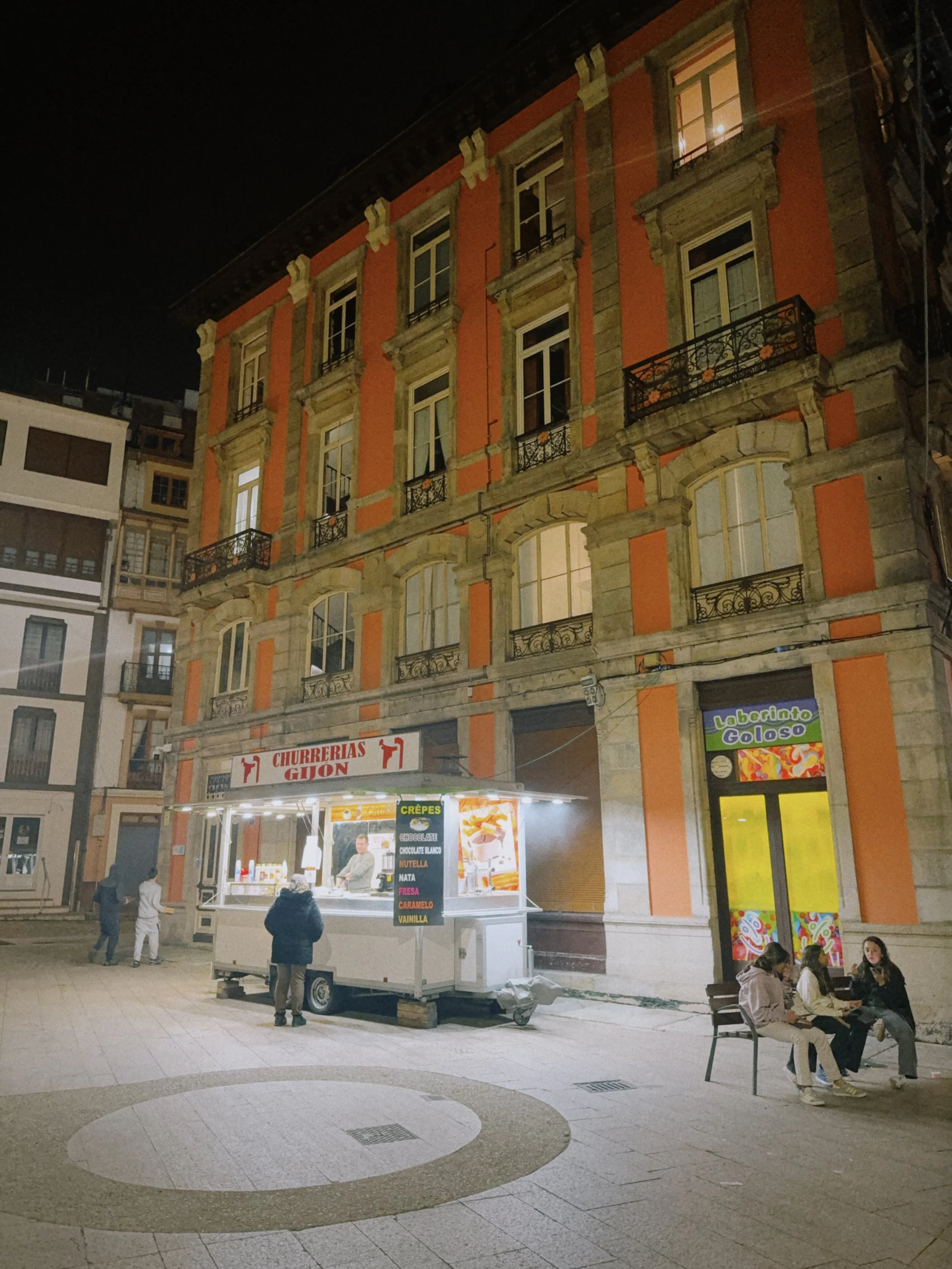
The kiosk model. You'll often see a churrería kiosk where you buy your churros, then take them to a nearby café where you order your coffee or chocolate. The café doesn't mind because you're buying drinks. It's a whole ecosystem, and the churros are usually very fresh because the kiosk is doing one thing.
Look for places frying to order. Many bars and cafés have churros, but they're often brought in from a supplier. Churros don't travel well. If you want the real experience, find somewhere frying fresh.
San Ginés in Madrid (Pasadizo de San Ginés, near Puerta del Sol) is the most famous chocolatería in Spain, open 24 hours, and a genuine institution since 1894. Yes, it's touristy. It's also worth going.
Xurreria Trebol in Barcelona is open 24 hours Thursday through Saturday and is where night shift workers and people coming home from parties end up at 6am.
In A Coruña, the debate between Bonilla a la Vista and Timón is ongoing and both are worth trying if you're there.
The Cookbook Problem
One last thing that I wanted to mention: churros are everywhere in Spain, eaten constantly, loved by everyone, and they almost never appear in a Spanish cookbook. I was recently cataloguing Spanish recipes for a project and couldn't find churros in a single cookbook.
Meanwhile, imported breakfast items get treated as elevated and special, while something that requires real skill and takes people a lifetime to perfect is considered just normal everyday food.
Churros are normal in Spain i …so familiar, so available, so woven into the fabric of daily life that people stop noticing how good they actually are. Until you eat them somewhere truly excellent, fresh from the oil, the exterior crispy and the inside soft and custardy. Then you remember.
This post is based on the churros episode of Spain Explained, my podcast about Spanish food and culture. Every episode covers one topic in depth — a dish, a tradition, a word, a habit — with the goal of helping you understand Spain a little better. You can find it on Apple Podcasts, Spotify, and everywhere else you listen, and more of my writing about Spanish food at martibuckley.com.