
How to Plan a Food-Focused Trip to Spain
Spain has long been a dream destination for travelers who plan their trips around food. From seafood markets along the Atlantic coast to tapas bars that fill narrow city streets late into the night, eating in Spain is rarely just about the meal itself. It is about culture, rhythm, and community.
A well-planned culinary trip can take you through centuries of cooking traditions while introducing you to ingredients and dishes that change dramatically from region to region. Instead of rushing between attractions, a food-focused itinerary encourages slower travel. Meals become experiences. Markets become destinations.
Planning ahead makes a big difference, especially if you want to explore Spain through its kitchens, vineyards, and neighborhood restaurants.
Understand Spain’s Regional Food Culture
Spain is not a country with one unified cuisine. Instead, its food reflects the geography and traditions of individual regions. Coastal areas lean heavily on seafood, while inland regions often feature cured meats, stews, and roasted dishes.
National Geographic highlights how Spain’s best food experiences are deeply tied to place, from rice dishes in Alicante and Valencia to truffle hunting in Aragon and market culture in Madrid. That regional variety is exactly why a food-focused trip works best when planned around specific areas rather than trying to see the whole country at once.
Some regions that food-focused travelers often prioritize include:
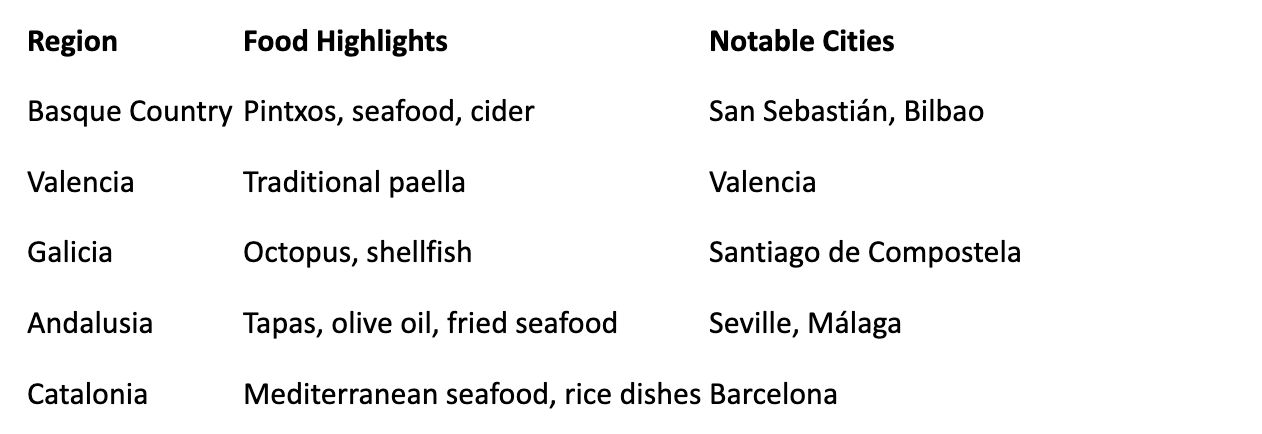
Trying to cover the entire country in one trip can dilute the experience. Many travelers find it more rewarding to pick two or three regions and explore them deeply.
Build an Itinerary Around Food Experiences
Rather than structuring each day around landmarks, food travelers often design their itineraries around meals and culinary experiences.
Some memorable options include:
visiting morning food markets
joining local tapas tours
taking regional cooking classes
touring vineyards or olive oil farms
reserving dinners at historic neighborhood restaurants
Food markets are particularly valuable stops because they bring together local ingredients, small producers, and traditional cooking methods.
Popular examples include:
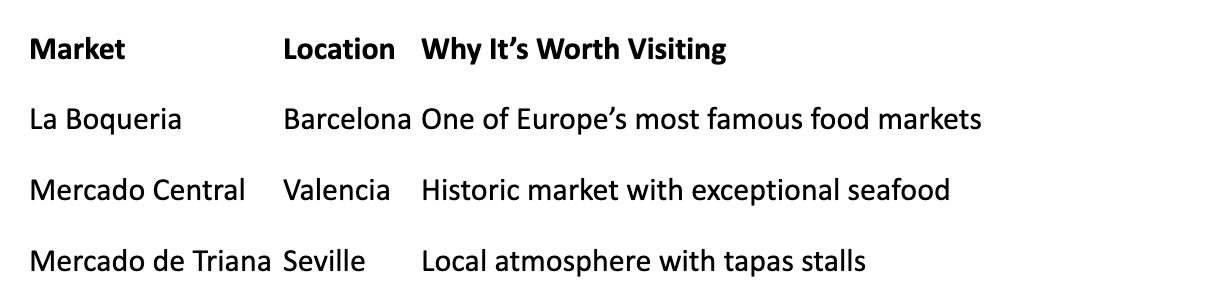
Markets also offer insight into seasonal ingredients and everyday Spanish cooking. Many small restaurants source their produce directly from these markets.
Learn Spain’s Dining Rhythm
Spain’s dining schedule differs from what many travelers expect. Restaurants follow a daily rhythm that reflects the country’s social lifestyle.
Typical meal times include:
breakfast around 8 to 10 AM, often coffee and pastry
lunch between 2 and 4 PM, usually the largest meal
dinner after 9 PM
Visitors who try to eat dinner at 6 PM often find restaurants closed or just preparing for service.
Tapas culture also varies across regions. In cities like Granada, tapas may be served automatically with drinks. In Madrid or Barcelona, diners usually order individual plates to share.
Spain’s regional cuisine traditions are deeply tied to local identity and daily life, which is why exploring food culture often reveals more about a place than visiting tourist attractions alone.
Tips and Tricks for Planning a Culinary Trip
Food-focused travel in Spain usually involves a lot of walking. Tapas hopping, exploring markets, and wandering through historic neighborhoods can easily add several miles to your day.
Comfort becomes more important than many travelers expect.
A few practical tips can make the experience smoother:
Wear comfortable sneakers for long food walks between restaurants and markets. Many travelers prefer supportive street shoes. I really like the New Balance Numeric shoes when I go on city breaks or long food exploration tours. They provide cushioning while still looking casual enough for city exploration.
Plan large lunches and lighter dinners when possible. Spanish lunches are often long and satisfying.
Avoid booking every meal in advance. Some of the best restaurants are discovered spontaneously.
Visit food markets early in the morning when vendors are busiest and produce is freshest.
Try local wines alongside regional dishes rather than ordering familiar international options.
Spain’s cities are extremely walkable, which makes culinary exploration feel natural. It is common to move from one tapas bar to another over the course of an evening. For travelers planning to explore multiple neighborhoods or regions, having an eSIM for Spain can make it easier to stay connected for maps, reservations, and navigation while moving between restaurants and markets.
Try Signature Dishes Where They Originated
Some Spanish dishes are closely tied to the places where they were created. While you can find them throughout the country, they often taste best in their home regions.
A few examples include:
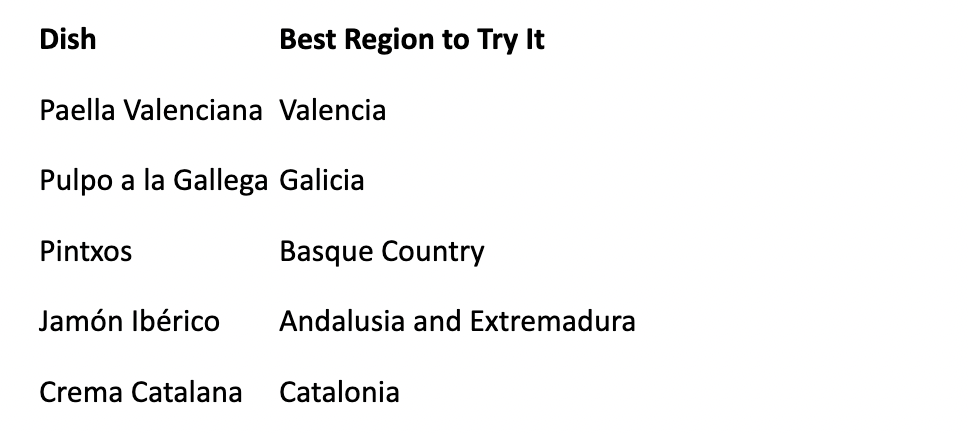
Local preparation methods, ingredients, and cooking techniques often differ from the international versions many travelers already know.
For example, authentic Valencian paella traditionally includes rabbit and green beans rather than seafood, which surprises many visitors.
Leave Room for Food Discoveries
Even the most carefully planned food itinerary should allow for spontaneity. Some of the most memorable meals happen by accident. A crowded bar down a narrow street, a bakery discovered during a morning walk, or a seafood stall inside a neighborhood market can easily become the highlight of a trip.
Spain rewards curious travelers who follow their appetite rather than rigid schedules. Exploring slowly, tasting regional specialties, and embracing the country’s relaxed dining culture often leads to the most authentic experiences.
A food-focused trip to Spain is less about checking off famous restaurants and more about immersing yourself in the everyday rituals that make Spanish cuisine so deeply rooted in local life.