
What Is Menú del Día? Spain's Fixed-Price Lunch, Explained
I have ordered a menú del día more times than I can count in the fifteen years I have lived in Spain, and it never stops being one of the best deals in European dining. Three courses, bread, a drink, and often coffee, all for a fixed (generally very fair) price. I got curious about where this thing came from, so I spent a fair number of hours in archives and government records for the latest episode of my podcast, Spain Explained.
This post is everything you could want to know about the menú del día: the practical details for ordering a menú del día, the pricing by region right now, and the history that most people do not know. If you want the full story with everything that did not fit here, the full episode of Spain Explained.
Quick Answer: A menú del día is a fixed-price, multi-course lunch served on weekdays at restaurants across Spain, typically between 1 and 4pm. It usually includes a first course, a second course, bread, a drink, and dessert or coffee, for a price agreed before you order, generally between 12 and 16 euros depending on region.
What Exactly Is a Menú del Día?
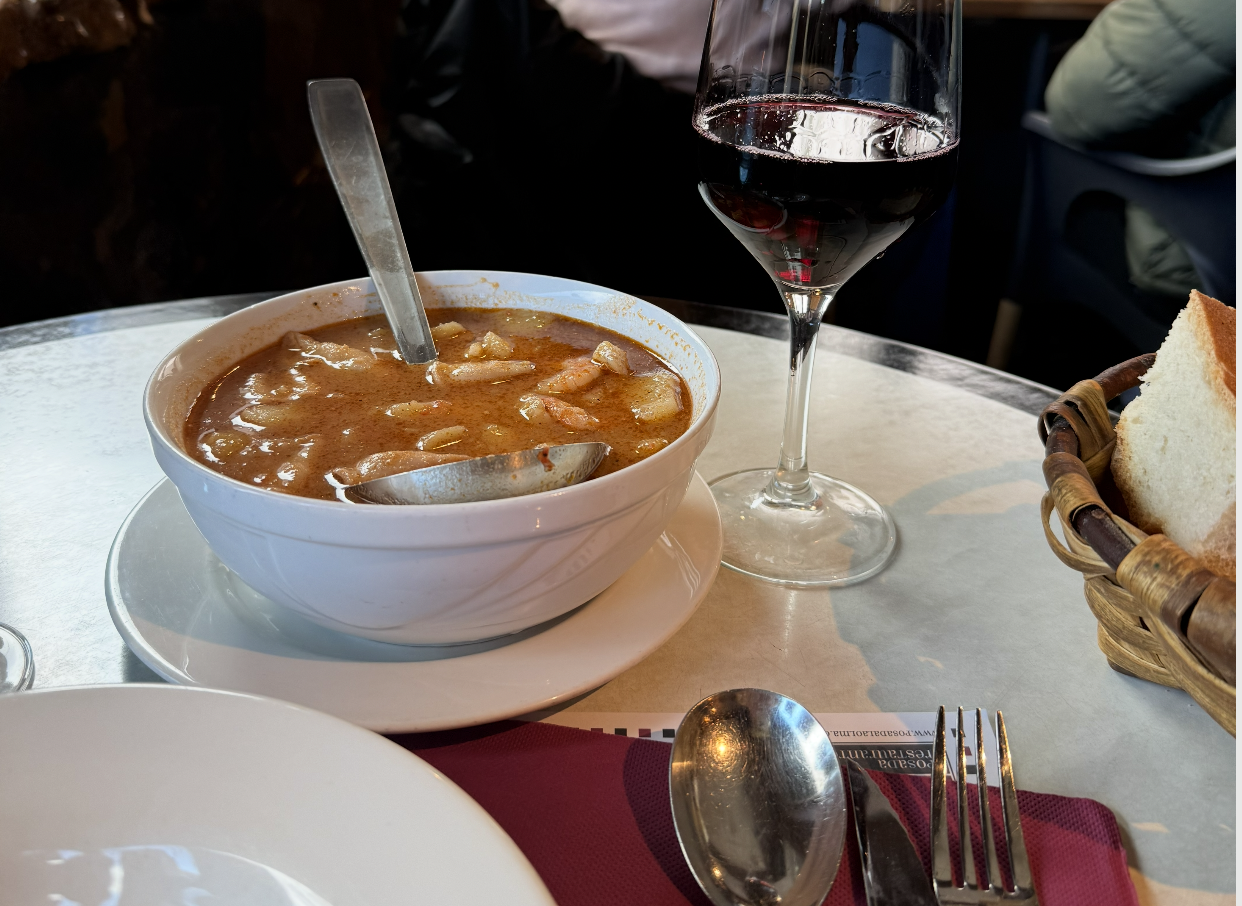
A menú del día is a fixed-price lunch offered Monday through Friday at restaurants across Spain. The format is simple: a lighter first course (soup, salad, a legume dish, pasta), a heartier second course (usually meat or fish), bread, a drink (almost always wine, beer, or water), and a dessert and/or coffee at the end. The price is agreed before you sit down, and it rarely changes based on what you order within the set options.
The format is more flexible in practice than any menu can capture. At some restaurants the day's choices are on a chalkboard by the door. At others it is a handwritten sheet on the table, or the waiter just tells you what is on offer. You will also see it called menú de la casa, and on the Camino de Santiago it often shows up as menú del peregrino, the pilgrim's menu. Same format, different name depending on where you are.
What's Included in a Menú del Día?
Every menú del día includes a first course, a second course, bread, a drink, and a dessert and/or coffee. A few practical notes worth knowing before ordering one: the posted price should state clearly whether it includes IVA, the ten percent restaurant tax, since that is not always factored in, and drinks occasionally are not included either. If you are not especially hungry, most places will let you order two first courses instead of a first and second. The menú generally cannot be split between two people, though I have seen restaurants offer a reduced-price half-menu for smaller appetites.
At its best, the menú del día is a version of home cooking rather than a restaurant's showcase dishes: lentils with chorizo, meatballs, braised pork. The cook made what was seasonal and economical that day, and everyone in the room is eating from the same list of dishes.
How Much Does a Menú del Día Cost?
According to industry data from Hostelería de España, the national average for a menú del día in 2024 was 14.20 euros, a figure that held steady into 2025 despite rising costs across the restaurant sector. Since 2016, that price has risen about 19.5 percent, which sounds significant until you compare it to general food inflation over the same period, close to 40 percent. Relative to what everything else costs, the menú del día has gotten cheaper.
Regional Price Differences
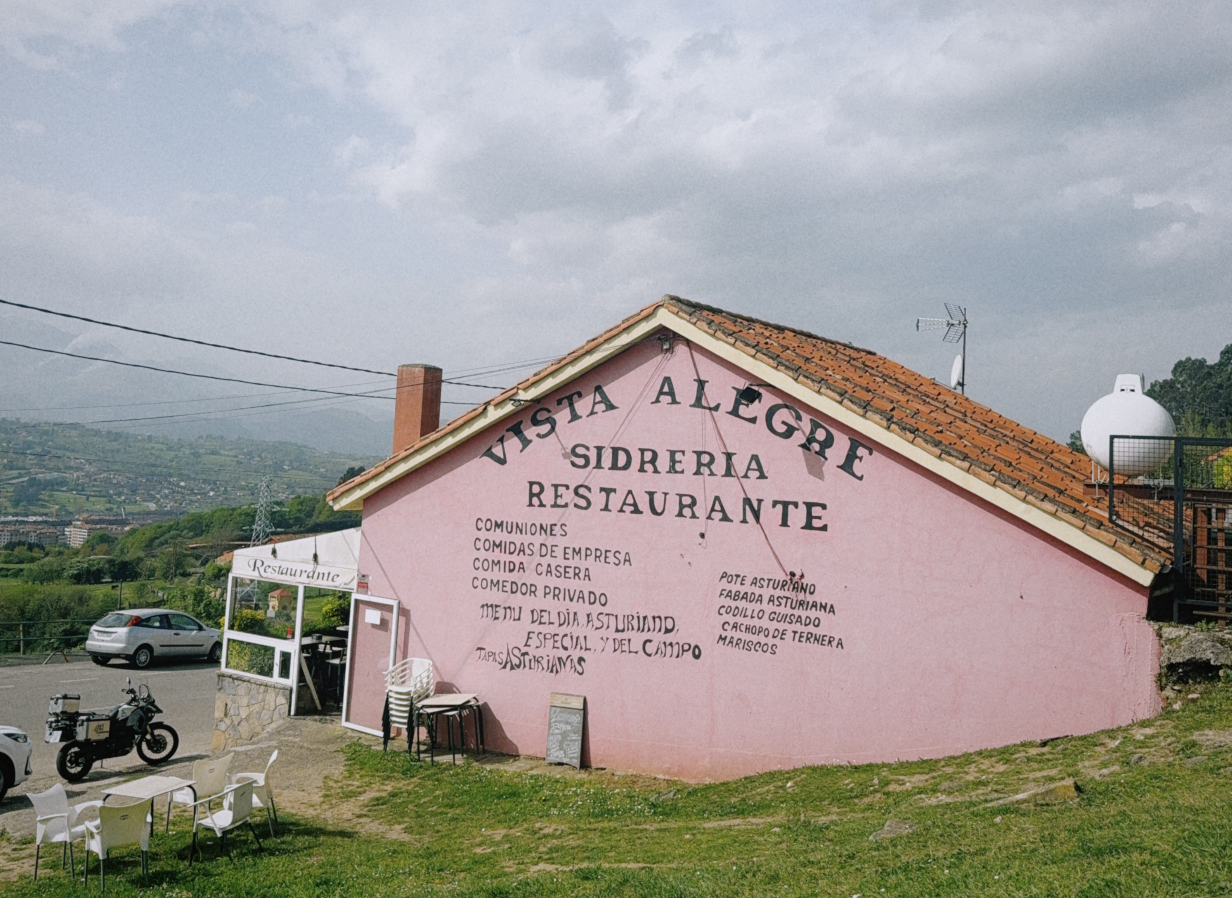
Where you are in Spain changes the price more than you might expect. The Balearic Islands average around 16 euros, the Basque Country around 15.80. The Canary Islands, at 13 euros, are consistently the cheapest, partly because of a different regional tax structure.
For travellers inspired to experience Spain's food culture for themselves, keeping an eye on last-minute holiday deals can be a practical way to visit destinations such as the Canary Islands without stretching the travel budget.
Food remains one of the most affordable ways to experience everyday Spanish culture, and visitors who are flexible with their travel dates can often combine reasonably priced dining with discounted flights and accommodation.
The menú del día in Andalucía and Murcia come in around €13.40.
A few other things affect the final price. Lower-priced menus often make you choose between dessert and coffee rather than including both. Some restaurants in busy areas add a terrace surcharge of 10 to 20 percent for outdoor seating. And a menú del día on a Saturday or Sunday, where it is offered at all, usually costs 20 to 50 percent more than the weekday price. That version is often called a menú de fin de semana, more of an occasion than a quick lunch.
What Time Is Menú del Día Served?
Menú del día is a lunch-only institution, typically served between 1 and 4pm on weekdays. It is not an evening menu, and it is not usually available on weekends, though a handful of restaurants offer weekend versions at a higher price.
Where Did the Menú del Día Come From?
This is the part of the story that changed how I think about a meal I have eaten hundreds of times. The idea of a fixed-price, multi-course midday meal in Spain goes back further than most people assume. Spanish fondas were serving something like it since the mid-1800s, and the novelist Pérez Galdós was already writing about the practice by 1900. But the menú del día as an institution, with a name and a set of rules, is a product of the 1960s.
The 1964 Tourist Decree
Spain in the late 1950s was economically isolated under Franco, and the economy was close to collapse. In 1959, a new cabinet of technocrats pushed through a sweeping liberalization plan. The country opened up, foreign investment arrived, and tourism grew fast: international visitor numbers went from 2.9 million in 1959 to 11.1 million by 1965. The slogan of the moment, used in an actual government tourism campaign, was "Spain is different."
In 1964, against that backdrop, the Ministry of Information and Tourism issued a decree requiring every restaurant in Spain to offer a "menú turístico" at a fixed, government-regulated price. A 1965 order tightened the rules, requiring the menu to be written out and posted in Spanish, English, and French. The format was specified in detail: a starter of hors d'oeuvres, soup, or cream; a second course of fish, meat, or eggs with a side; dessert of fruit, sweets, or cheese; plus 80 grams of bread and a third of a bottle of wine. Prices were set by restaurant category, from 50 pesetas at the most basic establishments up to 250 at luxury restaurants, and the menu had to feature dishes considered typically Spanish: paella, cocido, tortilla española, and fried fish among them.
How It Became a Local Institution Instead
The rule was not an instant success. Some restaurants displayed the required board and then quietly steered customers toward the more expensive à la carte menu instead, calling the fixed option inferior. Others cut corners with reheated food or cheaper ingredients. By the early 1970s, restaurants had effectively been running two things side by side: the mandatory "menú turístico" and their own voluntary fixed-price lunch, which regular customers already called the menú del día. In 1970, the regulation dropped the official "turístico" name and adopted menú del día instead, aimed now at local working clientele rather than visitors.
That shift lined up with something bigger happening in Spain at the time. The country was urbanizing quickly, and people were moving from villages into cities for factory and office work, no longer able to return home for the midday meal. The fixed-price lunch, built to sell Spain to the outside world, ended up filling a very domestic need instead.
By 1981, price controls were lifted and top-tier restaurants were exempted from the requirement. The legal obligation for the rest of Spain fell away in 2010, when an EU services directive forced a revision of the country's tourism laws and handed authority over to individual autonomous communities. Most dropped the mandatory version. But! And this is kind of cool, Aragón, Asturias, and Navarra still require lower-category restaurants to offer one.
What's the Difference Between Menú del Día and Plato Combinado?
A plato combinado is a different, simpler thing: one plate, usually something like a fried egg, chips, and a croquette or two, more of a bar food format than a proper multi-course meal. It exists alongside the menú del día in daily Spanish eating. The menú del día is a full seated meal; the plato combinado is closer to a quick bar lunch.
Is the Menú del Día Still Around Today?
Around four million menús del día are served across Spain every single weekday. The institution remains central to how the country eats midday.
Quality Pressures on the Tradition
The format is under pressure. As restaurants compete on price, cutting costs to stay competitive, quality can decline. Food historian José Berasaluce has spoken about how platos de cuchara, the spoon-food dishes like stews and legumes that once defined the menú del día, are being replaced by faster, cheaper, fried options. He has argued for a regulated minimum price, not to cap what restaurants can charge, but to protect a floor that lets kitchens sustain themselves while still cooking food worth eating.
At the same time, more ambitious restaurants are using the format differently, offering their own elevated menú del día at higher price points as a way to make serious cooking accessible at midday. In the Basque Country, where I live, it is not unusual to find restaurants that would cost real money in the evening offering a full, thoughtful menú del día at lunch for 25 to 50 euros. Same idea, a very different category of cooking.
A Meal Built for OUTSIDERS, Claimed by Everyone
What I find most interesting about the menú del día, after all this research, is the reversal at the center of it. A regulation designed to present Spain to the outside world became, almost by accident, the meal that fed the country's own workers through decades of economic change. It carries the weight of a dictatorship's economic strategy, a genuine daily ritual, and a livelihood question for restaurant kitchens, all at once, in a plate of lentils and a glass of house wine that costs about fourteen euros.
I get into all of this in more depth, plus a few details I could not fit into this post, in the latest episode of Spain Explained. You can listen right here:
This blog started because I was obsessed with Spain. I still am. You can catch more about my life and Spain over at The Spain Dispatch, my newsletter where I share what I'm eating, where I'm traveling, and more random stuff! It's free, some come join a few thousand of us! If you liked this post, you'll probably love it.
Do you have any questions about the menú del día that I didn’t cover?