Basque Cheesecake : THE Recipe and All Your Questions, Answered
I live a short walk from the bar where Basque cheesecake was invented. I have eaten it more times than maybe anyone? I put the recipe in my 2018 cookbook, Basque Country, back when most Americans had never heard of it, and I have spent the years since watching it turn into one of the most-baked desserts on the internet. My version of the recipe now lives on New York Times Cooking. I have also sat across a table from Santi Rivera, the man who invented this global sensation of a dessert, and asked him every question I could think of for Condé Nast Traveller.
So if you read one article about Basque cheesecake, tbh it should probably be this one. I’m including my recipe and a video of me making it, too, just because I love y’all! Everything below comes from living here, eating it here, and talking to the people who make it. (If that sounds interesting to you, I really recommend you checking out both my newsletter and my podcast!)
What is Basque cheesecake?
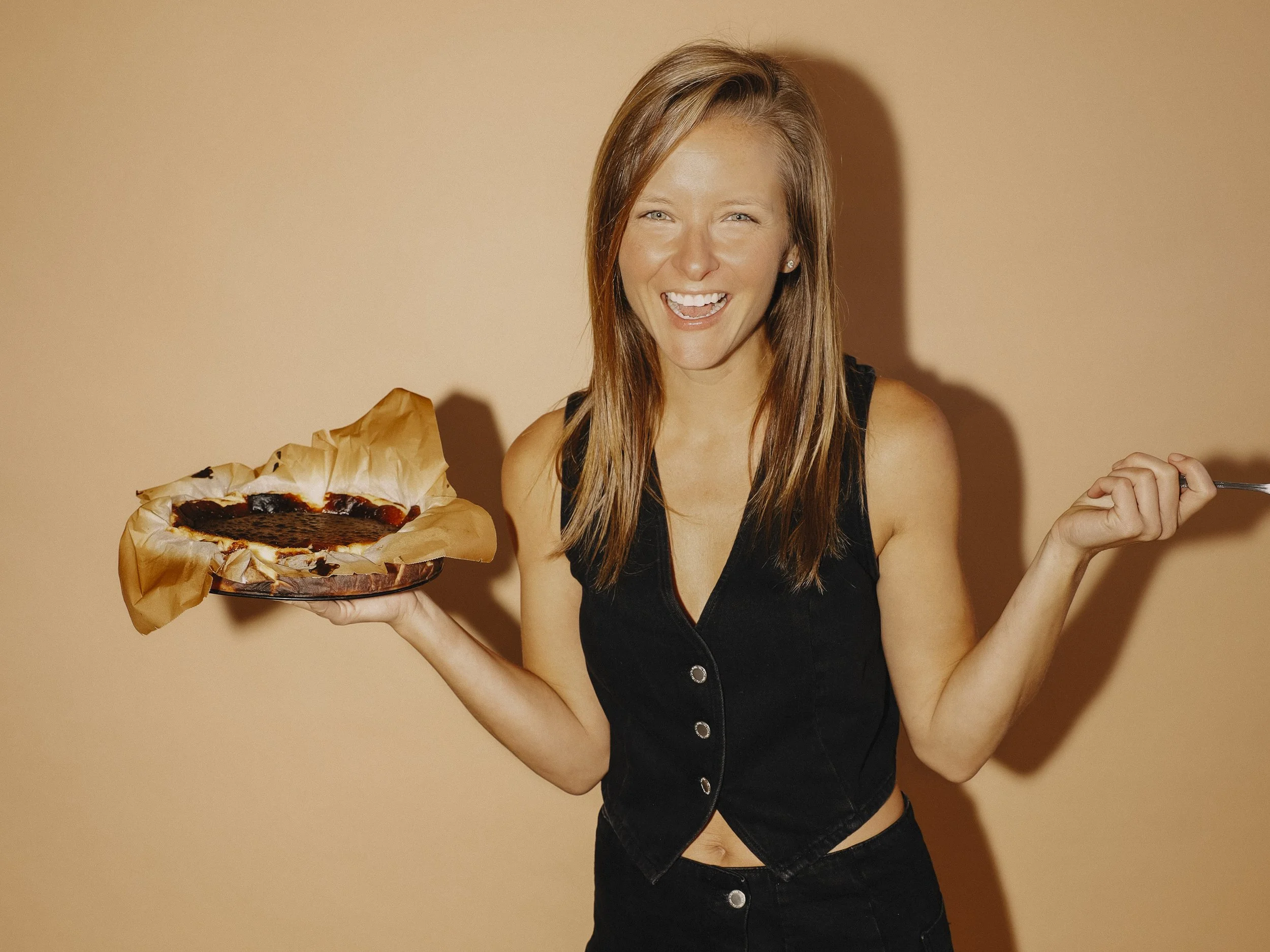
Basque cheesecake is a crustless baked cheesecake with a deeply caramelized, almost-scorched top and a loose, custardy center. It is made from five ingredients: cream cheese, sugar, eggs, heavy cream, and a small amount of flour. No water bath, no cookie base, no sour cream, no vanilla, no lemon zest, no fuss.
In Spain it goes by tarta de queso de La Viña, or just tarta de queso. In Basque it is gazta tarta. English speakers tend to call it burnt Basque cheesecake, a name nobody uses in San Sebastián.
Btw, if you’re looking for places to try in San Sebastián, you can scroll to the bottom of the post for my other favorite!
What does Basque cheesecake taste like?
Imagine the love child of a New York cheesecake and a flan, then add a note of burnt sugar across the top like the lid of a crème brûlée.
Three things are happening at once. The caramelized surface is bittersweet and toasty. The layer just under it, where the batter rose and set against the hot pan, is mousse-like. The center is barely-set custard, dense with cream, tangy from the cheese, and not very sweet.
It is rich. Slices should be small.
Who invented Basque cheesecake?
Santiago "Santi" Rivera, at a small pintxo bar called La Viña on Calle 31 de Agosto in San Sebastián's old town. The year was 1988.
La Viña itself is older. Santi's father Eladio and his uncle Antonio opened it in 1959, and ran it with their wives, Carmen and Conchi, the way family bars were run then: if there were customers, you served them, whatever the hour. Santi came into the business in the late 1980s. He had trained as an electrician, nobody was hiring, and he figured that if he was ever going to take over the family bar he had better learn to cook.
There were no cooking schools to speak of. He taught himself from books and from Basque chefs on television, Karlos Arguiñano and Pedro Subijana among them. On Mondays, when the bar was closed, he came in alone and tested things: chocolate mousse, mango creams, a black-and-white chocolate cake, pintxos. One of those Monday experiments was a cheesecake, built by comparing recipes from his books and combining the parts he liked.
When he told me the story, the detail that stuck was his father's reaction. Eladio tasted it and told his son never to stop making that one. I was commissioned by Conde Nast to write all about Basque cheesecake if you’d like to read more.
Is Basque cheesecake actually traditional Basque food?
No, although as time goes by, traditions are formed and within a hundred years, maybe the answer will be yes.
When it all comes down to it though, Basques are not a dessert culture. Meals here tend to end with cheese and quince paste, a piece of fruit, a yogurt, or nothing at all. The true traditional Basque sweets are gâteau basque, pantxineta, goxua, torrijas. A cheesecake invented in 1988 is a recent arrival by those standards. I wrote a piece about inventing tradition in the Basque dessert culture here, for you nerds: https://www.travelcookeat.com/imported-20100608191054/2023/2/8/falsifying-tradition-the-story-of-sagargala
What makes it Basque is where it was made and how it thinks. It is simple, built on excellent dairy, unfussy to the point of being rustic, and designed to be eaten standing up at a bar with a glass of something. That is very Basque. The recipe is just young.
Cheesecake in general is ancient, and the region had other famous ones before this one traveled. The cheesecake at Zuberoa in Oiartzun, developed by Hilario Arbelaitz, is the one older Donostiarras will bring up, and it took a different route entirely, using blue cheese.
Why is Basque cheesecake burnt?
Because the oven is hot, around 400°F (200°C), and the cake stays in long enough for the top to start to caramelize. The original version, though, does not have nearly as dark a surface as people like Molly Baz would lead you to believe. Anyway the science: milk sugars and proteins caramelizing, and it delivers the bitter, toasty edge that keeps the rest of the cake from reading as too sweet. The same reaction gives you the top of a crème brûlée or the crust on good bread.
There is no crust to protect the edges, which is why the sides go dark too.
Why is it called burnt if La Viña doesn't burn it?
The emphasis and the concept here is Santi’s: they do not burn the cheesecake at La Viña. Burning it makes it bitter, and bitterness is a flaw. He is far too gracious to tell anyone they are doing it wrong, and he believes every baker should make it the way they like it. But the English name drifted away from what the original bar is going for.
"Burnt Basque cheesecake" is a name the internet gave it, mostly because the photographs looked shocking next to a pale New York cheesecake. In Spanish nobody says quemada. They say tarta de queso, and they mean the one from La Viña.
Deeply browned, yes. Blackened, no. If yours tastes acrid rather than caramelized, you went too far.
Btw, if you’re liking this deep dive, you might like my newsletter!
Why doesn't Basque cheesecake have a crust?
Because Santi took the crust out on purpose.
He had been working on a chocolate mousse, and what he loved about it was that it dissolved. Nothing to chew. A cookie base, he decided, interrupts that: your teeth get involved, the creamy part stops melting, and the flavor arrives late. He wanted the cheesecake to go from fork to palate to brain with nothing in the way.
What replaces the crust is the cake itself. The batter touching the hot pan sets and browns faster than the middle, so you get a thin caramelized shell that fades into custard with no hard line between the two.
Why is it served in two small slices?
When you eat in small pieces, Santi told me, you taste more. Two modest slices give you more flavor than one big wedge, and you walk away having eaten less. Anyone who has stood at La Viña's bar with a glass of sherry and two little wedges knows that’s more than enough!
How is Basque cheesecake different from New York cheesecake?
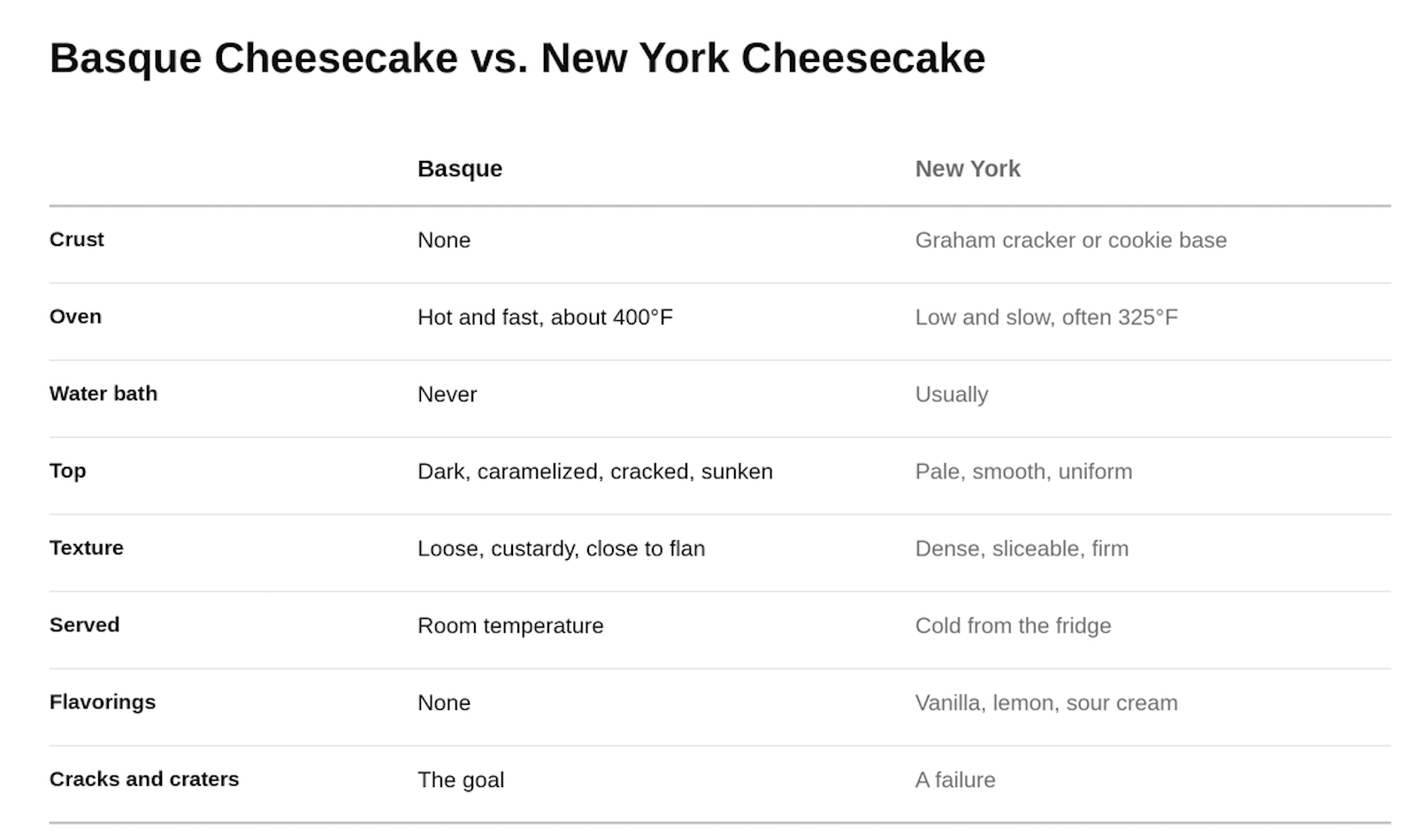
I love the unfussiness of the Basque version. They are the “same” dessert, judging from the name, but they’re NOT AT ALL, really.
I made this table for you to see the differences in a glance:
Is San Sebastián cheesecake the same as Basque cheesecake?
Yes. Same cake, different name. It gets called San Sebastián cheesecake in a lot of places, particularly Turkey and across Asia, where the style exploded years before it hit the US. Burnt Basque cheesecake, Basque burnt cheesecake, tarta de queso La Viña, gazta tarta, and San Sebastián cheesecake all point to the same thing. It is not the same as Japanese cotton cheesecake, which is a different animal entirely: whipped egg whites, a water bath, a pale springy crumb like a chiffon cake.
How did Basque cheesecake get famous?
Slowly, then all at once, and the first push had nothing to do with the internet.
Sometime after Santi took over the kitchen, a chef visiting from the Ritz in Paris told him the cake should never go in the refrigerator, because cold makes it dense. Santi thought about it, and moved the cheesecakes out of the fridge and onto the bar next to the coffee machine. Suddenly people could see them, stacked in their springform pans alongside the pintxos and the wine. That is when it started to sell. Two at a time, then four, then the wall of cakes you see today.
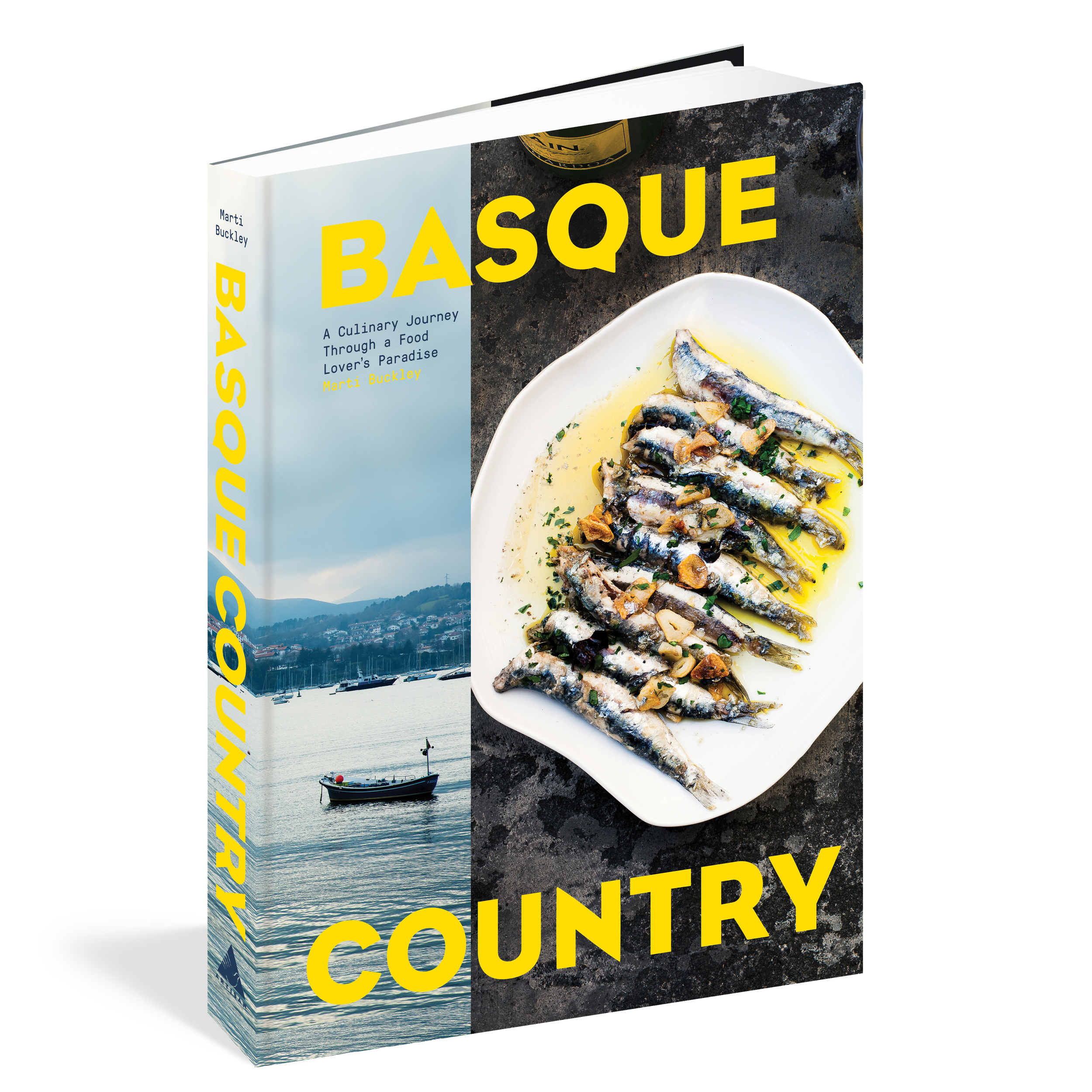
The rest came later: Basque Country in 2018, Nigella Lawson's version, the Instagram era, The New York Times naming it a trend of 2021, and eventually the Cheesecake Factory putting a Basque-style cheesecake on the menu. A dessert from a bar with a dozen barstools, arrives to WORLDWIDE FAME!
Maybe the true peak of my career is being the subject of a Reddit thread , and of course it’s about cheesecake.
Santi's own read on the fame is generous. He points to the bar being open to anyone, to San Sebastián's pull as a food city, to the fact that you can walk in and try one slice without committing to a whole meal. He shared the recipe early on precisely so people would make it themselves. Watching the world play with it, he says, pays him back in a way that selling slices never could. I love that man. Love the Basques.
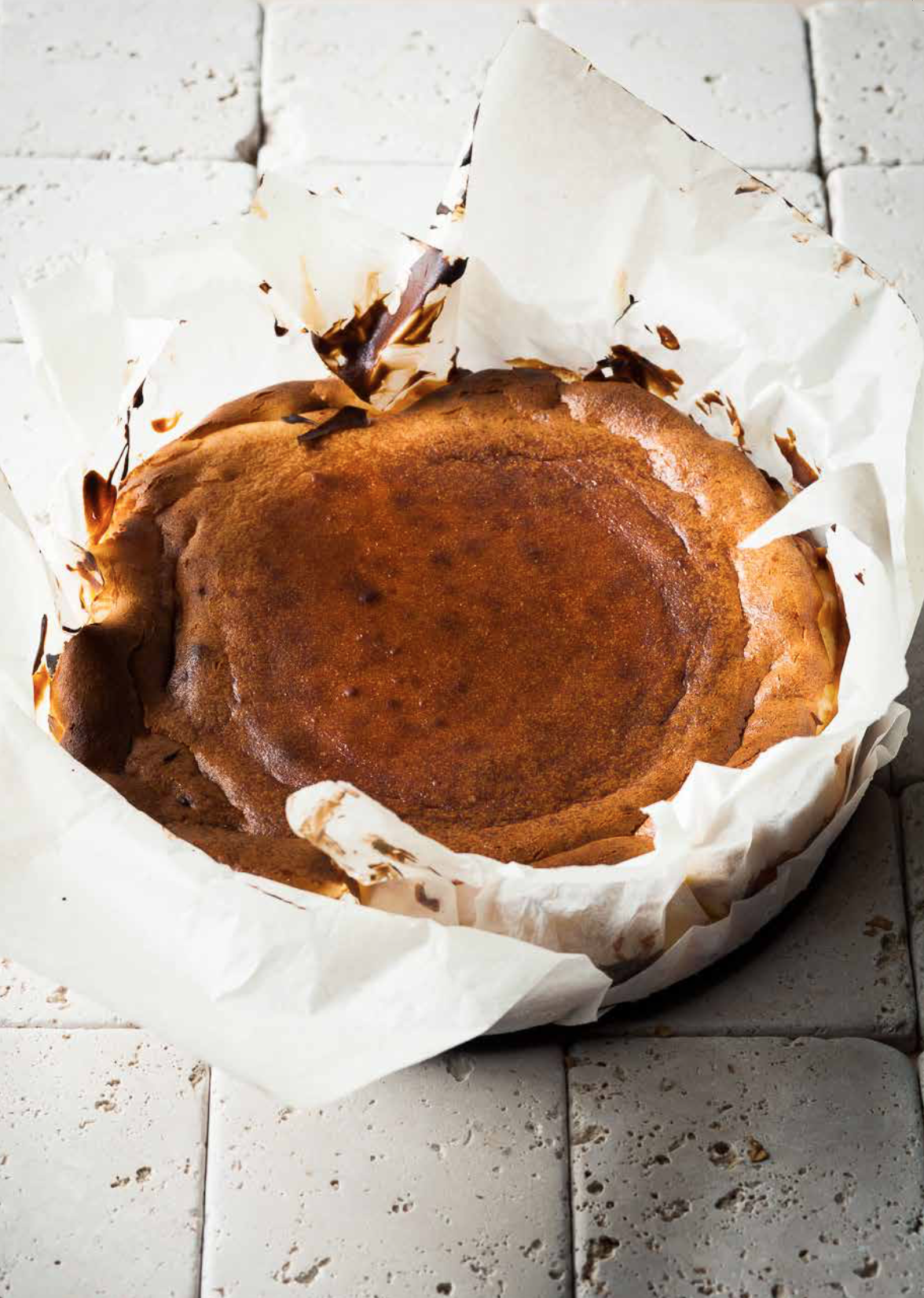
photo from Basque Country, by Simon Bajada
Basque Cheesecake Recipe
This is the recipe as it appears in Basque Country and The Book of Pintxos, and the one that ran on NYT Cooking. Five ingredients, one bowl, one pan. We’ve come a long way since I first published the cheesecake recipe on my website!
Ingredients
1¾ cups (350 g) sugar
2¼ pounds (1 kg) cream cheese, at room temperature
¼ teaspoon kosher salt
5 large eggs
2 cups (480 ml) heavy cream
¼ cup (30 g) all-purpose flour
Instructions
Heat the oven to 400°F (200°C) with a rack in the center. Let it come fully up to temperature before the cake goes in.
Line the pan. Grease a 10-inch (25 cm) springform pan and line it with parchment, letting 2 to 3 inches (5 to 7.5 cm) hang over the rim. You can cut a circle for the base and a band for the sides, but I press one big sheet in and let it pleat where it wants to. The creases are part of the look.
Cream the sugar and cream cheese until completely smooth, using a stand mixer with the paddle or a handheld mixer. A wooden spoon and five minutes of effort also works. Add the salt and mix.
Add the eggs one at a time, stirring until each disappears before adding the next. Stop as soon as it is smooth. Beating air into the batter is how you get a cake that puffs too dramatically and collapses into a crater.
Whisk in the cream.
Sift in the flour and fold it through gently.
Pour and bake until the top is browning but the center is still dangerously jiggly. Ovens vary enormously, so start watching at 30 minutes. The center should still wobble like a custard when you nudge the pan. It will probably be a 40-50 minute cook time.
Cool completely at room temperature, two to three hours. Release the springform, peel the parchment away gently, and serve at room temperature with a glass of sherry.
On egin! That is Basque for bon appétit.
Watch me make it
If you’re more a visual learner, I made a really simple video of myself making the cheesecake, here:
What cream cheese should I use for Basque cheesecake?
Whatever good full-fat block cream cheese you can get. La Viña started with a quark-style cheese in the late eighties, and Santi spent afternoons driving around to shops and supermarkets tasting his way through options before settling on a cream cheese. He has switched brands over the years, once because a supplier offered a better price, but he says it got even better. His position on brand loyalty is relaxed: Philadelphia, San Millán, whatever is good where you live.
Two rules that do matter. Use full fat, never the reduced-fat or whipped tub versions, which carry more water. And use block, not spreadable, for the same reason.
One myth to kill: there is no funky local Basque cheese hiding in the La Viña recipe, and there is definitely no brie. Other bars in the region make cheesecakes with blue cheese or local sheep's milk cheese, and those are delicious and different things.
Do the ingredients need to be at room temperature?
Yes. Cold cream cheese will not smooth out, and no amount of extra beating fixes it; it just adds air. Lumps in the raw batter become lumps in the finished cake.
Pull the cream cheese and eggs out at least an hour ahead, two in a cold kitchen. If you forget, cut the cream cheese into cubes and spread them on a plate, which speeds things up considerably. A cold batter also browns more slowly.
Do I need a springform pan?
Practically, yes. You need to lift the sides away from a cake that has no structural integrity of its own. A regular cake pan means inverting it, and inverting this cake means destroying the top, which is the entire point.
If you have no springform, the workaround is a deep cake pan lined so generously with parchment that you can lift the whole cake straight out by the flaps. Grease between overlapping sheets so they lie flat. Do not use a loose-bottom tart pan; the batter is thin enough to run out.
How do I know when Basque cheesecake is done?
Three signals, in this order.
Color. The surface should be browning.
Wobble. Nudge the pan. The middle should move like loose custard, in a wave rather than a ripple. You should be kinda scared to take it out of the oven. It keeps cooking as it cools.
Temperature, if you want certainty. This is the most foolproof method but also kinda pro. An instant-read thermometer in the center should say somewhere around 150 to 155°F (65 to 68°C). Past 165°F the eggs tighten, squeeze out water, and the texture turns grainy. If you are nervous, this is the most reliable tool you have.
Never judge doneness by whether it looks set. It never looks set.
Why didn't my Basque cheesecake brown?
Five likely culprits, roughly in order of how often they are the problem.
Your parchment collar is too tall. This is the sneaky one. Paper standing much more than 2 inches above the rim acts as a shield and blocks the heat from hitting the surface. Trim it back.
Your oven runs cool.
You did not preheat long enough. The cake needs the oven at full temperature from minute one.
Your batter went in cold. See the room temperature section above.
You are baking on a low rack. Center rack, or slightly above center if your oven has weak top heat.
The rescue: raise the heat to 450°F for the last five minutes, or run the broiler for one or two minutes with your eyes on it the entire time.
Why is my Basque cheesecake grainy or curdled?
You overbaked it. Once the eggs pass roughly 165°F, the proteins tighten and wring the moisture out of the emulsion, and the smooth custard turns porous and slightly scrambled, often sitting in a puddle of released liquid.
There is no fixing it after the fact. Next time, pull it earlier, check the internal temperature, and trust the wobble. Baking at too high a temperature for too long causes the same thing, so if your oven runs hot you may need to shave five or ten minutes off.
Why is the middle of my Basque cheesecake runny?
The opposite problem. It came out too early, or your oven runs cool and the top browned before the inside caught up.
Bear in mind that "runny" the day it is baked can become "perfect" a few hours later, since the cake sets as it cools and people cut it too soon. Give it a full two to three hours. If it is still soup after that, it needed more time in the oven.
If your top browns long before the middle sets, move the cake to a lower rack and tent it loosely with foil for the last stretch.
Why did my Basque cheesecake sink in the middle?
Because it is supposed to. The cake puffs up like a soufflé in the oven, then collapses as the air escapes and the custard settles. The crater is the signature.
If yours sank dramatically, you probably beat air into the batter. Mix only until each addition disappears.
Why did my Basque cheesecake crack?
Also perfectly fine. Cracks across the top are standard and considered attractive here. If you are chasing a smooth surface you have picked the wrong cake.
Why is liquid seeping out of my cheesecake?
A little weeping between the cake and the parchment is normal, especially with a high-cream recipe like this one. Tilt the plate and blot it with a paper towel, or slide the cake onto a fresh sheet before serving.
A lot of liquid, paired with a grainy texture, means overbaking. A lot of liquid with a smooth texture usually means low-fat or whipped cream cheese.
How long should Basque cheesecake cool?
Two to three hours at room temperature, minimum, and do not rush it. Straight out of the oven the cake is hot cream with ambitions. It has no structure at all until the fats set.
Leave it in the pan for the whole cooling period. Release the sides only when you are ready to serve.
How do I cut Basque cheesecake cleanly?
Run a long knife under hot water, wipe it dry, and cut. Repeat between every slice. Cold cheesecake cuts more neatly than room-temperature cheesecake, which is the one honest argument for chilling it, and it is not enough of an argument for me.
Serve small. Two little slices per person, the way La Viña does it.
How do I adapt the recipe for a different pan size?
This recipe is built for a 10-inch (25 cm) springform. Scale by the area of the pan, not the diameter.
Round the egg count to whole eggs and adjust the cream slightly to compensate. For a 9-inch, four eggs works well. For a 6-inch, two.
Smaller pans brown before they set, so expect to bump the heat at the end or use the broiler. Check early. Deeper pans need longer than shallow ones of the same diameter.
Can I halve the Basque cheesecake recipe?
Yes, easily. Half the recipe fits an 8-inch springform with a little room to spare, and readers have had good results dividing it among small pans and ramekins. Individual ramekins bake in roughly 20 to 25 minutes, so start checking at 18.
Can I make Basque cheesecake ahead of time?
Yes. Bake it the morning of, or the day before, and leave it covered at room temperature. Many people think it is better on day two, once the caramelized flavor has had time to move down into the custard.
What you should not do is bake it, refrigerate it, and serve it cold. See below.
Should Basque cheesecake be refrigerated?
No, if you can help it. Cold turns it dense and mutes the flavor, which is exactly what that chef from the Ritz told Santi decades ago.
La Viña's own rule is that the cake is at its best within 36 hours of coming out of the oven, and that stretching its shelf life by freezing or vacuum packing would kill the thing that makes it good. It is one of the reasons they have never sold it anywhere but the bar.
If you must refrigerate leftovers, cover them well and pull them out at least an hour before serving so they come fully back to room temperature. The difference is not subtle.
How long does Basque cheesecake keep?
Covered at room temperature, one day comfortably, two at a push in a cool kitchen. In the refrigerator, three to four days, with the texture trade-off above.
Is Basque cheesecake gluten free?
Nearly. A cup-for-cup gluten-free blend works at the same quantity.
Can I add other flavors to Basque cheesecake?
Santi's own position is that everyone should play with it, and he floats blue cheese as an example, which tells you how relaxed he is about the whole thing. I personally am a purist and think once you start adding stuff, you lose the spirit of it all.
Can I make Basque cheesecake dairy free?
No.
Can I make the batter in a blender?
You can, and plenty of recipes tell you to. I do not, though. Blenders whip a lot of air in, and air is what gives you the exaggerated puff and collapse. A paddle attachment on low, or a bowl and a wooden spoon, gives a denser and better cake.
What do you serve with Basque cheesecake?
At La Viña, a glass of sweet, dark brown sherry, and that is the pairing I default to. Pedro Ximénez if you want sweet against sweet (that’s what’s encouraged at the bar), oloroso or amontillado if you want the nuttiness to play against the caramelized top.
Where to eat Basque cheesecake in San Sebastián
Ok, so the spot is La Viña, Calle 31 de Agosto 3, in the old town. Go outside of peak hours if you want to stand anywhere near the bar. Order two small slices and a glass of sherry, and look up at the shelves of cheesecakes waiting in their pans, coming down steadily all day.
Santi is close to retiring, and the bar has built a bakery behind the church nearby to give the kitchen more room. The cakes still come to La Viña to be sold. They have no plans to sell the cheesecake anywhere else, which I find admirable in a world where the obvious move is to franchise.
My other favorite, or maybe even my favorite, is at Bertakoteka. Amazing texture, slightly more savory than La Viña.
Beware the imitators and stupid shops that have popped up everywhere!
The last word
Santi’s story is a story of generosity. He gave the recipe away on purpose, and he has watched the world return it to him in a thousand versions.
I hope you enjoy.
And lord knows, if I left out anything , let me know in the comments!
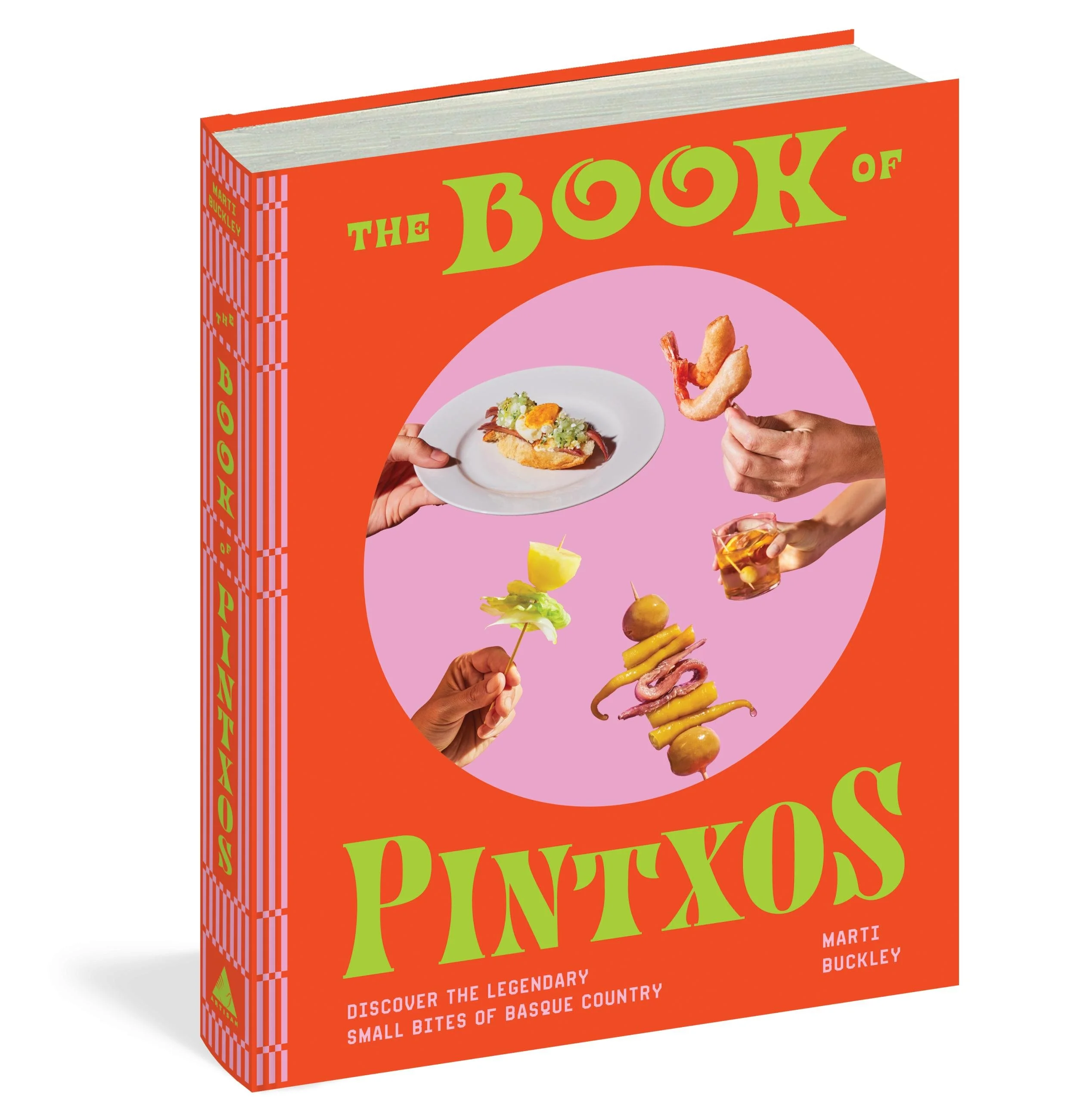
If you bake it, tag me on Instagram. For more on the food culture that produced this cake, my books Basque Country and The Book of Pintxos go a lot deeper.
I write all about everything Basque Country and Spain on my newsletter, down here…come join me!
And subscribe to my podcast, where every single episode I get into ONE thing about Spain and describe it what I hope you think is a humorous yet rigorous way!