What Is Cava Wine? Everything to Know About Spanish Sparkling Wine
Oh my, welcome to a post I am so excited to make.
Cava is Spain’s sparkling wine and one of the great bargains in the wine world. It’s glorious, it’s delicious, there’s so much variety and….it’s made the same way as Champagne, with a second fermentation inside the bottle. Cava is Spain’s most exported DO wine: 190 million bottles sold last year, more than half of them shipped to over 130 countries.
I’ve lived in San Sebastián since 2010, and I once got on a plane for a 24 hour trip to Alella just to drink it. Cava is the wine that taught me to stop saving bubbles for special occasions.
I dedicated a full episode of my podcast, Spain Explained, to cava. This guide answers the questions people ask most about it: what cava wine is, how it compares to Champagne and Prosecco, whether it works in mimosas, how sweet it is, where it’s made, which bottles to buy, etc etc. Further down you’ll find the grapes, the story behind the name, and why some of Spain’s best producers left the Cava DO to form Corpinnat.
The Bottom Line for those mistakenly wanting the TLDR
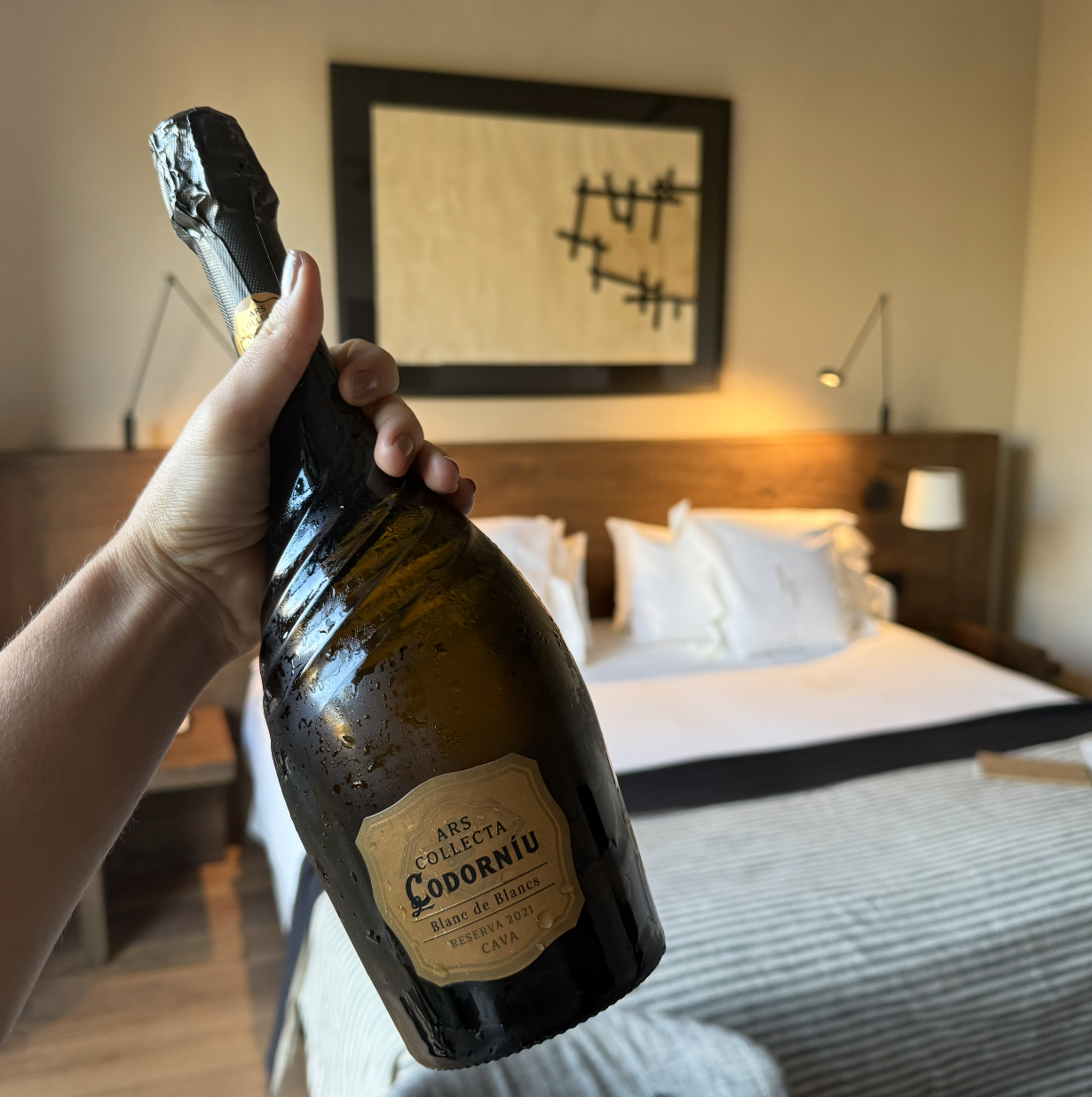
Cava is Spanish sparkling wine made by the traditional method, with a second fermentation in the bottle and at least nine months of aging. It can be made in ten Spanish provinces, but about 95 percent comes from Catalunya, mostly the Penedès. The classic grapes are macabeo, xarel·lo and parellada. Brut Nature is the driest style. Reserva means at least 18 months of aging and Gran Reserva at least 30. A very good Gran Reserva costs 20 to 30 euros in Spain.
What is cava wine?
Cava is a Spanish sparkling wine made by the traditional method and protected by its own Denominación de Origen (DO). It’s white or rosé, it spends at least nine months aging in the bottle, and most of it comes from the Penedès, about 45 km west of Barcelona. The first bottles were made in Sant Sadurní d’Anoia in 1872.
The Cava DO works differently from almost every other DO in Spain. Instead of starting with a map, the Cava DO starts with a method, the método tradicional. Of course, there is a list of the places allowed to make it, but it’s spread all across Spain. That’s why cava can be made in La Rioja, Aragón, Extremadura and Valencia as well as Catalunya. It’s also the root of the fight that has split the Penedès for more than a decade.
You can listen to all of this here if that’s more your jam.
How cava gets its bubbles
Winemakers make a still, dry, fairly acidic white wine, the base wine.
Each bottle gets a little sugar and yeast, the licor de tiraje, and is capped.
The yeast eats the sugar and produces alcohol and carbon dioxide. With the bottle sealed, the gas dissolves into the wine.
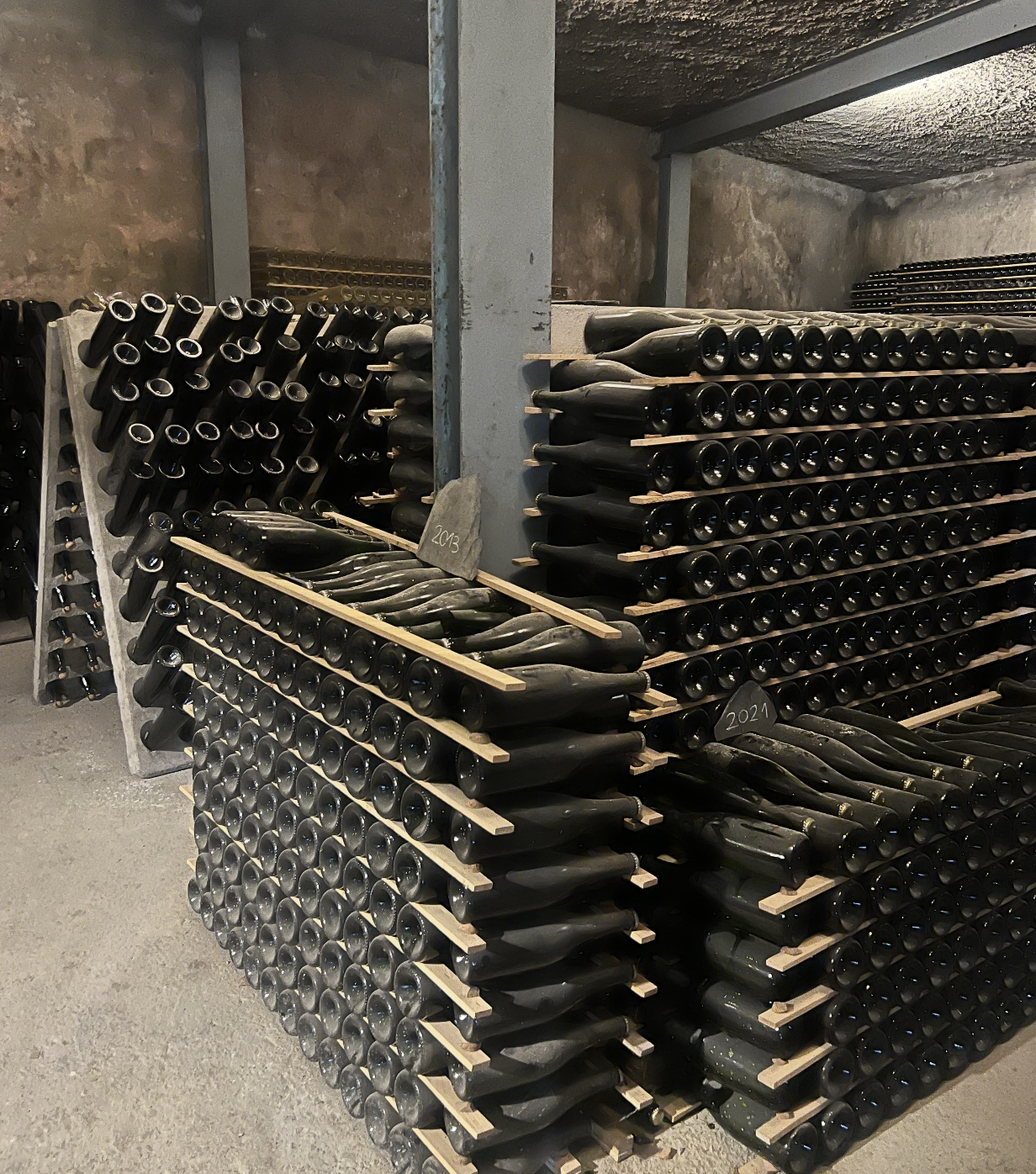
The bottle rests on its side in a cool cellar for months or years. The dead yeast cells, the lees, slowly break down and give the wine bready, toasty, nutty flavors.
The bottles are tilted neck-down and turned gradually so the sediment slides into the neck. This is the removido, done by hand on wooden racks called pupitres or by machine in large cages.
The neck is frozen, the cap comes off, and the frozen plug of sediment shoots out. This is the degüelle.
The bottle is topped up with wine and, depending on the style, some sugar, the licor de expedición, and corked.
What is the difference between Champagne and sparkling wine?
Ok, this is the big question. Champagne is sparkling wine from the Champagne region of France, and only wine from there can use the name. That’s why Spanish bottles stopped saying xampany or champán decades ago, although El Xampanyet, a bar in Barcelona’s Born, still carries the old word on its sign. Cava is Spain’s traditional-method sparkling wine: the same method as Champagne, in a different place, from different grapes.
How cava and Champagne compare:
Grapes: Champagne uses Chardonnay, Pinot Noir and Pinot Meunier. Cava is built on macabeo, xarel·lo and parellada.
Climate: Champagne grows at the cold northern edge of where grapes ripen, on chalk, which gives it a steely, high-acid tension. Cava grows in Mediterranean sun, which gives it fruit and softness.
Aging: Champagne requires at least 15 months in the bottle, 12 of them on the lees, and three years for a vintage wine. Cava’s minimum is nine months, and Reserva, at 18 months, matches or beats Champagne’s non-vintage minimum.
Price in Spain: Good non-vintage Champagne starts around 35 or 40 euros. A very good Gran Reserva cava costs 20 to 30 euros, a Paraje Calificado 40 to 60, and the top long-aged cavas 100 euros or more.
At the entry level, cava competes on price. At the top, the best long-aged bottles belong in the same conversation as top Champagne.
Is cava good for mimosas and sparkling wine cocktails?
Yes. A young Brut cava is an ideal sparkling wine for mimosas and cocktails. It’s dry and bottle-fermented, and nine out of ten bottles sold in Spain cost under ten euros. Look for a Cava de Guarda, the nine-month category. Keep Reserva and Gran Reserva bottles for drinking on their own, where you can taste what the extra years in the cellar did.
Cava vs Prosecco: what’s the difference?
Now THIS is a difference you can taste. And it’s not that confusing: Cava gets its second fermentation in the bottle, and Prosecco gets it in a tank. That means the yeast doesn’t have as much an effect on the flavor, and so Prosecco is henceforth more grape-like, more fruity.
Prosecco is Italian, from the Veneto and Friuli Venezia Giulia, and made from the Glera grape. Almost all of it is made by the tank method, also called Charmat or Metodo Martinotti: the second fermentation happens in a large pressurized steel tank in a matter of weeks, then the wine is filtered and bottled under pressure.
Because Prosecco spends so little time with its yeast, it tastes of pear, peach and fresh grapes and almost never of bread. Cava rests on its yeast for at least nine months and often for years, which is where its toast and brioche flavors come from. The two compete on price around the world, so cava is made slow and expensively, yet perversely often sells for Prosecco money.
Oh the injustice!
It really does feel like there’s so much people don’t know about Spanish food.

Where is cava made in Spain?
Cava is made in over 150 municipalities in ten Spanish provinces: Barcelona, Tarragona, Lleida and Girona in Catalunya (Catalonia in English), plus Zaragoza, Navarra, Álava, La Rioja, Badajoz and Valencia. Since 2020, those places are organized into four zones:
Comtats de Barcelona produces around 95 percent of all cava. Its five subzones are Valls d’Anoia-Foix, Serra de Mar, Conca del Gaià, Serra de Prades and Pla de Ponent.
Valle del Ebro is split into Alto Ebro (La Rioja and Álava) and Valle del Cierzo (Aragón).
Viñedos de Almendralejo is in Extremadura.
Requena is in the province of Valencia.
The heart of Spain’s sparkling wine region is Valls d’Anoia-Foix, the valleys between the Anoia and Foix rivers. It’s home to Vilafranca del Penedès and Sant Sadurní d’Anoia, which calls itself the capital of cava. Putting the zone on the label is optional for basic cava and required only on the higher categories.
Is cava sweet or dry?
Most cava is dry, and the label tells you exactly how dry. From driest to sweetest:
Brut Nature: 0 to 3 grams of sugar per liter, with no sugar added at disgorgement
Extra Brut: up to 6 grams
Brut: up to 12 grams
Extra Seco: 12 to 17 grams
Seco: 17 to 32 grams
Semi Seco: 32 to 50 grams
Dulce: above 50 grams
Spain drinks a lot of Brut Nature, more than most sparkling wine countries. The Catalan house Parxet was one of the first to sell one commercially, back in the 1960s, and bone-dry has been the Catalan house style ever since. If you find most sparkling wine slightly sweet, or you want the least sugar in your glass, start with a Brut Nature.
What are the types of cava?
Cava is classified by aging, color and sweetness.
By aging:
Cava de Guarda: at least 9 months in the bottle
Reserva: at least 18 months
Gran Reserva: at least 30 months, and only in Brut Nature, Extra Brut or Brut
Cava de Paraje Calificado: at least 36 months, from a single certified vineyard site with its own soil and climate (created in 2015)
Reserva, Gran Reserva and Paraje Calificado make up the Guarda Superior tier. From the 2025 harvest on, it requires organically farmed grapes, vines at least ten years old, a maximum of 10,000 kilos per hectare, and a vintage on the label.
By color: Cava is white or rosé. Rosé cava must use at least 25 percent red grapes, from Garnacha, Monastrell, Trepat and Pinot Noir. Trepat, a local Catalan red, makes a lovely strawberry and cinnamon rosé.
By sweetness: see the scale above.
Two more extra bits of info you might run across are the Elaborador Integral seal and a subzone name such as Valls d’Anoia-Foix on the label. Only 19 wineries hold the Elaborador Integral seal, which means they grow, press, ferment, age and bottle everything on their own premises. Every DO Cava bottle also carries a numbered, color-coded quality stamp with the minimum months of aging printed on it.
Some excellent sparkling wine from the Penedès no longer says cava at all. Look for Corpinnat, Clàssic Penedès and Conca del Riu Anoia, all explained below.
Can you visit cava wineries near Barcelona?
Yes, and you have two easy bases. Sant Sadurní d’Anoia, in the Penedès about 45 km west of Barcelona, is a town of about 13,000 people with something like 80 producers and cellars running under its streets. Alella sits on the Maresme coast about 20 minutes north of the city. It’s one of the smallest wine DOs in Spain and also part of the Cava DO’s Serra de Mar subzone, so a producer there can make still Alella wine and cava in the same cellar.
My 24 hour trip to Alella
I once flew from San SEbastián’s tiny airport to Barcelona, ignored the city and drove straight to Alella.
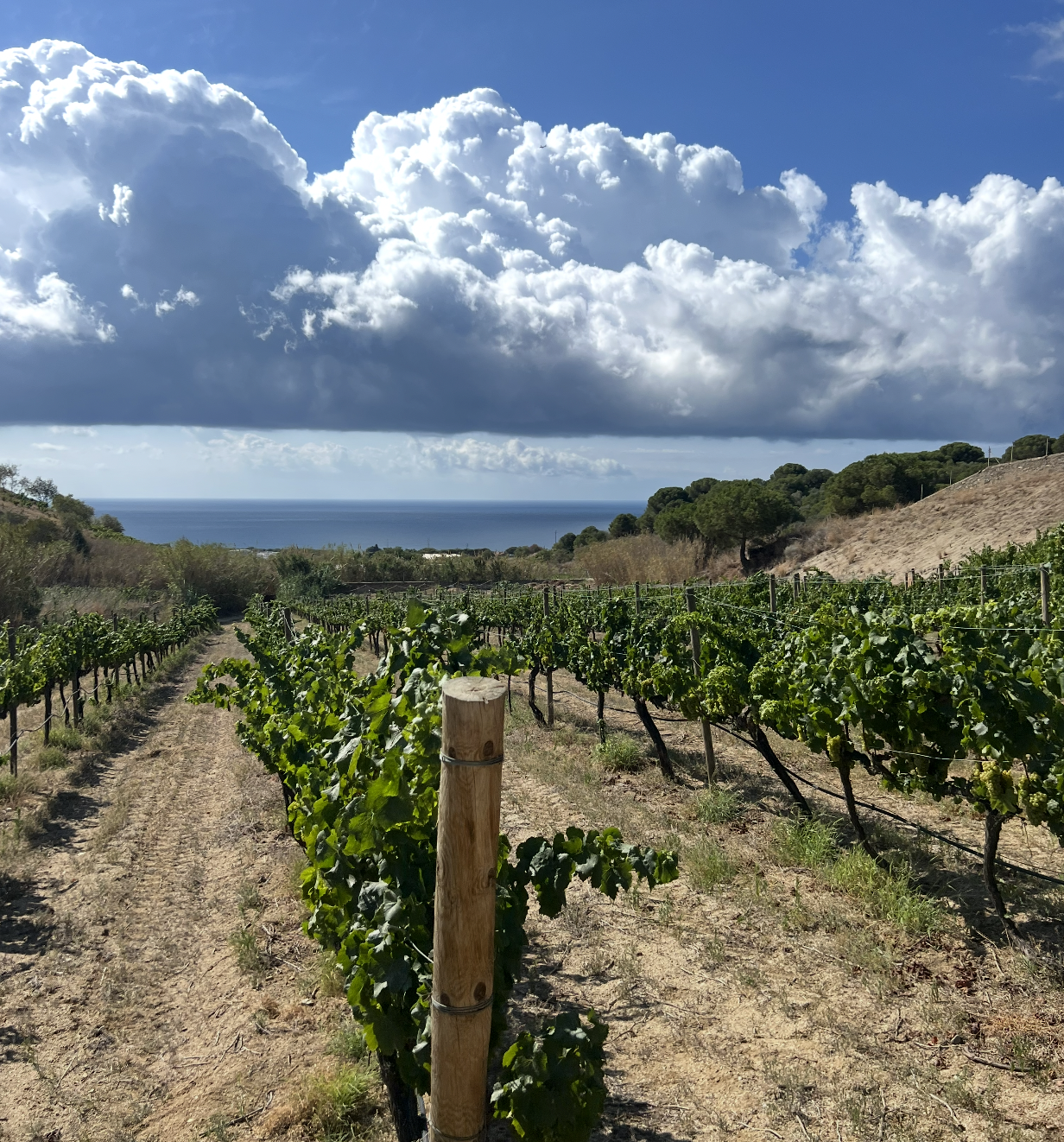
On a map, Alella could pass for just another square mile of Barcelona’s urban sprawl. Before you’ve even noticed, you’re in the midst of its criss-crossing main streets, dotted by bars and bakeries, nestled among grand, Modernist villas, vestiges of a past populated by the summering wealthy. The DO Alella was one of the first DOs of Spain, officially established in 1956, and wine has been cultivated there since Roman times. The vineyards are a stone’s throw from the Mediterranean, on the Maresme coast where mountains drop quickly to sea level, leaving small flat parcels aerated by perfect salty breezes.
We sat by the pool, had a drink on the beach, and hit main street for dinner. Then the next day I visited three different wineries and made my evening flight back to San Sebastián. Highly recommend.
How much alcohol is in cava?
Cava has between 10.8 and 12.8 percent alcohol by volume, the range set in the Cava DO’s official specification. It’s also bottled under real pressure: at least 3.5 bar at 20°C in a standard bottle, which is why the cork is held down with a wire cage.
What is the best cava wine?
Of course this question is ridiculously subjective. The best cava comes from producers who grow their own grapes and age their wines for years. Inside the Cava DO, look for Parés Baltà, Pere Mata, Maria Rigol Ordi, Alta Alella, Mestres and Vilarnau. Some of the best sparkling wine in Spain is now labeled Corpinnat: Recaredo, Gramona, Llopart, Nadal, Mas Candí, Can Feixes, Juvé & Camps and Celler Kripta (formerly Agustí Torelló Mata). Raventós i Blanc bottles under Conca del Riu Anoia, and Colet and Loxarel under Clàssic Penedès.
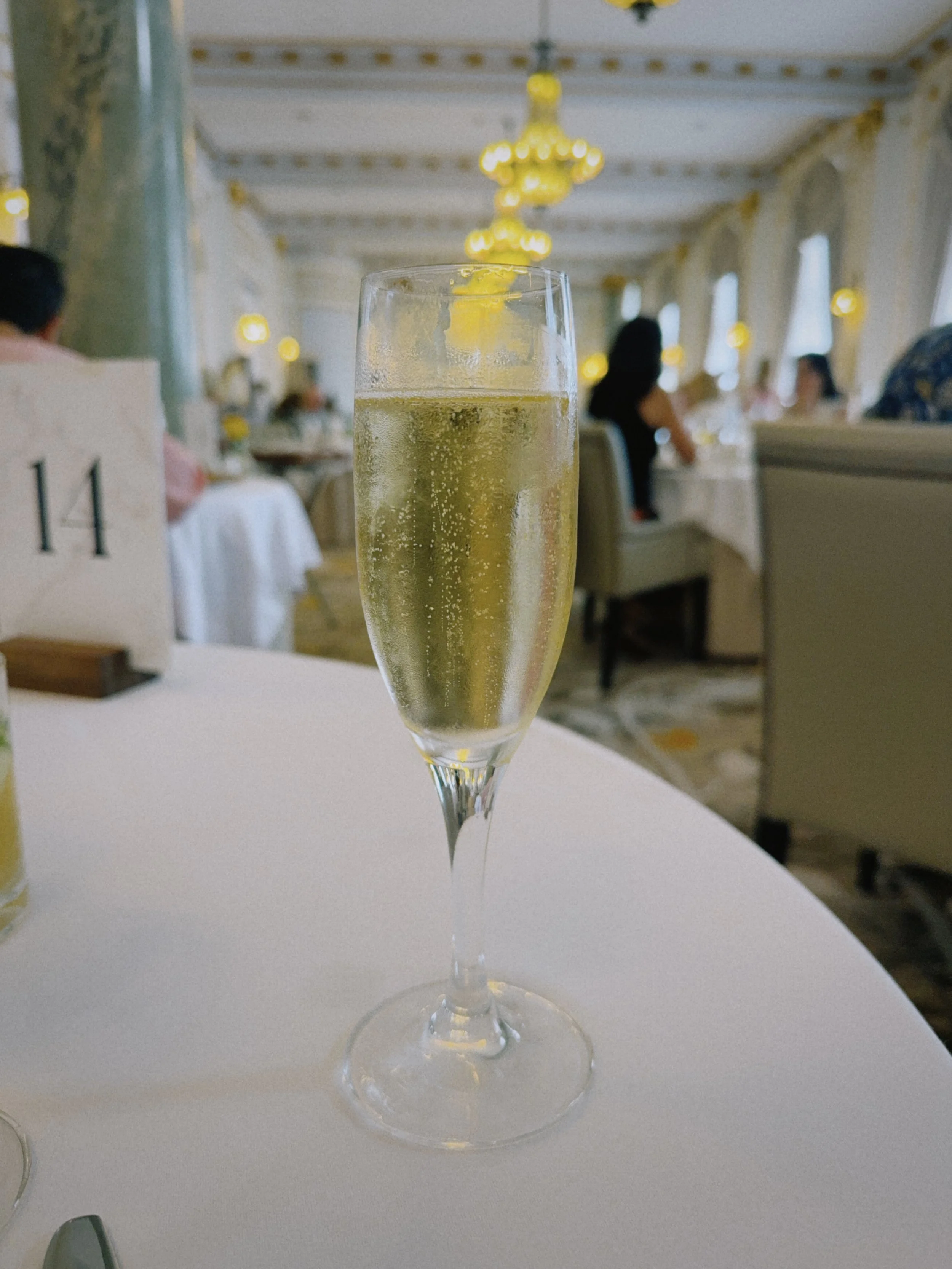
What cava should you buy for Nochevieja, or New Year’s Eve?
Buy a Gran Reserva. On December 31, Spain eats twelve grapes with the twelve chimes of midnight and then toasts with cava, and stepping up from a basic bottle to a Gran Reserva costs five or ten euros more. That gets you at least 30 months of aging, organic grapes from the 2025 harvest on, and a dry style.
What grapes are in cava?
The three classic cava grapes are macabeo, xarel·lo and parellada. Together they make up about 85 percent of the grapes used for cava, and producers call the blend the coupage.
Macabeo (Viura in Rioja) is the most planted. It’s floral, fine and ages well.
Xarel·lo is the grape the Penedès is proudest of. Thick skins give structure, body and an earthy, waxy, slightly saline character, and it’s what lets cava age ten or fifteen years.
Parellada grows best in the higher, cooler parts of the Penedès and brings freshness and delicate apple notes.
Chardonnay has been allowed since 1986, and Pinot Noir since 1998 for rosé and 2007 for white. Subirat Parent (Malvasía Riojana) appears mostly in sweeter styles.
What does cava taste like?
Young cava tastes of green apple, lemon, white flowers and fresh bread, with a Mediterranean softness. Reserva and Gran Reserva develop toasted bread, almond, hazelnut, honey, dried apricot and the waxy note of xarel·lo, with a creamier texture and acidity that holds. Cavas aged five, eight or ten years taste like something between great Champagne and dry sherry, with a savory, nutty depth, for a fraction of the price.
Why is it called cava?
Cava means cellar in Spanish and Catalan, after the underground cellars where the bottles age. For most of the 20th century, people in Catalunya called the wine xampany, and in Spanish it was champán or champaña. According to the Consejo Regulador, the word cava first appears in an official document in 1959. It was approved as the official name for Spanish traditional-method sparkling wine in 1972, and in 1986, the year Spain joined the European Economic Community, a ministerial order defined the “Región del Cava.” The current regulation dates from 1991.
The method itself arrived through Josep Raventós Fatjó of the Codorníu family in Sant Sadurní d’Anoia, credited with the first Spanish sparkling wine fermented in the bottle. His son Manuel settled on the macabeo, xarel·lo and parellada blend. When phylloxera hit the Penedès in 1887, growers replanted with local white grapes suited to sparkling wine, and the plague that destroyed the old vineyards built the new industry. King Alfonso XIII visited in 1904, and by 1911 Spain was producing more sparkling wine than it imported.
What is Corpinnat, and why did producers leave the Cava DO?
So this is where a bit of drama creeps in. Corpinnat is a private association of Penedès sparkling wine producers who left the Cava DO in 2019 to work under stricter rules. The background is scale. In 2025 the DO sold 190 million bottles, a business of about two billion euros, and well over three quarters of production comes from three companies: Freixenet, Codorníu and García Carrión. A family estate making hand-harvested, long-aged wine from its own vineyards shared the same word on the label as a bottle made from bulk base wine in a huge factory.
The departures came in waves. In 2012, Pepe Raventós of Raventós i Blanc, whose grandfather helped found the Cava DO, began labeling his wine Conca del Riu Anoia. In 2013 and 2014, Colet, Loxarel, Albet i Noya and others moved to the DO Penedès under Clàssic Penedès. In 2017, six top houses including Recaredo and Gramona created Corpinnat, a name that means “heart of the Penedès,” and they left the DO in 2019.
Corpinnat requires 100 percent organic, hand-harvested grapes, all wine made at the winery, premium prices for growers on long-term contracts, at least 18 months of aging, and at least one wine aged 60 months or more per winery. By the mid 2030s, Chardonnay and Pinot Noir will be banned. Corpinnat has grown to 23 members, and Juvé & Camps announced this year that it is joining. Add the producers who have opted out of every label, and a single valley’s wine can now go by five different names.
The Cava DO responded with its 2020 plan. It created the Guarda Superior tier, raised the Reserva minimum from 15 to 18 months, put zones and subzones on the label, created the Elaborador Integral seal, and required organic farming for the upper tier. Excellent producers stayed, including Parés Baltà, Pere Mata, Maria Rigol Ordi and Alta Alella. Anaïs Manobens of Maria Rigol Ordi told wine writer Jason Wilson that every wine now called Corpinnat was cava until a few years ago, and that these are neighbors in the same village. The shift toward quality shows in the DO’s own numbers: in 2025, Gran Reserva sales grew six percent and Paraje Calificado grew 82 percent.
How is cava drunk in Spain?
In Catalunya, cava is a weekday wine, poured by the glass for two or three euros and served with lunch. Catalunya accounts for 33.7 percent of the cava sold in Spain. The xampanyeria, a bar built around cheap cava and a sandwich, is its own genre, and Can Paixano in the Barceloneta is the famous one. Cava goes with calçots in February, with fideuà, with anchovies and with Sunday paella.
Across the rest of Spain, cava is the wine of Christmas and Nochevieja. Freixenet’s Christmas ad, with dancers dressed as golden bubbles, has run every December since the late 1970s, and Spaniards can tell you who the burbuja was the year they were a kid.
Listen to the cava episode
Everything in this guide comes from my Spain Explained episode on cava, including my 24 hour trip to Alella and the full story of Corpinnat.
This blog started because I was obsessed with Spain. I still am. You can catch more about my life and Spain over at The Spain Dispatch. Sign up for my newsletter where I share what I’m eating, where I’m traveling, and more random stuff! It’s free, so come join a few thousand of us! If you liked this post, you’ll probably love it.