
What Is La Tomatina in Spain? Inside the Largest Food Fight in the World
Twenty thousand people, one hour, and somewhere between 120 and 150 tonnes of tomatoes. That is La Tomatina, held every year on the last Wednesday of August in Buñol, a Valencian town of roughly nine thousand people about forty kilometres inland from the city of Valencia. Guinness certified it the largest annual food fight in the world. Each person goes through about six kilos of ammunition each, delivered by seven trucks, and when the hour is up the streets run ankle-deep in red pulp.
I spent weeks with the sources while building the newest episode of my podcast, Spain Explained, so I thought I’d compile it all for you in a blog! You can listen, though, if you’d rather.
Every August I get at least one person ask me: what is the tomato thing, and is it as big as it looks.
Well…It is bigger, and it is also far more organized. A rocket starts it and a rocket ends it, and the second one is obeyed instantly by twenty thousand people. A soaped pole with a whole ham tied to the top has to be dealt with first. There is a supply chain built specifically to grow tomatoes that nobody will ever eat. In the latest episode I walk through the day hour by hour.
One of the details I loved was about a funeral. In 1957, with the tomato fight banned by officials under the Franco regime, the people of Buñol staged the entierro del tomate. A coffin, one enormous tomato inside it, a band playing funeral marches, a procession, a town dressed in mourning. It was satire and it was theatre, and it was also a legible act of collective defiance in a country where actual protest carried real risk. Best of all, it worked. Now on with all your burning questions!
What is La Tomatina?
La Tomatina is an annual tomato fight held on the last Wednesday of August in Buñol, a town about forty kilometres inland from the city of Valencia. For one hour, from eleven in the morning until noon, participants throw overripe tomatoes at each other in the streets. The Spanish government designated it a Fiesta de Interés Turístico Internacional in 2002, the country's highest official category for a fiesta.
Buñol itself is an old agricultural and industrial town with a thirteenth-century castle in the middle of it, a river, and a cement factory. For 364 days a year it has no particular reason to make international news. Then there is the Wednesday.

When is La Tomatina, and how long does it last?
The fight lasts exactly one hour, from 11:00 to 12:00, on the last Wednesday of August. The next edition falls on Wednesday, August 26, 2026.
Both ends are marked by a rocket. The first fires at eleven and the second at noon, and the noon shot ends the food fight. If you keep throwing after, security will walk you out. That hard stop has a reason, which I get into further down.
How does the hour actually unfold?
Seven trucks ease into a crowd that parts around them and tip their loads while volunteers hurl tomatoes down into the street. That works out to roughly six kilos of ammunition per person. The buildings along the route are wrapped in tarps and plastic sheeting, and shopfronts are boarded as though a storm is coming (it kinda is?).
Before any of that, there is the palo jabón. Tradition calls for someone to climb a tall wooden pole slathered in soap and knock loose a whole ham tied to the top. Human pyramids form, slide apart, and form again while the crowd chants and sings. In practice the ham sometimes comes down and sometimes doesn't, but these days the fight starts at eleven regardless.
What kind of tomatoes are used, and is it a waste of food?
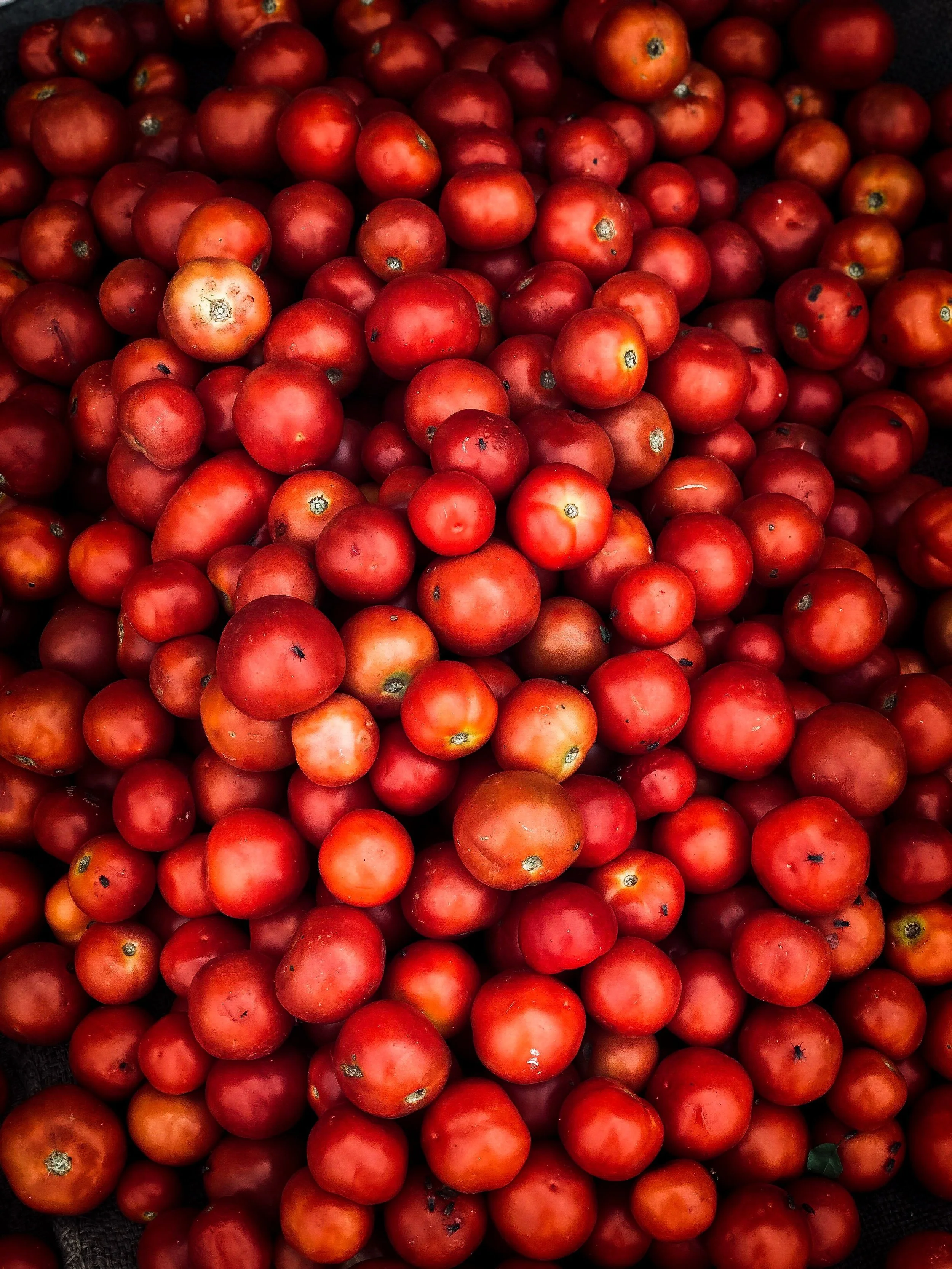
The tomatoes are a cheap pera variety grown specifically for the event: overripe, low grade, and below the quality standard for sale for human consumption. Buñol's organizers are frank that if the fruit weren't bought for La Tomatina, it would be discarded.
This is the question the fiesta draws more than any other, I’d say. An entire supply chain for substandard tomatoes has grown up around the last Wednesday of August. You can accept that framing or push back on it. What you cannot say is that nobody in Buñol has considered the question. But also, can’t stop thinking about how much salmorejo you could make with all those tomatoes!
What are the rules of La Tomatina?
There are few rules and they are obeyed. Squash the tomato in your hand before you throw it so it lands soft.
Nothing goes in the air except tomatoes: no bottles, no hard objects.
Do not rip anyone's shirt.
Give the trucks room.
And when the second rocket fires at noon, stop immediately and completely.
How do you get in, and what does it cost?
Since 2013 the event has been ticketed and capped at around twenty thousand participants, with basic entry running about fifteen euros in recent editions. The cap followed the 2012 edition, when the crowd swelled to roughly forty thousand in a town of nine thousand and the whole thing became unmanageable. That was also the year Guinness certified it as the largest annual food fight in the world.
The cap is widely credited with making the day both safer and better. La Tomatina has gone dark only twice since the fifties, in 2020 and 2021…COVID.
What do participants wear?
Clothes they plan to throw away, and closed shoes that tie. Anything loose on your feet disappears into the pulp within minutes.
Decades of participants would probably agree, the most useful accessory is: swim goggles. Tomato acid in the eyes is no bueno. Some regulars add earplugs. Anything valuable should stay home or be sealed in something waterproof. Arriving early is the other consistent piece of advice, because the street fills fast, and once you are in the middle of it you are in until noon.
How does the town clean up 120 tonnes of tomatoes?
Fire hoses come out, neighbours hose down strangers from their doorways, participants file to communal showers and down to the river, and crews sluice the streets. The acidity of all that tomato works as a scouring agent, and by evening the pavement of Buñol is famously cleaner than it was the day before.
I find the reversal at least as impressive as the fight. A few hours after what looks like an apocalypse in the aerial photos, the town is spotless. That is eighty years of practice.
What else happens during Tomatina week?
The tomato fight is actually just part of Buñol's fiestas , and the week around it looks like fiesta weeks across the Valencian Community: parades, brass bands, verbenas at night. There is a paella contest near the town square the evening before with dozens of fires going at once.
There is also the Tomatina Infantil on the Saturday before, where kids from about four to fourteen get their own fenced-off, gentler tomato battle on the main street. Buñol hands this down to its children on purpose, to carry on tradition.
How did La Tomatina start?
On the last Wednesday of August in 1945, Buñol was in the middle of its fiestas mayores in honor of San Luis Bertrán and the Virgen de los Desamparados. A parade of gigantes y cabezudos was moving through the streets when a group of local young men pushed their way into the procession. In the crush, one of the figures went down. Tempers flared, punches flew, and a vegetable stall happened to be within arm's reach.
The following year the same young people came back on the same day and did it again on purpose, this time bringing tomatoes from home.
How solid is that account? Not 100%, and the historians say so plainly. No journalist was standing in the square of a small Valencian town in 1945 taking notes on a food fight between teenagers, so almost everything known about the origins comes from oral history. The serious study is a 2018 paper by Enric Cuenca Yxeres and Vicent Giménez Chornet, published in Cultura y Representaciones Sociales and available open access. There are rival legends too, one about a crowd pelting a bad singer, another about locals throwing tomatoes at town officials, and the historians treat both as good stories with weak evidence.
Why was La Tomatina banned?
Because it was secular, spontaneous, and involved throwing food during years when food was rationed. In 1945 Spain was six years out of the Civil War and deep in the hungriest, most repressive stretch of the Franco dictatorship. The regime imposed a calendar of holidays that fit its vision of the country, and that vision was Catholic, orderly, and solemn.
An anarchic street battle with food, needless to say, was not part of that vision. Through the late forties and fifties the fiesta lived on and off. Some years it happened, some years the police broke it up, and there were years when people were arrested simply for showing up and throwing tomatoes, because the event had no official permission and no religious significance. The exact chronology of the bans varies between sources. I guess nobody was keeping careful records of a suppressed food fight.
What all the sources agree on is 1957 and the coffin. Within a couple of years of that funeral, the town council allowed La Tomatina back with conditions, the central one being that the fight would last one hour and not a minute more. The chaos got a container, and inside that container it has lived ever since.
How did it become internationally famous?
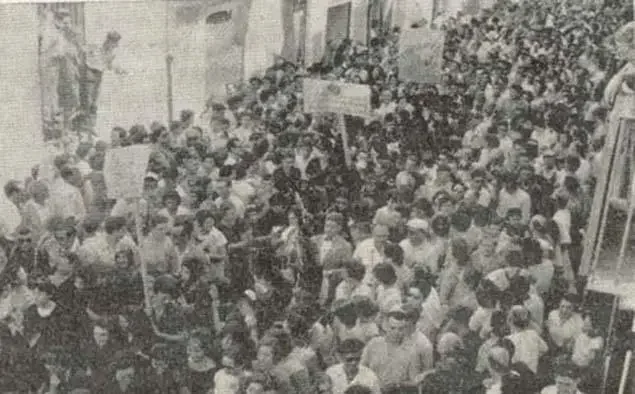
Through the sixties and seventies it stayed a local fiesta, run by the town for the town, with the council formally taking over organization around 1980. The turn came in 1983, when Spanish national television aired a report by the journalist Javier Basilio on Informe Semanal and the rest of the country found out what Buñol had been doing every August. International attention followed, the 2002 designation followed that, and by 2012 the crowds had outgrown the town.
Is La Tomatina fun?
People love it and people hate it. Roaring, childish release, strangers laughing at each other, the strange intimacy of a crowd where nobody can tell anyone apart. Also the crush of bodies, the smell, the sting, and an hour that can feel very long from the wrong spot. Both reports are accurate.
The word participants keep reaching for is catharsis, and in 2025 Buñol said the same thing about itself. That edition, marking eighty years since the first fight, carried the slogan Tomaterapia. Buñol had been among the towns hit by the catastrophic Valencia floods of October 2024, which killed more than two hundred people.
What La Tomatina is about
An hour of tomato throwing can look like meaningless chaos, but I would argue for the opposite reading. La Tomatina belongs to a very old family of Spanish and Mediterranean fiesta logic: the world turned upside down for a fixed window of time. Within about four minutes everyone is identically coated in pulp and unrecognizable, mayor and teenager and grandmother alike. Then the rocket fires and ordinary order snaps back. Buñol throws tomatoes, Haro throws wine, Ivrea across the water in Italy throws oranges.
And underneath the pulp, this is a story about defiance. The fiesta was banned by a dictatorship for the offense of being joyful without permission, people were arrested for throwing tomatoes, and a town answered by staging a funeral for a vegetable. That is why Buñol guards it so fiercely now, caps the crowds, prices the tickets, and hands it to its kids in miniature on the Saturday before.
The full episode of Spain Explained goes deeper on the origin research, the ban chronology where the sources disagree, and the practical side of the day. The Cuenca Yxeres and Giménez Chornet paper is linked in the show notes along with the rest of the reporting behind it.
This blog started because I was obsessed with Spain. I still am. You can catch more about my life and Spain over at The Spain Dispatch. Sign up for my newsletter where I share what I'm eating, where I'm traveling, and more random stuff! It's free, so come join a few thousand of us! If you liked this post, you'll probably love it.
Key takeaways
Guinness certified La Tomatina the largest annual food fight in the world after the 2012 edition drew around forty thousand people.
It runs from 11am to noon on the last Wednesday of August in Buñol, Valencia. The next edition falls on Wednesday, August 26.
Seven trucks deliver 120 to 150 tonnes of tomatoes, roughly six kilos per participant.
A rocket starts the hour and a rocket ends it, and the second signal is absolute.
Since 2013 the event has been ticketed and capped near twenty thousand, at around fifteen euros for basic entry.
The fight began in 1945 during the town's patron saint fiestas and has been passed down deliberately ever since.