
What is Spanish Chorizo? : A Complete Guide to Types, Regional Varieties, and Dishes
Chorizo is everywhere in Spain: sliced cold on a plate at the bar, tucked into a bocadillo, cooking down slowly in a pot of lentils, skewered on a pintxo. It belongs to no single meal or occasion. I dedicated a full episode of my podcast, Spain Explained, to answering the ‘What is Chorizo?"‘ question, because asking for chorizo can produce varying results (although most of them will be undoubtedly delicious)!
I've been living in San Sebastián since 2010, and chorizo has been part of my daily food life here since before I published my first cookbook on Basque cooking. I buy it at the market, I cook with it, I eat it on bread with nothing else. What follows is an attempt to answer all the questions that can come up around Spanish chorizo.
You can listen to the podcast here:
What Is Spanish Chorizo?
Spanish chorizo is a pork sausage seasoned with pimentón, garlic, and salt, and then either fresh, cured, or smoked depending on the type. Spain has SO many great meats and sausages, but chorizo is arguably the most accessible and beloved for both cooking and eating straight. To legally be called chorizo in Spain, a sausage must contain pimentón. That is the legal baseline, the non-negotiable.
Pimentón is Spanish paprika, typically smoked. It's what gives Spanish chorizo its deep red color and its characteristic flavor depth. The smokiness, the richness, the way chorizo fat stains a broth a warm orange-red: all of that comes from pimentón. Beyond that ingredient, the spice level, fat content, shape, curing time, and pig breed vary enormously by region, producer, and tradition.
Spanish chorizo as we know it couldn't have existed before the 16th century. Pimentón arrived in Spain from the Americas with the conquistadors. Before New World capsicum peppers reached the Iberian Peninsula, Spanish sausages were white or black. The modern red chorizo is built on an ingredient that wasn't in Europe until Spain brought it back across the Atlantic.
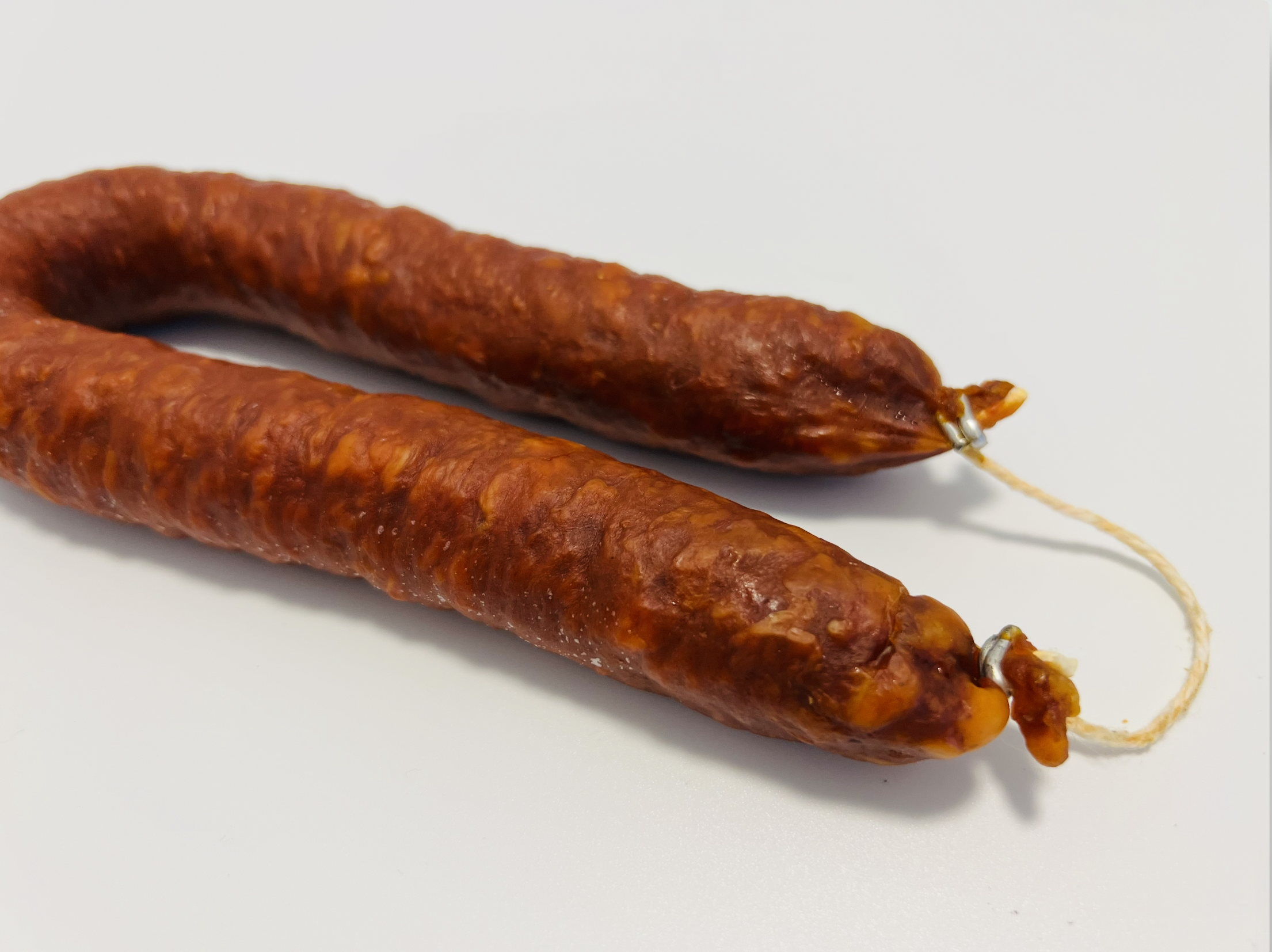
Is Spanish Chorizo Different from Mexican Chorizo?
This is one of the most asked questions about chorizo, and the answer is: substantially, yes.
Spanish chorizo is a cured or fresh pork sausage built around pimentón. When cured, it's firm and sliceable. It holds its shape in cooking, releases seasoned fat into a broth, and has a concentrated, paprika-forward depth of flavor.
Mexican chorizo is typically fresh, loose in texture, and spiced differently. It's usually cooked out of its casing and crumbles into a pan. The flavor profile and the texture are both distinct from Spanish chorizo. They are not interchangeable in recipes.
This comes up in cooking. A Spanish recipe calling for chorizo in a stew expects a sausage that keeps its structure and bleeds color and fat into the liquid over time. A fresh, crumbly chorizo gives you something different.
The Different Types of Spanish Chorizo
The most useful way to understand Spanish chorizo is by curing method, because that determines almost everything about how you use it.
Chorizo fresco is raw. It has not been dried or cured, it has a short shelf life, and it must always be cooked. This is the chorizo you grill, cook with eggs, or put in a stew at the beginning so it can release its fat and flavor into the broth as it cooks. Txistorra, or chistorra, the thin fresh chorizo from Navarra and the Basque Country, is a variant in this category.
Chorizo curado is the version most people picture when they hear the word: dried, firm, cured in cool air for weeks or months. As it dries, the fat distributes through the meat and the flavor concentrates. A good cured chorizo is eaten cold, sliced at room temperature and served on a board. The Chorizo Riojano, horseshoe-shaped and PGI-protected, is one of the most recognizable.
Chorizo ahumado is smoked. This is especially common in Galicia, Asturias, and León, where the humid climate makes air-drying difficult. After stuffing, the chorizo is hung over wood smoke, which preserves it and gives it a deep, earthy intensity. Galician chorizo is one of the most distinctive smoked varieties in Spain, and it's essential to caldo gallego.
Then there is the flavor dimension: chorizo dulce uses sweet pimentón with no heat, while chorizo picante uses spicy pimentón and cayenne. A chorizo can be fresh and spicy, cured and sweet, smoked and anything in between.
What Is Chorizo Ibérico de Bellota?
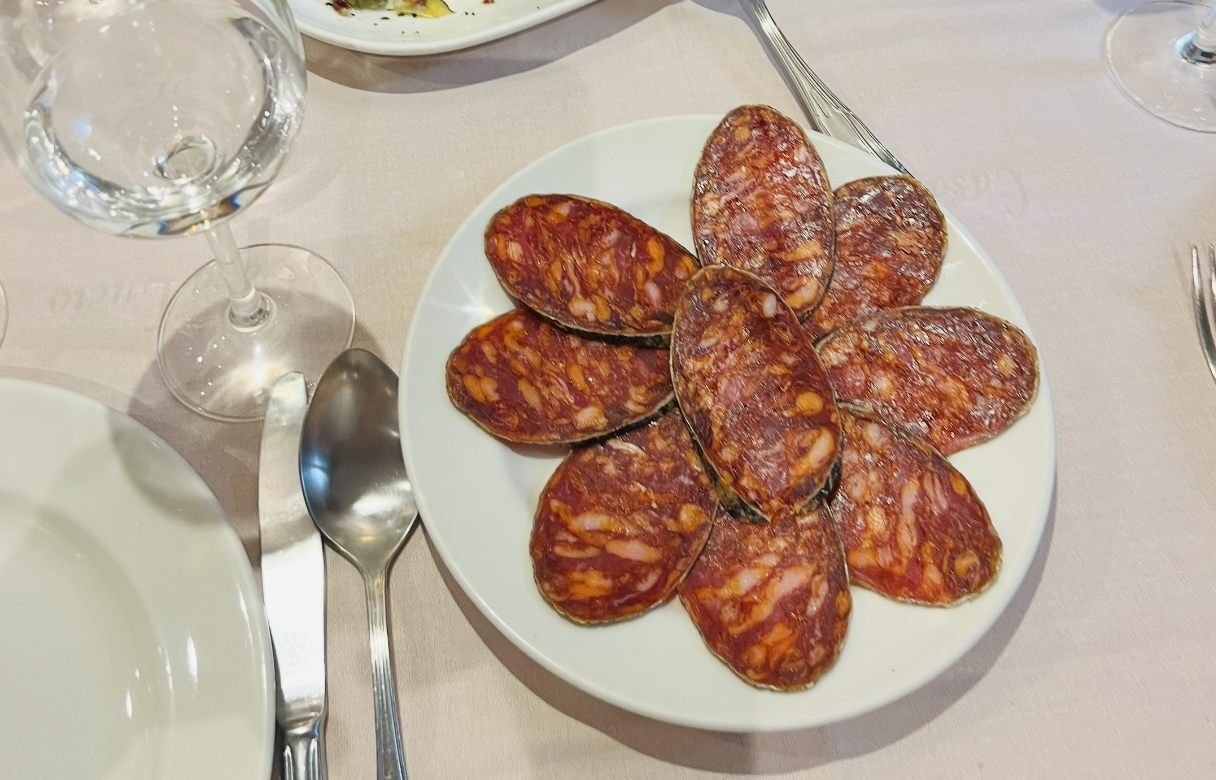
Chorizo ibérico comes from the Iberian pig, the same breed that produces jamón ibérico. These pigs carry a much higher proportion of intramuscular fat, which gives the chorizo made from them a marbling and richness that no standard white-pig chorizo can replicate.
Within ibérico chorizo, the classification mirrors the jamón system:
Cebo: the pig was raised on commercial feed
Cebo de campo: the pig had access to pasture
Bellota: the pig was finished on acorns in the dehesa, the oak woodland of western Spain
Chorizo ibérico de bellota is the top of the range. When you slice it, the marbling is visible. You can see in the picture above how gorgeous it is. Or check it out here, housemade chorizo from one of my favorite places to eat, Asador Etxebarri.
The texture is almost silky and the flavor stays long past the bite. Eating it on plain bread with nothing else is the best way to try it the first time, so you can pay full attention to what you're eating.
The difference between an ibérico chorizo and a standard white-pig chorizo is not subtle once you know what you're looking for. The price reflects it, and so does the eating.
When Do You Cook Spanish Chorizo and When Do You Eat It Cold?
This question trips people up, and the answer is simpler than it seems.
Fresh chorizo: always cook it. No exceptions.
Cured chorizo: it depends on size and form. A large, firm, horseshoe-shaped cured chorizo like a riojano is for the cutting board: slice it cold at room temperature and eat it with bread. A small, hard, compact cured sausage is often made for the pot, where it holds its shape through long cooking and releases its seasoned fat into the stew or broth.
The only mistakes are a) eating fresco chorizo raw, you may get seriously sick and b) putting a beautifully cured chorizo ibérico into boiling water, you lose the exquisiteness of it). As a working rule: soft and fresh means heat, firm and large means the board, small and hard can go either way. When in doubt, ask whoever is selling it. In any market in Spain, they will tell you exactly what to do with it.
Spanish Dishes WITH CHORIZO
Here are some of the most famous dishes from Spain that contain chorizo. I can vouch from personal experience, they are all delicious.
Fabada asturiana is Asturias's defining dish: giant white fabes beans slow-cooked with chorizo, morcilla, and panceta. The chorizo releases its fat and color into the broth over hours. It's a winter dish and one of Spain's most celebrated legume preparations.
Lentejas con chorizo is the comfort food of the Spanish interior. The pimentón bleeds into the broth and turns everything dark and warm. Every household has its version and it varies by family, by region, by what's in the larder.
Patatas a la riojana is potatoes and Chorizo Riojano stewed together in a clay pot with pimentón. Simple, cheap, and deeply satisfying. I have a recipe on my YouTube channel, I love it so much:
If you’re like me and more a text person, you can find the recipe for patatas a la riojana here. I make this dish ALL THE TIME.
Chorizo al vino is the simplest tapa: chorizo cooked in red wine until the sauce reduces and emulsifies around the meat, glossy and savory. Almost impossible to do badly. In the north, the same dish is made with cider, chorizo a la sidra, and the result is tangier and lighter. I actually have a recipe here for chorizo a la sidra, you won’t believe how easy AND delicious it is.
Caldo gallego is Galicia's restorative broth: smoked chorizo, white beans, turnip greens, and potatoes. Humble and one of the best soups I've eaten in Spain.
Cocido madrileño is Madrid's Sunday dish: a multi-stage chickpea stew traditionally served in three courses, with chorizo essential to the flavor of the entire thing.
Huevos rotos con chorizo is fried potatoes and broken eggs with chorizo, a bar order and a weeknight dinner at once.
What Is the Matanza Tradition?
La matanza del cerdo, the pig slaughter, is intimately linked to chorizo culture in Spain. For centuries, rural families kept a pig through the year, feeding it on table scraps and grain, and slaughtered it in the cold months between November and February when the temperature was low enough to prevent spoilage. Everything was used. The blood became morcilla. The hams were salted and hung for months. The fat trimmings were seasoned with pimentón and garlic, stuffed into casing, and hung in the rafters for around 40 days to dry into chorizo.
The matanza was a community event. Neighbors arrived to help with the slaughter, the butchering, the seasoning, the stuffing. A single pig could sustain a family through winter and into the following year. The saying that came with it: del cerdo se aprovecha hasta los andares. From the pig, even the way it walks is useful.
The practice is not common today, but it hasn't disappeared. Some families in rural areas still gather for the matanza, now with veterinary controls in place and EU regulations requiring the animals to be stunned before slaughter. The communal ritual, the recipes passed through families, the careful use of every part: those remain.
Understanding the matanza is part of understanding why chorizo in Spain is not just a product you buy at the supermarket. It carries the weight of history! Love that.
Regional Varieties of Spanish Chorizo
Spain's chorizo diversity is significant enough that several varieties are protected under EU law with PGI status, meaning their production methods and geographical origins are legally defined.
Chorizo Riojano, from La Rioja (which I starred in a documentary about, by the way), is horseshoe-shaped and known for its intense pimentón flavor. It can be sweet or spicy and is the star of patatas a la riojana.
Chorizo de Cantimpalos, from Segovia, is deeply red, sweet-flavored, and often has white mold on the outside of the casing. That mold is not a defect. It's a sign of proper artisanal production and part of what distinguishes it.
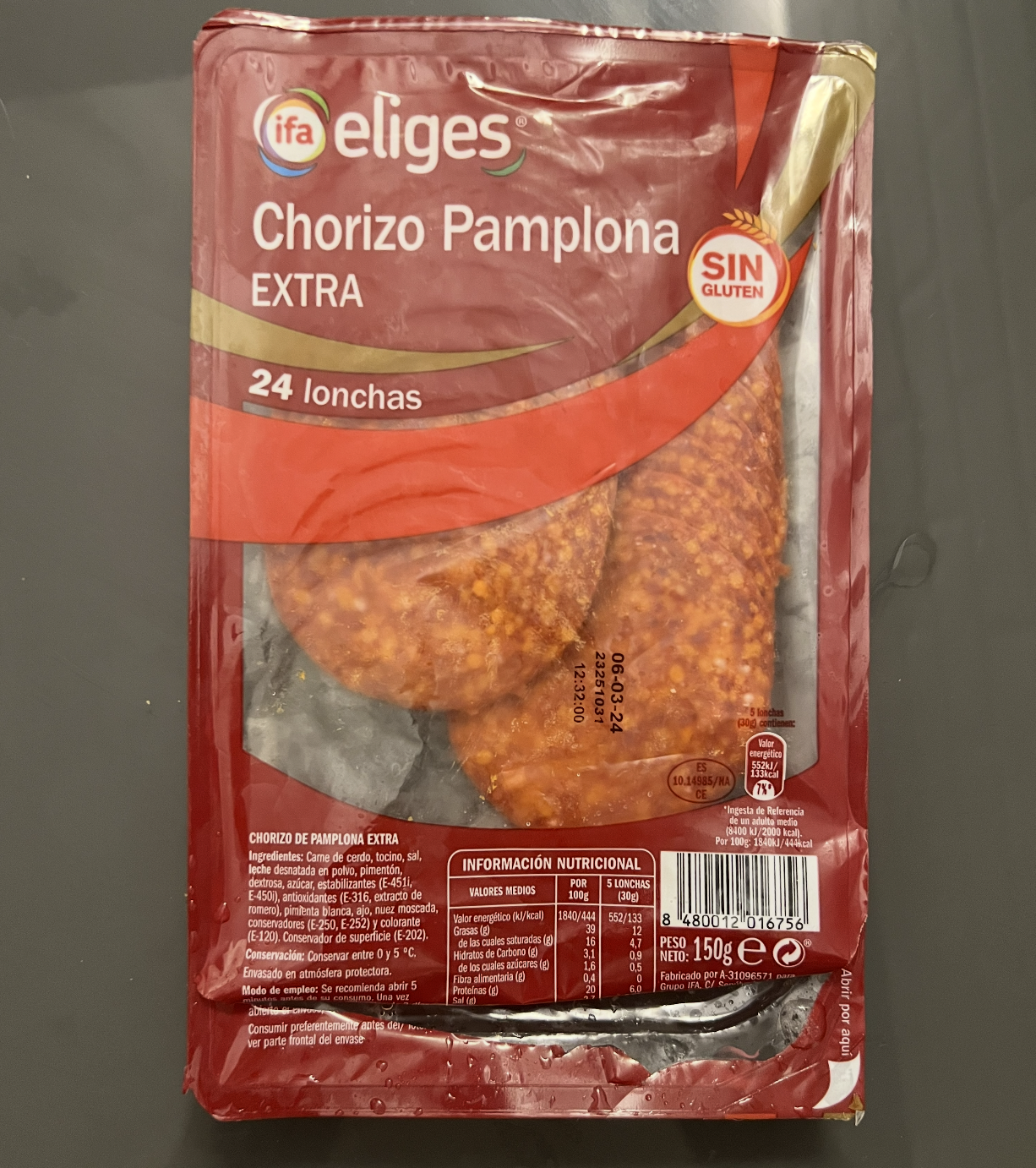
oh how i love this chorizo de pamplona
Chorizo de Pamplona, from Navarra, is very finely ground and large in diameter, closer in texture to a mild salami. It's sliced thin and eaten in sandwiches across Spain.
Chorizo de León is smoked, intensely flavored, and one of Spain's older pork traditions.
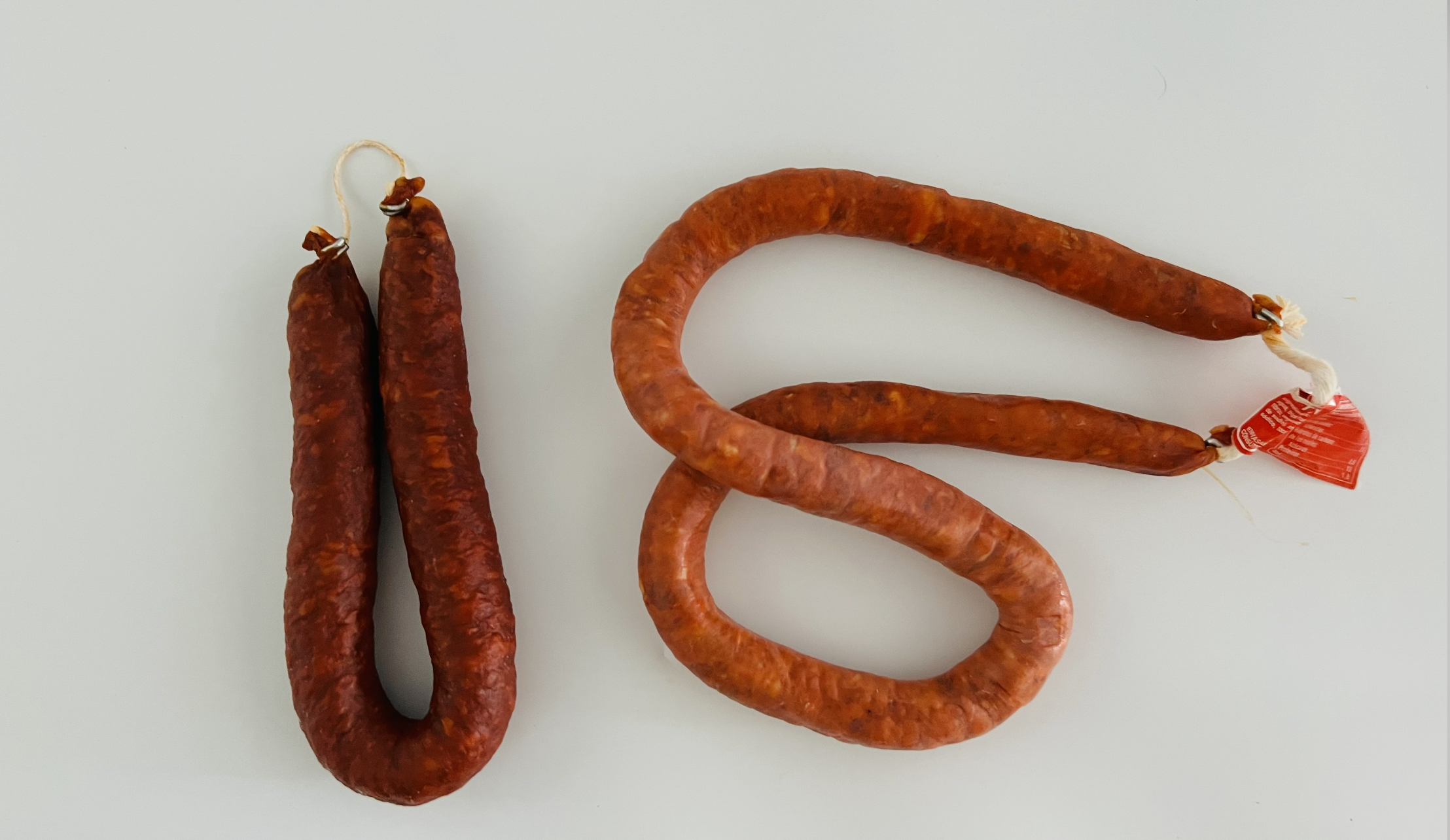
a side by side comparison of chorizo vs txistorra
Txistorra, aka chistorra, from Navarra and the Basque Country, is technically a chorizo variant: very thin, always fresh, always cooked. In bar culture across northern Spain it's one of the most satisfying quick bites you can order. Salt, fat, pimentón, and the crackle of the skin.
Each of these represents a regional tradition with its own logic, its own rules, and its own best uses. The more you know about where a chorizo comes from, the better you can use it.
Listen to the Full Episode
My Spain Explained podcast episode on chorizo goes further: how to read a label, the Pimentón de la Vera denomination and why it matters, the slang (calling someone a chorizo means calling them a crook, and it has a long political history), and the story of the Spanish astronaut who packed it for the International Space Station. Listen below or on Apple podcasts, or wherever you get your podcast, realy.
For more Spain content, subscribe to Spain Explained wherever you listen, follow me on Instagram at @martibuckley.
You can sign up for my newsletter, too!