What is El Bulli? The Restaurant, The Chef, and The Dishes, Explained
For most of the 2000s, the hardest dinner reservation on Earth was at the end of a dirt road on the Costa Brava. ElBulli had about fifty seats and opened for half the year, and by the restaurant's own count it got around two million requests for roughly 8,000 places a season. It had started life in 1961 as a minigolf course.
I just made a whole episode of my podcast, Spain Explained, about elBulli, and this post is its companion. It's everything you'd want to know about the restaurant: where it was, who cooked there, what the food was like, what a meal cost, why it closed, and what you can visit today. At the bottom, I've also left you the trail of old reviews and forum threads I fell down while researching. Press play here if you'd rather listen:
About the timing of this post: A drama series about the restaurant, Gènesi, lands on Netflix on Friday, November 20, 2026 under the English title Welcome to El Bulli, and I was at its world premiere here in San Sebastián. More on that below.
One housekeeping note: the restaurant always wrote its name as elBulli, one word with a lowercase e. Most of the English-speaking world writes El Bulli. I use both in this post.
What was El Bulli restaurant?
ElBulli was a restaurant on the Costa Brava in Catalunya, run by chef Ferran Adrià, his younger brother Albert and their partner Juli Soler, and it changed how the whole world cooks. It held three Michelin stars from 1997 until it closed on July 30, 2011, and Restaurant magazine named it the best restaurant in the world five times: in 2002 and then every year from 2006 to 2009.
Every foam on a plate today traces back to this kitchen, and so does the little bursting sphere in your cocktail. A who's who of famous chefs trained there, including René Redzepi of Noma, Massimo Bottura, José Andrés, Joan Roca and Andoni Luis Aduriz of Mugaritz.
Where was El Bulli?
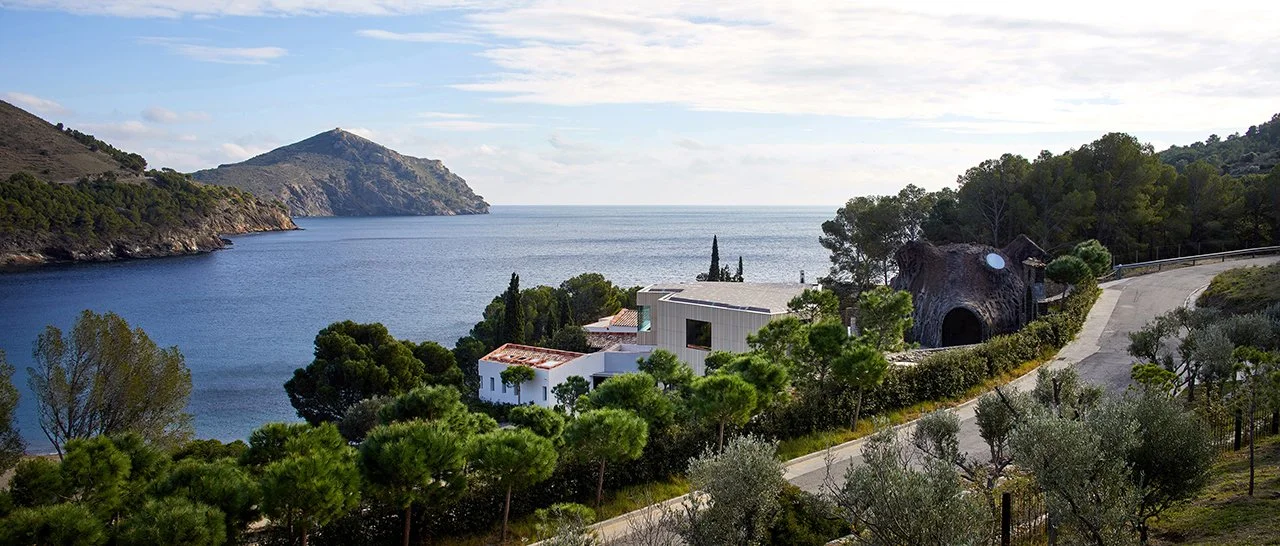
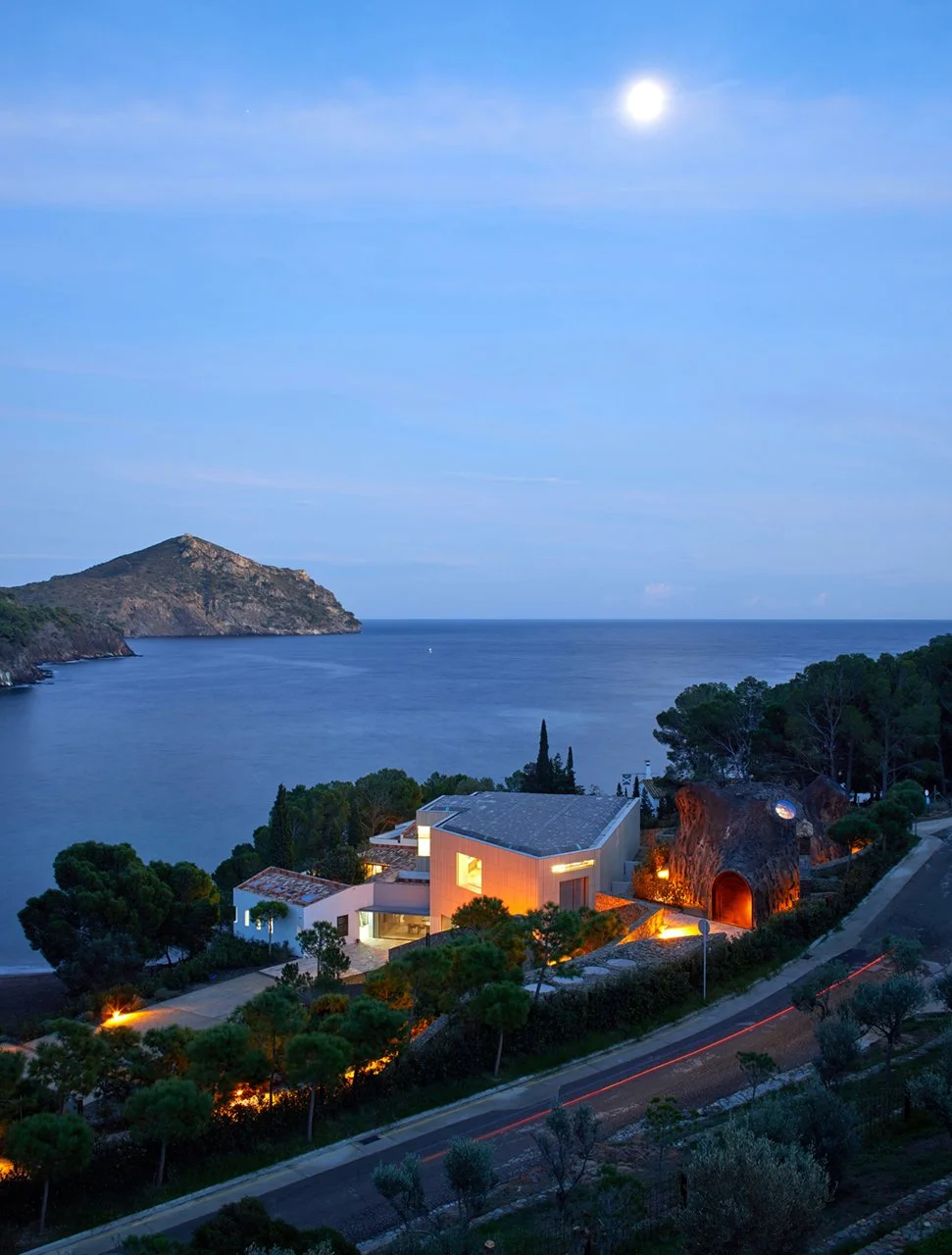
ElBulli sat on Cala Montjoi, a small cove about seven kilometers outside the town of Roses, in the province of Girona. That's the far northeast of Spain, close to the French border and roughly an hour and a half to two hours' drive north of Barcelona. The cove is inside what is now the Cap de Creus natural park.
The road in was dirt, rocks and potholes for decades. The first time Ferran was driven up it, he thought somebody was playing a joke on him, because he couldn't believe a restaurant with Michelin stars sat at the end of what he called a goat track. There was no telephone at Cala Montjoi until 1977. When the owner wanted to talk to his chef from Germany, he sent a telegram telling him to be in the lobby of a hotel in Roses two days later at a certain hour, and the chef drove into town and waited by the phone.
The building is still there, now as a museum called elBulli1846 (more on visiting it below). If you're driving, type "elBulli1846" into Google Maps. The foundation warns that typing "Cala Montjoi" can send you to other spots in the area by other routes (elBullifoundation).
The history of El Bulli: from minigolf to three Michelin stars
ElBulli began in June 1961, when a German doctor named Hans Schilling and his Czech-born wife, Marketta, got a permit to build a minigolf course on land they'd bought at Cala Montjoi. The couple had French bulldogs, and "bulli" was their pet name for the breed. So the most influential restaurant of the last half century is named after somebody's dogs.
The minigolf lasted about a year. The cove was popular with scuba divers, so in 1963 the Schillings put up a thatched-roof beach bar that people in Roses just called "the German bar." In 1964 they added a kitchen and a covered patio and started serving roast chicken, leg of lamb and grilled fish. That was the first restaurant.
Dr. Schilling is the reason it didn't stay a beach grill. He spent most of the year in Germany, ate at the best restaurants in Europe, and came back every autumn with ideas and with ingredients that were hard to find in Spain at the time. The menu got more and more French. In 1975 he hired a French chef, Jean-Louis Neichel, and in 1976 elBulli earned its first Michelin star.
Juli Soler, the rock fan who ran the dining room
At the end of 1980, Marketta Schilling offered the job of running the restaurant to Juli Soler, a music guy with almost no fine dining experience. His interview with Dr. Schilling was set for noon on Christmas Day. He'd been out on Christmas Eve, overslept, and ended up walking up the road in a sheepskin coat under a blazing sun until a passing car gave him a lift. He got the job anyway, and Dr. Schilling sent him off for two months to eat at the best restaurants in France, Belgium and Germany.
In Juli's first season, some customers told him elBulli had vanished from the Michelin guide. Michelin thought the restaurant had closed. Juli drove to Paris with Marketta and the chef, called Michelin, and when they asked which day he'd like an appointment, he told them they were already at the door. ElBulli was back in the guide the next year. Juli ran the dining room and the business for three decades, and everyone who worked there talks about him as the soul of the place.
The years that made elBulli
Ferran Adrià arrived in 1983 (his story is in the next section). In 1987 he became the only head chef, and elBulli started closing for the winter, at first for five months and later for six. Nobody was driving out to the cove in January, and staying open was eating their cash. What began as a money problem became the way the restaurant worked: six months of serving dinner, six months of inventing.
In 1990 the Schillings retired, Juli and Ferran bought the restaurant, and the second Michelin star came. In 1993 they built the kitchen of their dreams, going from about 50 square meters with room for ten cooks to 325. In 1997 elBulli earned its third star.
Who was the chef at El Bulli? Ferran and Albert Adrià
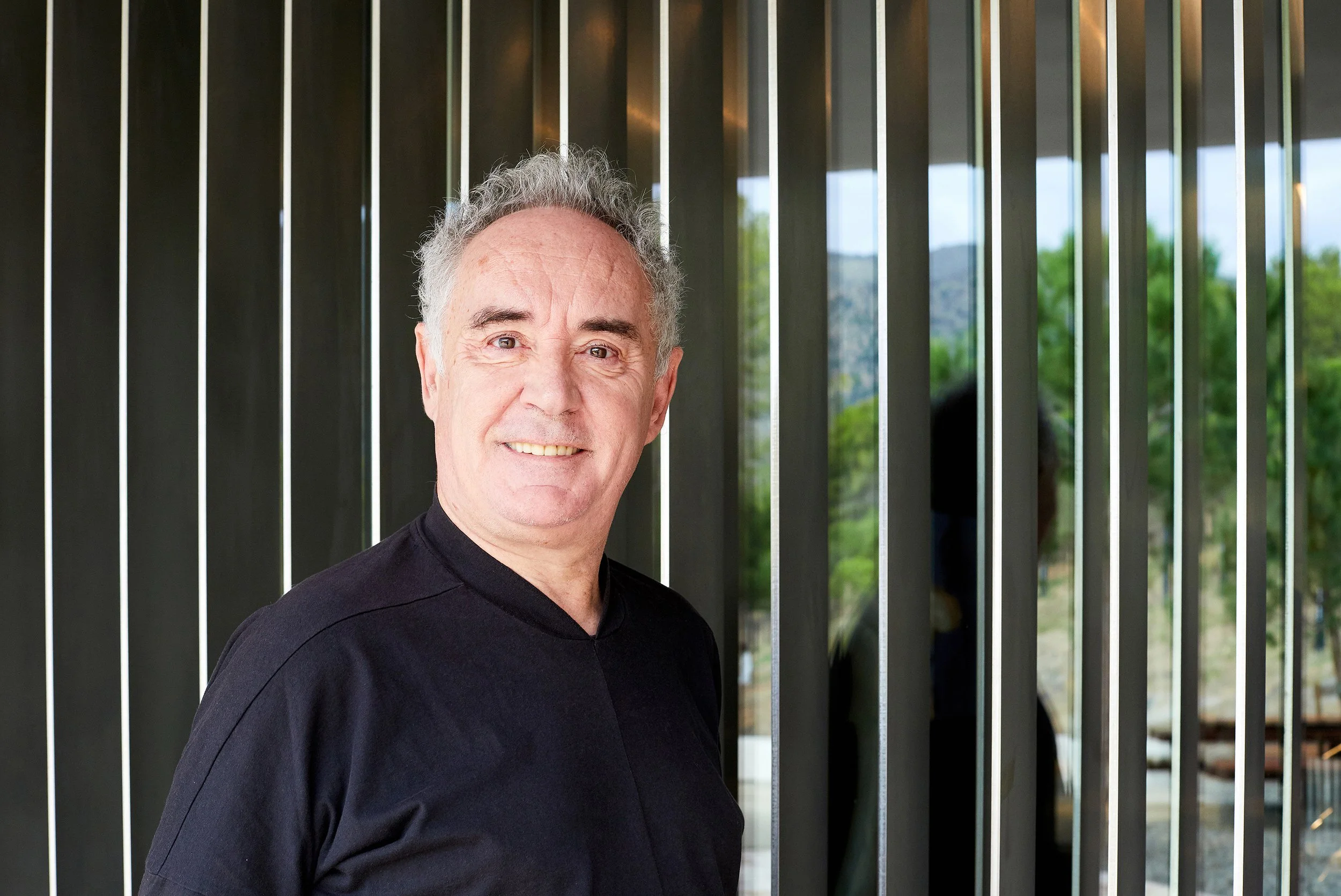
The chef at elBulli was Ferran Adrià, the most famous Spanish chef of his generation, and his younger brother Albert Adrià was the other half of the kitchen. Ferran is the face and the voice. Albert is the quiet one, and he's just as central to the story.
Ferran Adrià
In 1983 Ferran was 21, from L'Hospitalet de Llobregat, right next to Barcelona, and doing his military service in the navy in Cartagena, cooking for an admiral. Another recruit in that kitchen, Fermí Puig, told him to spend his month of summer leave working at a restaurant on the Costa Brava where Fermí had cooked. Ferran has written that he had never heard of elBulli and had no idea what a Michelin star was. The beach was probably the draw.
He loved it, and he joined the staff in March 1984. That same year the head chef left to open his own place in Barcelona and took half the team with him, and by October Ferran was co-head chef alongside a Frenchman, Christian Lutaud. He was 22. In the restaurant's official history, Ferran says almost every step of his career at elBulli came down to chance.
The turning point came in 1987. At a cooking demonstration on the French Riviera, someone asked the chef Jacques Maximin what creativity is, and Maximin said: "Creativity means not copying." Ferran went home, put the French cookbooks away, and from then on elBulli only served dishes it had invented.
Albert Adrià
Albert arrived at Cala Montjoi on March 28, 1985. He was 15, he'd dropped out of school, and his brother needed hands in the kitchen. He lived in a beat-up caravan on the property and worked every station before landing in pastry. Part of the reason was that the pastry cook left. The other part is that he's allergic to crustaceans, which is a real problem in a kitchen on the Mediterranean.
Albert ran the sweet side of elBulli and wrote its dessert book. When it came out, Anthony Bourdain compared pastry chefs seeing it to Eric Clapton hearing Jimi Hendrix for the first time. From 1997 Albert ran elBulli's creative workshop in Barcelona, where the dishes were invented, until he left in 2008. Today his Barcelona restaurant, Enigma, has two Michelin stars, and he's one of the great chefs in the world in his own right.
What kind of food did El Bulli serve?
ElBulli served a long tasting menu of small, surprising dishes built on techniques its own kitchen invented, rooted in Catalan and Mediterranean cooking. Their first book, in 1993, was called The Taste of the Mediterranean, and they said openly that the long menu of little bites owed a lot to tapas.
The big shift came in 1994. Until then, creating a new dish meant a new combination of ingredients or a twist on something that already existed. That year Ferran and his team decided to look for new techniques and new concepts instead. Their reasoning was simple: a new recipe is one dish, and a new technique is hundreds of dishes.
The most famous El Bulli dishes
Foam (1994). They filled a whipped cream siphon, the canister a pastry shop uses, with other things. One of the first was a white bean foam served with sea urchin: the full flavor of the beans in something that weighed almost nothing.
Vegetable stew in textures (1994). Each vegetable on the plate came in a different texture.
Hot jellies (1998). They figured out that agar, a gelling agent made from seaweed, holds up to heat.
Airs. Even lighter than foams. The carrot air was basically carrot-flavored bubbles.
Spherification (2003). A liquid trapped inside a skin so thin it bursts in your mouth. The most famous dish elBulli ever served looks like a green olive on a spoon and is pure liquid olive juice. It's why there are bursting spheres on menus and in cocktails all over the world today.
Melon caviar. Spherified melon, served in a caviar tin.
Tortilla española in a glass. Warm onion at the bottom, then an egg cream, then hot potato foam on top. You go down through all three layers with a spoon, and it tastes exactly like tortilla. This is the dish people mean when they talk about elBulli and "deconstruction."
Over the life of the restaurant they created 1,846 dishes and cataloged every one with a number and a date, which nobody else was doing.
What dinner at elBulli was like
In the later years, dinner was one sitting of thirty-some small courses; from 2001 they only served dinner, so mornings could go to creating. It opened with cocktails and snacks you ate with your hands, and it moved fast. The French food writer Clotilde Dusoulier ate there in 2006 and counted 35 dishes in three acts, with no knife used at any point, over six hours, from 8pm until 2am (Chocolate & Zucchini).
There were about as many cooks in the kitchen as guests in the dining room. When Jancis Robinson ate there in spring 2011, she counted 48 chefs and 28 waiting staff serving about 40 dishes to 50 diners (JancisRobinson.com / Financial Times).
In 2006 the team wrote their philosophy down in 23 points. A few of them explain the whole place. Cooking is a language, and it can express humor and provocation as well as beauty. Every product has the same gastronomic value whatever it costs, so a sardine deserves the same respect as caviar. However much you change a food's texture or temperature, the goal is to keep its pure flavor. And a dish can make you think, laugh or remember something.
Was El Bulli molecular gastronomy?
You'll see elBulli called the home of molecular gastronomy everywhere, though Ferran has rejected the label for twenty years. The term was coined by scientists studying the physics and chemistry of cooking, and journalists stuck it on elBulli. In the restaurant's official history, Ferran says nine out of ten interviewers bring it up and calls the label a marketing operation. Until 2003 elBulli had almost no contact with scientists, and the foam came from cooks being curious with a siphon. His line is: "I claim to be merely a cook."
In December 2006, Ferran, Heston Blumenthal of The Fat Duck, Thomas Keller of The French Laundry and the food-science writer Harold McGee published a joint statement on the "new cookery" in The Observer. It says the term "molecular gastronomy" doesn't describe their cooking or any style of cooking (full text).
How much did a meal at El Bulli cost?
A meal at elBulli cost about €165 for the tasting menu in the mid-2000s and €290 by its final season in 2011, before wine. The figure you'll see most often is an average of about €250 a head (Wikipedia).
For a three-star restaurant, that was reasonable, and Dusoulier said as much in 2006. Robinson pointed out that the wine list had bargains too. The catch is that the numbers never worked. Fifty diners a night, a team of nearly 80 people and a six-month season meant the restaurant itself lost money; from 2000 on, the profit came from elBulli's books, lectures and consulting.
How did you get a reservation at El Bulli?
You asked once a year and hoped. Bookings for the next season were taken right after the current one closed, and the restaurant had about 8,000 places a season for something like two million requests. In 2006, Dusoulier's method was to email a request around October 15 with the size of your party, let the restaurant pick the date, and plan the trip around it. Rejections went out first, so a long wait was a good sign.
That's why so many people talk about elBulli as the restaurant they never got into. Getting a table worked like a lottery.
How many Michelin stars did El Bulli have?
ElBulli had three Michelin stars, which it held from 1997 until it closed in 2011. The first star came in 1976 under the French chef Jean-Louis Neichel, the second in 1990, and the third in 1997 (Wikipedia). In 1997 only two other restaurants in Spain had three stars: El Racó de Can Fabes, also in Catalunya, and Arzak, here in San Sebastián.
El Bulli's other awards
Named best restaurant in the world by Restaurant magazine five times (2002, 2006, 2007, 2008, 2009), a record later equaled by Noma, and second in 2010.
In 1996, Joël Robuchon, the most decorated French chef of his day, called Ferran the best cook in the world.
In 2003 Ferran was the cover story of The New York Times Magazine, and in 2004 Time put him on its list of the 100 most influential people in the world.
In 2007 the restaurant was an official pavilion of Documenta, one of the most important contemporary art exhibitions there is.
El Bulli and the Basque chefs
I live in San Sebastián, so I'm obviously going to make the Basque connection (and hey I wrote the book on it!). In 1976, the same year elBulli got its first star for cooking French food with a French chef, a group of Basque cooks led by Juan Mari Arzak and Pedro Subijana started what became known as nueva cocina vasca, New Basque Cuisine. They took the ideas of French nouvelle cuisine and applied them to Basque cooking. It was the first time chefs in Spain said fine dining here could be its own thing.
Ferran has talked about it as two generations coming together: Arzak, Subijana and Hilario Arbelaitz on one side, and his own generation, with Martín Berasategui and Joan Roca, on the other. Juan Mari and Ferran are close friends, known for calling each other late at night to talk about ideas, and Arzak has said Ferran opened another door for him and he ran through it. It went the other way too: Andoni Luis Aduriz of Mugaritz cooked at elBulli in the early nineties. The Basques opened the door for modern Spanish cooking, and elBulli took it somewhere nobody had imagined. That's a big part of why Spain has so many of the famous restaurants people travel for today.
When and why did El Bulli close?
ElBulli served its last dinner on July 30, 2011, and it closed because the restaurant lost money every year and Ferran wanted to put that money and time into creativity instead of service. He has always described that night as a transformation.
Here's how it played out:
Early 2010. Ferran announced elBulli would close after the 2011 season. The New York Times quoted him saying he and Juli were losing about half a million euros a year on the restaurant and the Barcelona workshop, and that they'd rather put the money into something bigger (Wikipedia).
Days later. Ferran said he'd been misquoted, and talked about a two-year break and a reopening in 2014.
October 2010. In a Vanity Fair piece by Jay McInerney, he confirmed the restaurant would close for good after July 2011.
Spring 2011. The elBulli website announced that on July 30 the restaurant would complete its journey and become a creativity center run by a private foundation. Jancis Robinson, writing a month before the end, noted the reported annual loss of €500,000 would probably be even bigger in the farewell season.
July 30, 2011. Last dinner. Ten years later, The Observer named the closing one of the 20 key moments in food of the previous two decades.
Fifty seats and six months a year never paid for an enormous team, and Ferran had spent decades building a restaurant around the six months when nobody was eating there. Juli Soler, the partner who ran the dining room for thirty years, died in 2015.
What is El Bulli now?
Today elBulli is a museum called elBulli1846, run by Ferran's elBullifoundation in the original building at Cala Montjoi. It opened on June 15, 2023, twelve years after the last dinner, and you can visit it in the warm months. You can't eat there.
The name has a double meaning. 1,846 is the number of dishes elBulli created, and 1846 is also the birth year of Auguste Escoffier, the father of classic French cooking. The refurbishment took more than a decade and €11 million, and the site is now about 30% bigger than the restaurant was, at 4,000 square meters.
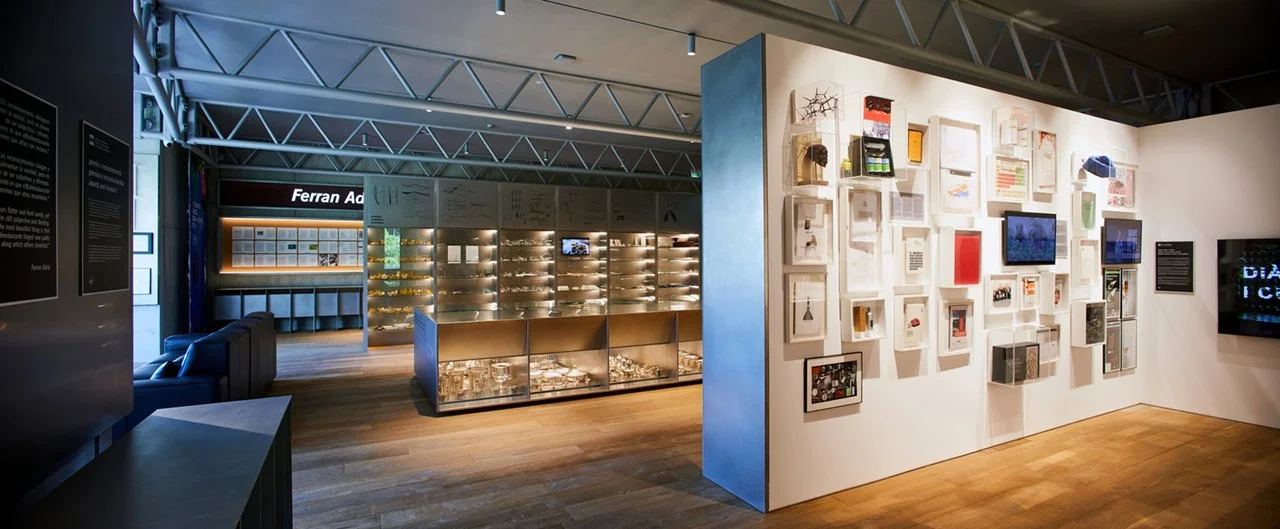
What you see at elBulli1846
The visit has an outdoor route of installations about cooking, knowledge and innovation, and an indoor route through the history of the restaurant. Inside you'll find the dining room as it was, the kitchen, the cutlery, photos of the waiters and staff on the walls, and 160 of the creative notebooks where dishes were worked out. There's table 25, which looks out over the Cap de Creus natural park, and plenty of French bulldogs, in honor of the Schillings' dogs.
Visiting elBulli1846: tickets and practical tips
Season: mid-April to autumn, Tuesday to Saturday, 9:30 to 17:00 with last entry at 14:00 (the published 2025 schedule). The 2026 season has wrapped, so check elbullifoundation.com for 2027 dates before you plan.
Tickets: €27.50 general admission when it opened, with reduced tickets for students, retirees, Roses residents and others. Book online and pick your day and time.
How long: about two and a half hours.
Getting there: drive and reserve parking with your ticket (€8.50 for three hours), or take the tourist train from Roses in summer (€18 return). In high season there's a barrier on the park road, and you show your museum ticket to get through.
Navigation: type "elBulli1846" into Google Maps, never just "Cala Montjoi."
House rules: no swimsuits or bare feet, no selfie sticks, and backpacks go in lockers. There's a beach bar on the cove for lunch after.
What is Ferran Adrià doing now?
Ferran set up elBullifoundation in 2013. When the museum is closed, the foundation works on the Bullipedia, a giant encyclopedia of gastronomy, and on teaching what Ferran learned about innovation to small businesses. He's 64, and he doesn't cook in a restaurant. Albert has Enigma in Barcelona.
The El Bulli Netflix series: Welcome to El Bulli (Gènesi)
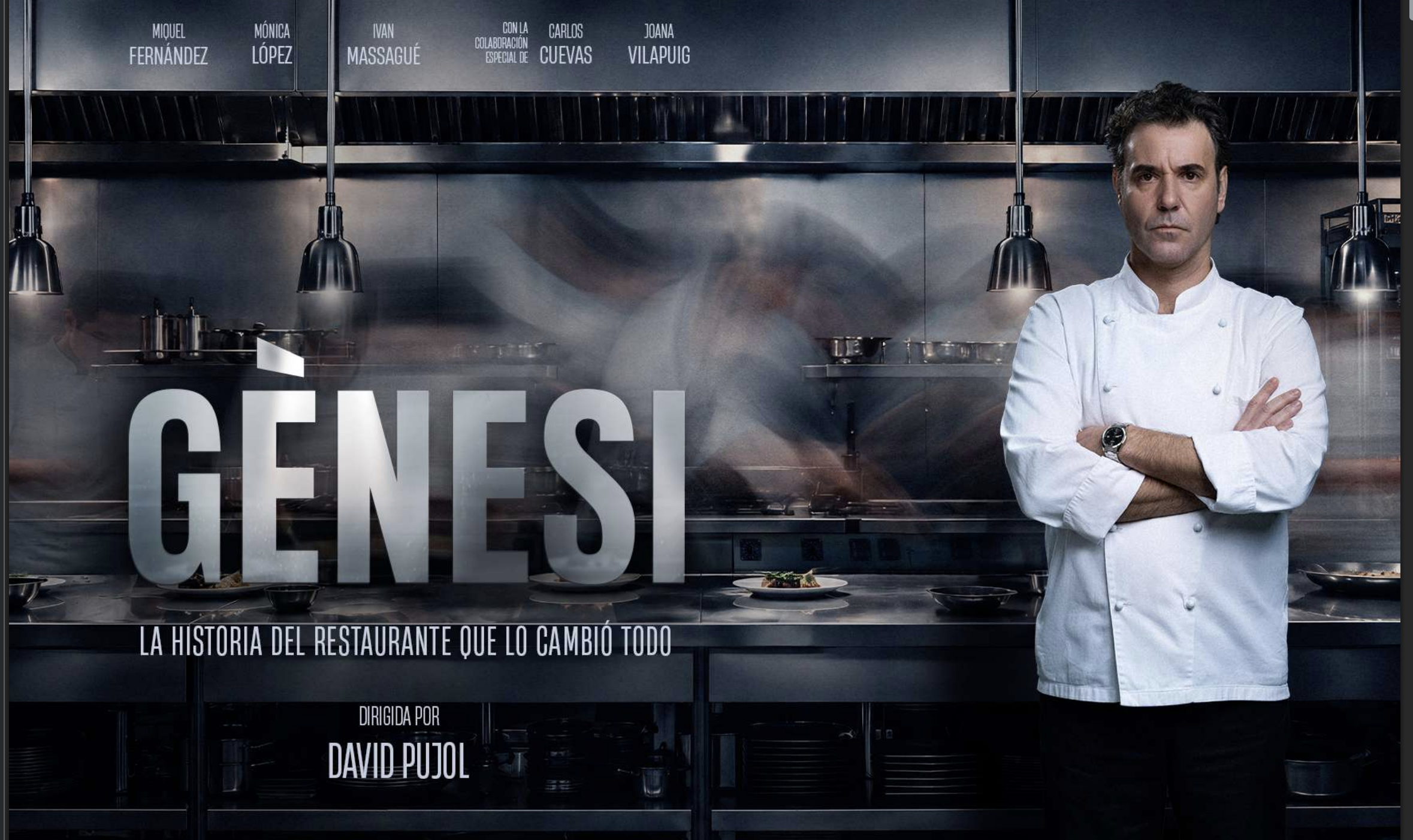
Welcome to El Bulli is a six-episode drama about Ferran Adrià and the rise of elBulli, and it arrives on Netflix on Friday, November 20, 2026 in the US, the UK, most of Western Europe and Latin America. In Catalunya and Spain it's called Gènesi. It was made by the Catalan public broadcaster 3Cat, it's in Catalan, and it was directed by David Pujol, who had already made documentaries about elBulli.
Is Welcome to El Bulli a true story?
Mostly, with dramatic license. The main storyline follows Ferran from his arrival at Cala Montjoi in the eighties through the rise of the restaurant, with Juli Soler at his side. A second timeline is invented: a food critic named Glòria Canabach comes back to Catalonia in 2025 to reopen her family's business. The show was made with the foundation's blessing, Ferran was involved, and dozens of real elBulli dishes were cooked again for the cameras. They shot at Cala Montjoi itself and on a full replica of the restaurant built on a set.
Miquel Fernández plays Ferran, and Iván Massagué plays Juli Soler. When it aired on TV3 this fall, it was the broadcaster's biggest series launch in three years, with about 2 million viewers and a 20% audience share.
Gènesi had its world premiere on September 21 at the San Sebastián Film Festival, at the Teatro Victoria Eugenia, with the producers, the director and the whole cast. Ferran was in the room. I got to attend, and it was just riveting! I was actually seated next to someone who lived a lot of the scenes int he movies, and he told me it was very faithful to real life. Everyone should go watch it!
The El Bulli rabbit hole: old reviews, forum threads and deep cuts
Researching this episode, I fell into the corners of the internet where people wrote about elBulli while it was still open. If you have an evening, here's where to go.
"Dinner at El Bulli," Chocolate & Zucchini (2006). The Paris food blogger Clotilde Dusoulier won the reservation lottery and wrote up every one of her 35 dishes, with stars next to her favorites. Look for the olive oil "spiral" you looped around your finger, the liquid ham croquette, and her blunt verdict that a Parmesan "air" topped with freeze-dried berry muesli was the low point.
The eGullet Q&A with Ferran Adrià (December 2004). For three days, Ferran answered questions from members of the food forum eGullet, and he shut himself in a conference room in a converted chapel at his workshop for hours to do it. One answer became a member's forum signature for years: "Remember that a very good sardine is always preferable to a not that good lobster." The same forum's 2006 diners' reports thread has people posting their actual receipts.
"El Bulli's legacy," Jancis Robinson in the Financial Times (June 2011). The wine critic ate there ten times in fifteen years and wrote this a month before the end. My favorite detail: hare ravioli served with a big wine glass of "hare blood" that was really beetroot, lemongrass and ginger juice. She also gets Jason Atherton, the first British chef to work at elBulli, on what Ferran taught him about looking after the kitchen porters.
The New York Times Magazine cover story (August 10, 2003). Arthur Lubow's 14-page piece, "A Laboratory of Taste," ran under the cover line "The Nueva Nouvelle Cuisine: How Spain Became the New France." It's the article that made Ferran famous in the US. The foundation keeps an archive entry for it in its catalog of everything ever written about the restaurant.
"If the world's greatest chef cooked for a living, he'd starve," The Observer (2006). John Carlin on elBulli's finances, with the best headline anyone ever wrote about the place.
"It Was Delicious While It Lasted," Vanity Fair (October 2010). Jay McInerney's piece, where Ferran confirmed the restaurant was closing for good.
El Bulli: Cooking in Progress (2011). Gereon Wetzel's 108-minute documentary follows the team through the 2008 to 2009 season, including the months in the workshop. There's no narration and no talking heads, so you just watch them invent.
Anthony Bourdain: No Reservations, "El Bulli" (aired August 1, 2011). Bourdain went back for the final days. His earlier special, Decoding Ferran Adrià, is the one eGullet members were buzzing about in 2004.
The Bullinianos list. The foundation keeps a complete list of every cook who ever worked at elBulli. Scroll it and count the famous names.
The Story of elBulli on Google Arts & Culture. Archive photos and press covers, put together with the Real Academia de Gastronomía Española.
"And what were they serving at El Bulli? Water!" on MetaFilter (2012). The internet arguing about whether a booked-out restaurant charging €250 had terrible business sense. Very 2012.
The 2013 Somerset House exhibition in London, which displayed the plasticine models of dishes alongside Ferran's original sketches. The exhibition page is gone, but photos of the plasticine dishes are still out there if you search.
Listen to the El Bulli episode of Spain Explained
A minigolf course became a beach bar, then a French restaurant, then the place where two brothers from L'Hospitalet and a rock fan from the dining room changed how the whole world cooks. I tell the full story in the elBulli episode of my podcast, Spain Explained, including my night at the Gènesi premiere. Listen before Friday, and you'll know the whole story by the time Welcome to El Bulli lands on Netflix.
This blog started because I was obsessed with Spain. I still am. You can catch more about my life and Spain over at The Spain Dispatch. Sign up for my newsletter where I share what I'm eating, where I'm traveling, and more random stuff! It's free, so come join a few thousand of us! If you liked this post, you'll probably love it.